Resolutions & statements

IHEU Minimum Statement on Humanism

In 1996, the IHEU General Assembly adopted the following resolution. Any organisation wishing to become a member of IHEU is now obliged to signify its acceptance of this statement:

Humanism is a democratic and ethical life stance, which affirms that human beings have the right and responsibility to give meaning and shape to their own lives. It stands for the building of a more humane society through an ethic based on human and other natural values in the spirit of reason and free inquiry through human capabilities. It is not theistic, and it does not accept supernatural views of reality.

Amsterdam Declaration 2002

In 1952, at the first World Humanist Congress, the founding fathers of IHEU agreed a statement of the fundamental principles of modern Humanism. They called it "The Amsterdam Declaration". That declaration was a child of its time: set in the world of great power politics and the Cold War.

Tolerance of all conceptions of humanism

This Board calls on all humanist individuals and organisations to be tolerant of each other's conceptions of humanism; and in particular, where ideas of other groups are within the basic statement on humanism, it calls on humanists to refrain from implying that these ideas are not truly humanism.

Board of Directors 1989

Amsterdam declaration 1952

This congress is a response to the wide spread demand for an alternative to the religions which claim to be based on revelation on the one hand, and totalitarian systems on the other.

IHEU comments on Islamophobia report

UN Geneva

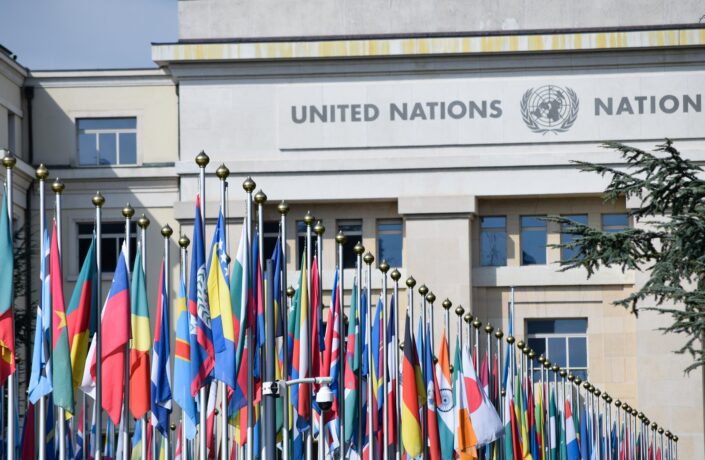
IHEU has called a UN Human Rights Council Special Rapporteur's report on Islamophobia "seriously flawed".

IHEU endorses statement to UN on defamation of religion

UN Geneva

In a statement to the UN Human Rights Council, endorsed by IHEU, World Population Foundation representative Diana Brown called on the Council to defend the human rights of all and not to attempt to defend religions against the human rights of people.

IHEU speaks out at the UN on freedom of religion and freedom of expression

Roy Brown (1)
UN Geneva

Speaking at the United Nations Human Rights Council, IHEU has called for a clear distinction to be drawn between protection for the rights of believers and attempts to protect ideas, beliefs and practices from legitimate criticism.

IHEU: 'Combating Defamation of Religion' unnecessary, flawed and morally wrong

Document (world+printout)
UN Geneva
 United Nations news

In its submission on Combating Defamation of Religions to the Office of the High Commissioner for Human Rights in Geneva IHEU has damned the current process at the UN as "unnecessary, flawed and morally wrong". In the submission, IHEU affirms that each individual should be absolutely free to form, hold or change his or her beliefs and condemns any attempts at stereotyping of religions, racial profiling of individuals, and any and all calls for violence in the name of religion or God. IHEU also expresses deep concerned that the exercise to combat ‘defamation of religions' could compromise established freedoms including freedom of expression, freedom of conscience and freedom of religion.

Resolutions on Defamation of Religion (originally "Defamation of Islam") were adopted by the former UN Commission on Human Rights in 1999 and every year until its abolition in 2006. The IHEU submission says that the very concept of ‘defamation of religion’ is flawed, since it is individuals, both believers and non-believers alike, who have rights, not religions.

The horror of child marriage

Map+magnifier
UN Geneva
 United Nations news

The oral statement by WPF and IHEU was one of only two during the debate on the rights of the child at the 4th session of the Human Rights Council to address the horror of child marriage.

Syndicate content