100 Years of Rationalism!
Jim Herrick
A 100 Years of Rationalism!
Jim Herrick is Director of the RPA, Editor of New Humanist, and former Editor of International Humanist News
Origins of the Rationalist Press Association
The Rationalist Press Association (a founder member of IHEU) has been a beacon of reason during the last 100 years. To celebrate its centenary a special conference was held, a special issue of the New Humanist was published, and a history of the Association is to be produced. The RPA has always had international contacts and members from round the world. Ask any older humanist anywhere in the world from where they first came across humanist ideas and it is odds on that they would reply 'The Thinker's Library'.
The RPA developed from the nineteenth-century freethought tradition, the development of the secularist movement of social and political reform, and the efforts of the Watts family which took a leading part in the development of freethought in the second half of the nineteenth century. Charles Albert Watts produced the Agnostic Annual from 1884 and Watts' Literary Guide from 1885 - which eventually became the New Humanist. The ambition of publishing books led to the establishment of the Propagandist Press Fund in 1889 to support literature on 'Freethought and Advanced Religious Reform'. Then in 1899 The Rationalist Press Association Ltd. was registered and included the aim to distribute books and pamphlets on rationalist themes.
Rationalist was defined as 'the mental attitude which unreservedly accepts the supremacy of reason and aims at establishing a system of philosophy and ethics verifiable by experience and independent of all arbitrary assumptions or authority'. We have since changed 'supremacy' to 'primacy', being mindful of the many other ways of being human than the purely rational.
Among the prominent supports of the RPA were Julian Huxley, Arnold Bennett, John Dewey, Albert Einstein, Bertrand Russell and H.G. Wells. One of the first successes was the publication of Ernst Haeckel's The Riddle of the Universe translated by Joseph McCabe. This became one of the first of a series of Cheap Reprints. Later the Thinker's Library consisted of over 140 books - classics of science, philosophy, history, counter-theology. Almost everybody interested in humanist ideas will have come across some of them. They are now collectors items.
Centenary Conference
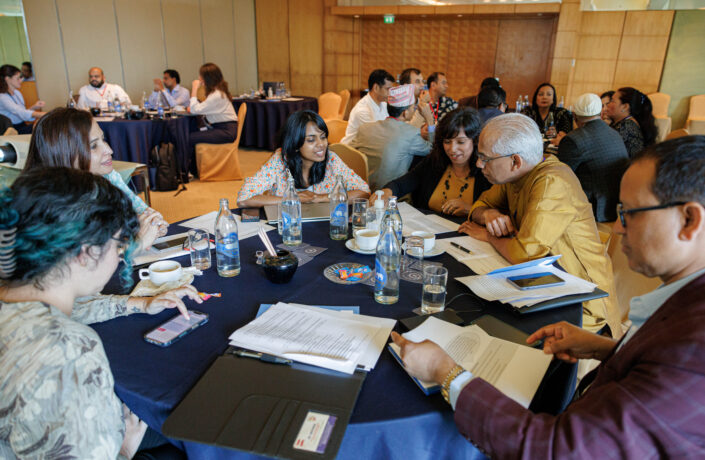
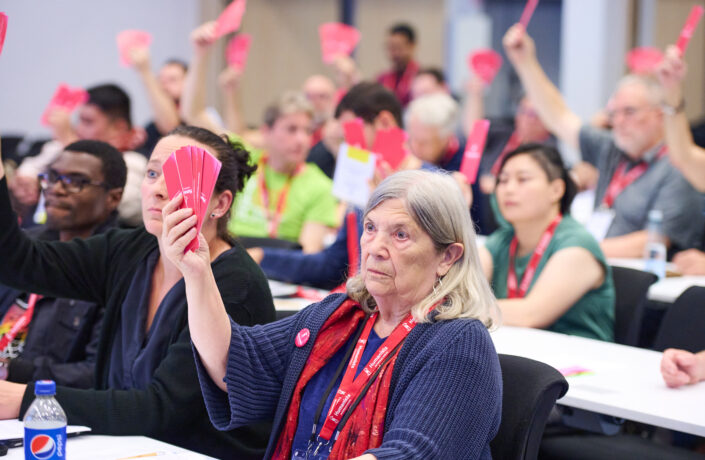
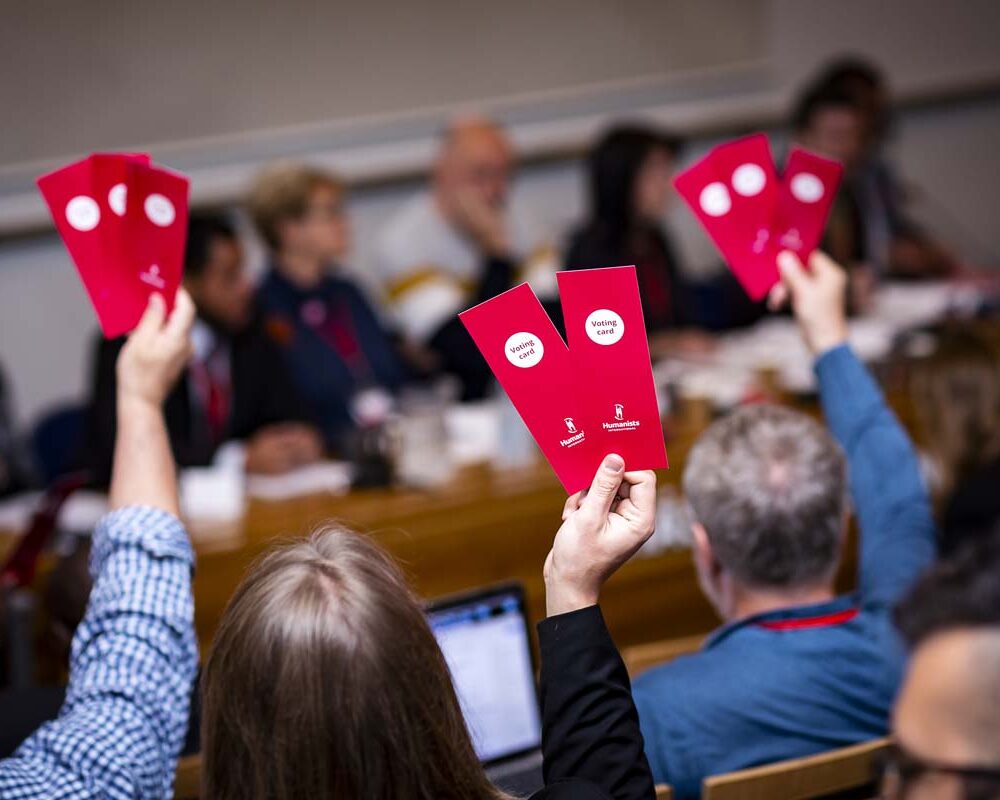
A centenary conference was held in Birmingham. (It was partly my need for time to help organise this conference and produce a centenary edition of the New Humanist, together with other increased work, that led me, regretfully, to resign from the editorship of the IHN.) The distinguished line-up of speakers covered science, media, psychology and sociology and international perspectives.
Lewis Wolpert, Professor of Biology as Applied to Medicine at University College, suggested that most people's belief is science is based on authority not rationality, that science doesn't always follow what seems like common sense, and that 'rationality is something we have to work quite hard at since our capacity for self-deception is rather large'. Professor Colin Blakemore, a leading biologist and fellow of the Royal Society, asked what hope for rationalism in the 21st century? Human beings, he suggested are not entirely rational: He quoted Cardinal Newman -
'Oh,
how we hate one another for the love of god.'The well-known psychologist from the University of Bath, Professor Helen Haste, spoke about 'irrational fear of the irrational'. She warned against the cult of rationality - in particular the dangers of demonising the enemy and 'haranguing the mosquito'. We need to be able to live with ambiguity and take on the complexity and uncertainty of life, of the world.
Professor Antony Flew, the philosopher particularly known for his works on atheism, had as his subject 'Against the New Irrationalism'. He particularly commented on the kinds of irrationalism found in some modem forms of 'thought' such as post-structuralism with its criticism of realistic epistemology and propounding of relativism in all matters. Colin Campbell, head of the Sociology department at York University spoke on 'The New Theology and the Threat to Rationalism in the Twenty-First Century'. He looked at theological movements since the sixties, which have led towards pantheism and mysticism and suggested that the many religious movements moving in this direction were the greatest threat to rationality in the future.
International perspectives were brought in by Diana Brown's examination of problems related to world population, and by Babu Gogineni, the Executive Director of IHEU, who suggested that Humanism was like ketchup - both solid and liquid. It is capable of destroying in a positive way the nonsense in the world, but it can also offer positive prospects in the growth and development for humanity. Sanal Edamaruku, the Secretary General of the Indian Rationalist Association, talked about rationalism in India and the third world. He thought that the communication revolution in the world would transform the spread of rationalism. Paul Kurtz, a leading American humanist, talked about current changes in the media and their possible consequences.
Of course, such brief snippets from the programme of the RPA conference can only give you a taste of what went on - but the proceedings of the conference will be available by the end of the year and the RPA will, I hope, be just as active as ever for another 100 years.