Democracy vs Theocracy: Liberal Democracy and Freedom of Expression

Warraq, IbnSeparation of religion & state

I shall begin with a joke.

The time: the 1950s. Place: The Holy Land. Two archaeologists are working on a site they believe is the true location of the Crucifixion of Jesus Christ on Golgotha just outside ancient Jerusalem. After months of careful digging they came across two skeletons several feet apart, and thinking perhaps these were the bones of the thieves crucified at the same time as Jesus, they shifted their attention to a spot where Jesus himself would have been crucified. Sure enough they find some bones, and the remains of a cross, and after weeks of further digging and carbon-dating analysis conclude that these remains were of Jesus. Furthermore, the archaeological details were consistent with the account of the crucifixion as found in the Gospels of Matthew, Mark and Luke. They looked at each other as they realized the implications of their findings, particularly for the Resurrection. This discovery was far too important to release to the public without first involving some eminent theologians. They immediately thought of Rudolf Bultmann, perhaps the leading theologian of his day, and author of “The Gospel of John (1941)”, now considered a classic in the field of research into the historical Jesus. Our archaeologists phoned him, and explained in breathless tones their discovery and its consequences. Bultmann listened patiently and was then silent for twenty seconds. Finally, in a thick German accent he said: “You mean he really existed!”

Your laughter is the difference between a democracy that guarantees freedom of expression, and a theocracy that stifles discussion of, let alone jokes about, religion – and any other subject it considers taboo.

Let us stay with Bultmann a little longer. Bultmann was a fiercely independent scholar of the New Testament; he was convinced that the Gospel narratives of the life of Jesus were not to be taken literally, they were not meant as history but rather as theology in story form, religious homilies in the accessible language of myth, a view summarized in his 1941 lecture, ‘New Testament and Mythology: The Problem of Demythologizing the New Testament Message’.

Bultmann and his reasoned look at the fundamental texts of Christianity was the culmination of centuries of Biblical criticism whose beginnings are often dated to Spinoza’s Tractatus Theologico-Politicus (A Theologico-Political Treatise) of 1670, but we find instances of it in 12th century Christian writers such as William of Conches. Many believe that Biblical criticism eventually led to the secularization of Western civilization and certainly without the exercise of freedom of expression and inquiry, wherever they may lead, there would not have been any real progress in Biblical studies, or tolerance of dissident views. As a Dominican priest once said to me, “The Catholic Church has received many slaps in the face, and it has done us a world of good.”

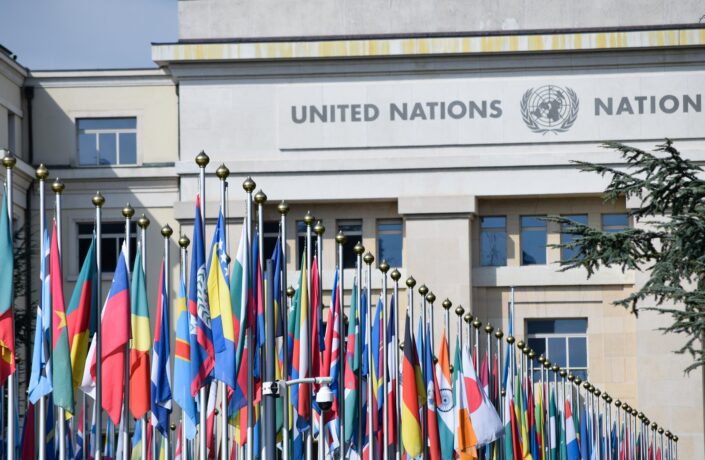
By contrast, the Islamic countries have tried for several years, and in recent months have succeeded, in stifling any criticism or even discussion of Islam at the U.N. Human Rights Council in Geneva.

Human rights begin with freedom of thought and freedom of expression; democracy depends on them. On 28 March 2008, sixty years after the Universal Declaration of Human Rights of 1948, a noble document whose articles 18 and 19 guarantee freedom of thought, conscience, religion, opinion and expression, the Islamic countries managed to kill it.

What happened was this. The seventeen Islamic member states of the Human Rights Council, with support from China, Russia and Cuba, succeeded in forcing through an amendment to a resolution as a result of which the UN Special Rapporteur on Freedom of Expression will now be required to report on the “abuse” of this freedom. Theo van Gogh, the Danish cartoonists, Geert Wilders and anyone criticising Islam, or the Shari’a will now be deemed to have 'abused' their freedom of expression. In other words, instead of protecting freedom of expression, the Special Rapporteur will be required to police its (mis)use.

The states that created the United Nations and promulgated the Universal Declaration of Human Rights in 1948 were committed to the concepts of equality, individual freedom and the rule of law. In the last fifteen years, the UN human rights machinery has been taken over by the Islamic States, whose record on human rights is abysmal, who have a very shaky notion of what constitutes democracy, and whose allegiance is to a seventh-century worldview defined exclusively in terms of man’s duties towards God or Allah. The Islamic States have been supported by other nations with a hatred of the United States of America, and by those who see their future economic and political interests as being best served by allying themselves with the Islamic States.

The Human Rights Council [HRC] replaced the old Commission on Human Rights in June 2006 following criticism that the latter was too selective and too politicised. However, the HRC has shown itself to be equally selective and politicised. It has failed to condemn human rights abuse in the Sudan, Byelorussia, Iran, Saudi Arabia, and China, for example, while constantly reprimanding Israel and Israel alone. The HRC is now dominated by countries that think you should be killed for changing your religion, a clear violation of article 18 of the 1948 Declaration. Quite clearly the HRC is incapable of fulfilling its central role, that of promoting and protecting human rights. And yet, western delegates, when confronted with the reversal of the role of Special Rapporteur on Freedom Expression, instead of voting against the amendment, abstained. The West blithely, complicitly, slides to its self-immolation.

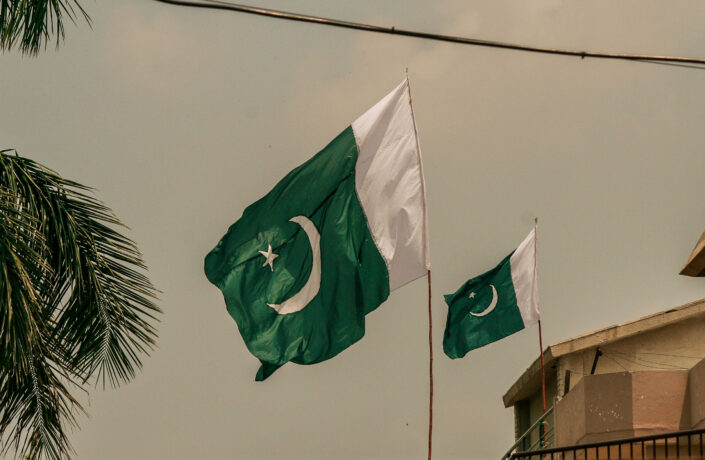
As of June 16, 2008, discussion of religious questions is now banned at the Human Rights Council. Delegates are not allowed to judge religions, according to president Doru Romulus Costea of Romania. Criticism of Shari’a law or fatwas is now forbidden. This ruling follows attempts by the Egyptian and Pakistani delegates at the Council to silence criticism of human rights abuse in the Islamic world.

The representative of the Association for World Education, in a joint statement with the International Humanist and Ethical Union, had denounced the stoning to death of women accused of adultery and of girls being married at the age of nine years old in countries where Shari’a law applies. The speaker, David Littman, was interrupted by no fewer than 16 points of order and the proceedings of the Council were suspended for forty minutes when the Egyptian delegate said that “Islam will not be crucified in this Council” and attempted to force a vote on whether the speaker should be allowed to continue.

On giving his ruling after the break Council President Costea said that the Council “is not prepared to discuss religious questions and we don’t have to do so. Declarations must avoid judgments or evaluation about religion. … I promise that next time a speaker judges a religion or a religious law or document, I will interrupt him and pass on to the next speaker.”

Let us move on to Democracy. We, in the West, tend to use the term “democracy” synonymously with “liberal democracy”, but we should distinguish between a democracy, meaning the rule of the people, involving free and fair elections, and a liberal democracy, whose liberal constitution enshrines the principles of rule of law, equality before the law, the right of minorities, a separation of powers, freedom of expression, religion, assembly, and the right to property; in other words a Bill of Rights that limits the power of the central government, protects the rights of individual citizens against arbitrary arrest, and protects the right to due process. Democracy takes many forms: representative democracy, direct democracy, and may include a greater and lesser use of referenda.

Historically, democracy and constitutional liberalism have followed different paths, and, contrary to one’s expectations, liberalism has preceded democracy. Greece gave us democracy, Rome gave us the notions of limited government, and the rule of law, but it was the rise of the Christian Church that was the source of liberty in the West since it was the first major institution in history that was independent of temporal authority and willing to challenge it.1 Jumping ahead to the nineteenth century, while Biblical criticism led to the abandonment of a literal reading of the Bible, it was also Christian religious tolerance and religious pluralism that eventually led to tolerance and pluralism tout court. As Owen Chadwick put it, “once concede equality to a distinctive group, you could not confine it to that group. You could not confine it to Protestants; nor, later, to Christians; nor, at last, to believers in God. A free market in some opinions became a free market in all opinions... Christian conscience was the force which began to make Europe ‘secular’; that is, to allow many religions or no religion in a state, and repudiate any kind of pressure upon the man who rejected the accepted and inherited axioms of society....My conscience is my own”.2

The American diplomat, Richard Holbrooke, said about the situation in Yugoslavia in 1990, “Suppose elections are free and fair and those elected are racists, fascists, separatists. That is the dilemma”.3 Similarly, free elections in many Islamic countries could well usher in an Islamic theocracy; for instance in the elections in Algeria in 1992, the Islamists were all set to win the elections when the army stepped in. The Islamists are quite capable of using the democratic process to destroy liberal democracy. Their philosophy is summed up in the pithy saying: “One man one vote – one time.” We also know that Hitler became chancellor of Germany via free elections. Thus, unless there are constitutional safeguards that prevent even a majority – the tyranny of the majority as J. S. Mill put it – from threatening the rights and freedoms of all its citizens regardless of race, gender and religion, democracy will clearly not be enough. As the great medieval scholar Alcuin wrote to Charlemagne in 798, ‘Nec audiendi qui solent dicere, Vox populi, vox Dei, quum tumultuositas vulgi semper insaniae proxima sit’, which roughly translated reads as: And those people should not be listened to who keep saying the voice of the people is the voice of God, since the riotousness of the crowd is always very close to madness.

The great British philosopher John Stuart Mill [1806-1873] wrote in On Liberty, 'Strange it is that men should admit the validity of the arguments for free discussion, but object to their being 'pushed to an extreme'; not seeing that unless the reasons are good for an extreme case, they are not good for any case.'

The cartoons in the Danish newspaper Jyllands-Posten depicting the Prophet Muhammad in a mocking light raise the classic question of freedom of expression. Are we in the West going to cave in to pressure from societies with a medieval mindset, or are we going to defend our most cherished freedom, the right to speak, and express ourselves, freely?

A democracy cannot survive for long without freedom of expression, the freedom to argue, to dissent, even to insult and offend. It is just this freedom that is sorely lacking in the Islamic world. Without it Islam will remain in its dogmatic, fanatical, medieval fortress; ossified, totalitarian and intolerant. Without this fundamental freedom, Islam will continue to stifle thought, human rights, individuality; originality and truth. A liberal democracy proceeds by tentative steps after due deliberation, debate, and compromise, and is able to adapt to changing circumstances. This is precisely how an Islamic theocracy does not proceed, and it is to such a theocracy I shall turn in my next article.

1 Fareed Zakaria, The Future of Freedom, Illiberal Democracy at Home and Abroad. New York: W. W. Norton & Company, 2007, p.34

2 Owen Chadwick, The Secularization of the European Mind in the Nineteenth Century, Cambridge, 1975, pp.21-23

3 Quoted by Fareed Zakaria, op. cit., p. 17.

(Text of a talk given at a conference organised by the University of Juan Carlos, at Aranjuez (Spain) in July, 2008 on the theme ‘Democracy versus Theocracy’. The rest of this talk will be published in installments in the forthcoming issues – Ed.)

Ibn Warraq is Senior Research Fellow at the Center for Enquiry

Trackback URL for this post:

http://www.iheu.org/trackback/3336