Freedom of Expression and the advocacy of religious hatred

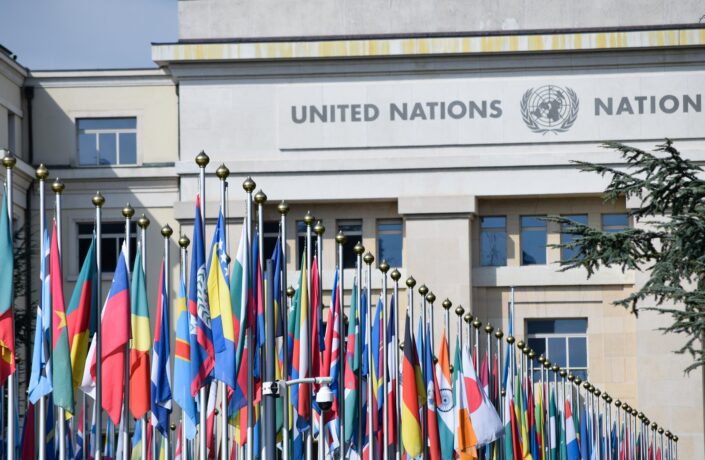
UN Geneva

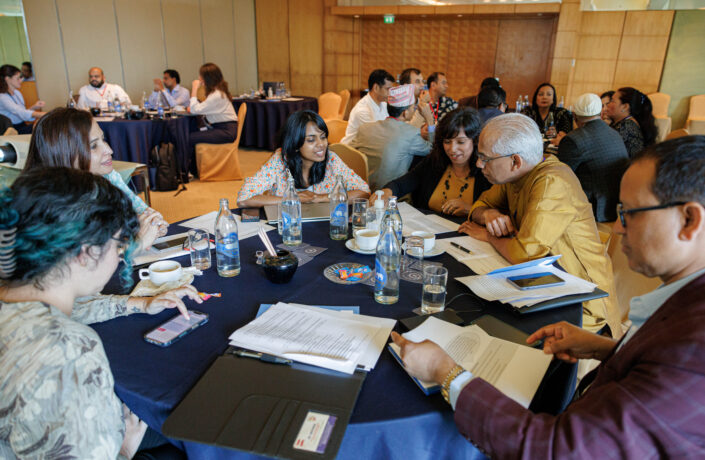
Following calls from the OIC and the former UN Special Rapporteur on Contemporary Forms of Racism for a review of the limits to freedom of expression, the Office of the High Commission for Human Rights organised a two-day expert seminar at the Palais des Nations, Geneva on 2/3 October 2008 to discuss “Freedom of expression and advocacy of religious hatred that constitutes incitement to discrimination, hostility and violence”.

The seminar was chaired by Bertrand Ramcharan, former acting UN High Commissioner for Human Rights, with presentations by 12, mainly academic, human rights experts but including present and former Special Rapporteurs Abdelfatah Amor, Asma Jahangir, Frank LaRue and Doudou Diene. Brief CVs of the twelve experts are given in Annex 1.

Prior to the meeting all of the experts were asked to submit written statements on the issues under discussion. The full texts of these statements can be found at: http://www2.ohchr.org/english/issues/opinion/articles1920_iccpr/experts_papers.htm

Day 1

The new UN High Commissioner for Human Rights, Navi Pillar opened the proceedings with an address in which she suggested that while carefully defined limits to freedom of expression do exist (Articles 19 and 20 of the ICCPR) “there remains little clarity over their precise meaning and application” but pointed out that freedom of expression and freedom of religion are not contradictory, they are mutually dependent. And she warned that “denying that freedom of expression, freedom of religion and freedom from discrimination are universally valid .. is to negate core values of humanity.”

For a Humanist, this impressive start was rather spoiled when in his opening statement the current President of the Human Rights Council, the Nigerian Catholic Martin Uhomoibhi, quoted Tony Blair’s “faith is part of our future” - as though this were a matter for rejoicing.

The chairman then read a statement by Jorge Sampaio, UN High Representatve for the Alliance of Civilisations, in which he explained that the strategy of the AoC was to facilitate dialogue to address cultural and religious divides, emphasising the role that religious communities can play in this. [1] An AoC Media Fund will finance mainstream productions “that challenge negative portrayals of minorities”. “Dialogue” was an oft-repeated call in the speech. .

The chairman then introduced the principal speakers, urging everyone to adopt the attitude of “seekers after truth, not as knowing the truth”.

Topic A. The legal framework.

The first of the 12 experts in to bat was Frank LaRue. Our major challenge is to create a culture that provides a bastion against dictatorship and protection against tyranny. Free people need free expression. Limits cannot be left to discretion. We need a regime which both guarantees Freedom of Expression and combats hatred. But mockery has to be acceptable. Ask: who is the holder of the right? You can’t say someone is slandering a country, a culture or an idea.

Agnes Callamard, (Exec Director of Article 19): Genocide in Cambodia, the gulags, Rwanda, all required control over expression and conscience. Freedom of information underlies all our freedoms (UNGA 1948). There can be no hierarchy of rights, articles 19 and 20 should be read together, restrictions must be necessary in a democracy. She was not convinced that legislation against hate speech is the best way of combating hatred.

Chair: “Local conditions will be relevant to creating standards” [2]

Nazilla Ghanea (U of Oxford). Sanctions need not be criminal law, nor involve the withdrawal of the offending expression, book or article. Not every expression that is followed by violence need be sanctioned. Art 20 needs to consider the expression actually incited the ensuing violence. We should be careful of the rights of minorities. Any restrictions should take account of the whole of the ICCPR. Criminalisation of expression should be seen as an extreme sanction.

Discussion:

Diene: Experience with Article 19 shows that restrictions do not protect us. What will? Freedom of Expression is politically instrumantalised to propagate racist platforms.
Amor: Prevention is problematic.
Eltayab: Legal limits should be seen as part of a wider strategy.
Jahangir: Emphasis on cultural particularities are usually detrimental to one group. Was Rwanda because of lack of legal instruments or lack of action? Should the threshold for religion be at the same level as race? Preventive legislation needs far more caution on the part of governments.
Thornberry: Context must be taken into account. Who defines hate speech? Uniform treatment is not what is required (!) “Some communities may take violent exception to what another community considers perfectly normal.”
Chair: The European Court of Human Rights has stated that it may be considered necessary to sanction, and insults to a particular group may not necessarily be protected.
Pakistan: The OIC was a sponsor of this meeting. How can groups and communities be protected? “We need to nip growing hostility in the bud”. “How do we protect groups against hostility to their religion?” [3]
Algeria: One needs to contextualise the issue. ICCPR came on the heels of a particular persecution. We have a new situation where another religious group is under attack following 9/11. “Obama is being attacked on the grounds that perhaps his grandfather was a Muslim!” The right to respect should not be treated as secondary. About religion, “the good Lord can defend himself” but religion cannot be used to de-humanise groups and justify attacks on them. We feel that the right to protect our dignity is as important as freedom of expression. Globalisation means we need an additional protocol to the ICERD.
Egypt: Why are we here today? This is not a sterile legal debate about articles 19 and 20. A large part of the international community feels aggrieved. The amendment to the mandate of the Special Rapporteur on Freedom of Expression shows that a vast majority of the international community believe that Freedom of Expression must not be used to incite racial and religious hatred. We need to define the threshold of what constitutes incitement. If countries do not implement their obligations under articles 19 and 20, what should the international community do?
France (for the EU): Freedom of Expression is the keystone of freedom and a democratic society. It goes hand in hand with all other rights and freedoms. Any discussion of thresholds might limit other freedoms such as freedom of religion, and might increase intolerance.
Bangladesh: Articles 19 and 20 make it possible to discuss limits. We need interpretation. Global communications mean a statement made in the US or EU can have repercussions in a small village in Asia.
Cuba: Defamation of religion and incitement to hatred have become common. They must be prohibited by law, criminalised, and victims should receive reparations. Thos who promote hatred and discrimination should not be permitted to participate in politics and should be penalised. We are speaking about immigrants in one part of the world and about Muslims in another part of the world. [4]
Sri Lanka: People are reacting to calamities and the racial attitudes behind them. While some of these attitudes are associated with the far right, Pol Pot was not of the far right. Defamation of religion is problematic. Who decides what constitutes defamation and where the boundaries are? This is an issue of real complexity.
Belgium: Excessive restrictions on Freedom of Expression will penalise minorities – the very groups we wish to protect. We need more Freedom of Expression, not less. We have a broadly sufficient framework but individual states need to legislate appropriately. We need to look at this through a more global framework, through education etc.
LaRue: We must protect minorities. Art 19 must be linked to the whole ICCPR – e.g. access to education and communication. The way to correct discrimination is to involve people and increase Freedom of Expression. The Islamic culture has been stereotyped, but the solution is not censorship but engagement, dialogue and understanding, not criminalising actions.
Callamard: Incitement to hatred should be forbidden by law, but I fear it will be driven by criminalisation and not focus on more effective means such as the enforcement of equality. The country with the strongest laws against expression just put into power a far right government. Strengthen education and professionalism in the media. Minority media is very important. Criminalisation can lead to the gulag and the Holocaust.
Ghanea: Under art 27 race and religion are treated equally, but under art 18 nothing should inhibit the individual search for truth. “I don’t see a hierarchy of hatred”. A minority rights perspective is helpful. Does the minority have the right to reply? Do they have access to the courts?

Topic B. Limits to restrictions to Freedom of Expression

Chair: How do we deal with the emerging issues, post 9/11?

Asma Jahangir. Not only since 9/11 but for many years attacks have been carried out against minorities. We should not be rushed into legislation during a period of heightened tension. States have an obligation to counter religious discrimination but dialogue is also key. Inappropriate sanctions might increase tensions. Cultural particularities have been used over the years to justify the oppression of women and minorities. There are important differences between religious and racial discrimination – for example some actions are particular to a religion and not a race.

Abdelfatah Amor. The rule of law is not easily separated from the uses to which it is put. As a jurist Art 19 cannot be read in isolation from arts 12, 13, 21, 22, 25 and 26. 19-3 determines the scope of Freedom of Expression but the duties under 19-3 are inseparable from the rights under 19-2. This could be interpreted as either a matter for individual conscience or for law.(?) Art 19-3 permits a state to enact legislation but doesn’t compel. It’s a matter of style. 19.3 speaks of necessity but the meaning of this term will vary from state to state, culture to culture.

Chair: Asma has warned us against vague legislation.

Morgens Schmidt: UNESCO is not an HR organisation but is built on HR principles. We should not waste time looking for contradictions between rights but how we can enjoy all of them. Restrictions must be narrowly defined, by a body which is politically independent, and must respect statements that are true. Incitement must be the intention for speech to be sanctioned. Prior censorship should not be used. Sanctions must come from general principles and respect proportionality. We are discussing these principles in a charged political climate. We must not rush into drastic changes in international law. The media must have an enabling environment. UNESCO has a model journalism curriculum. We need more diversity (!) but we will not get it from more restrictions.

Chair: You speak of intentions. I would draw your attention to the fact that laws are worded in objective terms, intention does not come into it. If it incites hatred it must be prohibited. [5]

Discussion
Diene. I am uneasy. The trend here is to push excessively the exceptional nature of restrictions, overlooking the balance contained in Art 19 between freedom and restrictions. I had hoped we would have invited media figures and religious leaders. I wanted to avoid an excessively juridical view. Since 9/11 we have been living in a fraught ideological context. We need to look at what has actually been happening, for example, concentration of power in the media has hindered access to information.
Chair: The Human Rights Committee recommended in 1980 that limitations to Freedom of Expression may not put in jeopardy the right itself. Should we invite the HR Committee to revisit their recommendation?
Eltayeb: We need to distinguish between religious and racial hatred. Restrictions do not necessarily call for criminalisation. The basic objective of Art 20 must be to safeguard the rights of religious minorities.
Muntabhorn: Criteria for thresholds. 1. Must be in the context of international law. 2. Must be based on grave or imminent threat or peril (a high threshold). 3. Proportional – and should be of a temporary nature (?) 4. Legitimate aims – must be based on objectivity.
Meyer-Bisch: I agree with Diene. Schmidt is inconsistent. Why is UNESCO not louder in this debate? There is a difference between religious and racial discrimination. Race does not exist (!) Religion does exist, involving heritage and culture, therefore different approaches are needed. “The fact that religion is used to discriminate, and even kill, detracts no whit from its underlying principles” [6]
Pen International: There is a right to be wrong. The Spanish Supreme Court declared laws against Holocaust denial to be unconstitutional. There must be a clear expression of incitement, not of mere opinion even if it is wrong.
World Press Freedom: Much jurisprudence was on freedom from restrictions until 9/11. Since then the trend has been strongly towards restrictions. This is ignoring the elephant in the room. The US has deliberately ignored Art 20. The First Amendment is under pressure. The principle of broadening Freedom of Expression should be reaffirmed by the UN.
Ghanea: What are the new phenomena? What is different from instances of national, racial or religious hatred? We should not allow States to be in the driving seat in upholding rights.
Chair: Since 9/11 a group in society feels it is being targeted. That’s what is different.
Amor: Race may not exist but racism does. The question is, how do we identify with the groups that suffer?
Thornberry: The CERD considers itself to be subject to change in the light of changing circumstances. But in what way have they changed?
Egypt: I disagree with Asma Jahangir. I agree with her 1 or 2%. I don’t think it should be portrayed as a conflict between Freedom of Expression and Freedom of Religion. How would dialogue have prevented the Holocaust? It would not have stopped Rwanda. “We all know what we are talking about here.” Are we being courageous enough? Everbody is going round the subject. How can we say to someone in Egypt that it is not OK to deny the Holocaust but it is OK to insult the prophet?
Morocco: These texts were codified in 1966 and it is useful to revisit them. This topic should be “Limits to Freedom of Expression”, not “Limits to restrictions on Freedom of Expression”. The climate around us is one of a resurgence of expressions of prejudice and hate. Law alone is not enough. We need law, morality, education, culture and government. Dignity has legal and spiritual weight. Does the victim have the right to defend himself? People living outside their countries do not always have the right to defend themselves.
Denmark: The meeting has expressed deep concern for the rights of minorities. We share that concern. We believe however that the balance between Freedom of Expression and incitement to hatred is well struck in existing legislation. We need to be sure that any new legislation protects the rights of minorities in all countries. Freedom of Expression is a pre-condition for the exercise of many other HRs, even if the views expressed shock and disturb. We have difficulty in accepting that the focus is shifting from the right to the restrictions. This is not in line with the normal approach to HRs.
Slovenia: Be cautious in equating racial and religious hatred. This can lead to further stereotyping. People have various identities. I am confused by the optional protocol to CERD. It should come under the ICCPR. We need to make a mental shift from tolerance to respect. We need to stimulate respect for diversity.
Algeria: We are in a state of denial. There are new forms of discrimination but restrictions are seen as a necessary evil. Is this fair? These restrictions refer to the rights of other rights holders. Demonising religious groups and immigrants is not acceptable but is explained as a necessity. We must apply all restrictions equally.
Turkey: This seminar shows we recognise the problem. Freedom of Expression must be protected universally. This is a serious problem. Legal measures should be part of a wider strategy.
Sri Lanka: Let’s go more deeply into the issues. The focus on Freedom of Expression is not a hangover from the Cold War. It is about Liberty, Equality, Fraternity. Are these new forms really new or a reappearance of the old?
Bangladesh: HR education is the best way to foster tolerance. But it is often scholarly people who inculcate hatred. Education is a long-term solution. We also need quick solutions in parallel.

End of Day 1

Day 2

Continuing the discussion on Topic B: Limits to restrictions to Freedom of Expression

France: We believe that the articles contain an adequate framework to deal with present day realities. Forms of expression that could offend people or communities are not a new phenomenon. The fact that a particular form of expression is permitted does not mean that it is approved. Disapproval may be expressed. Restrictions on Freedom of Expression will take us in the wrong direction. It might worsen things, particularly for minorities.
Jahangir: We all agree that States have an obligation to act under Art 20. There should be an end to impunity. In what way can we expand the limits? We must distinguish between hostility and historical fact. Perpetrators must ne proactive, not speaking privately. 9/11 sharpened polarisation but it was already there. It was in 1999 that the OIC introduced the resolution on defamation of Islam. We have found the perpetrators of crimes now presented as victims. I am sorry that the distinguished representative could only agree with 2 ½% of what I said but perhaps that gives us something to build on.
Egypt: I only agreed with 1 or 2%.
AWE (David Littman): We have all learned a lot here. But I would appreciate an answer from the experts to the following question. To what extent should we be able to raise issues of religion in the Council? (And by the way, my wife of 50 years prefers me without a moustache.).
Chair: This meeting is about Articles 19 and 20. Matters concerning the Council should be dealt with by the Council.
An NGO speaker: There is a lack of Freedom of Expression in the Arab world. But the Arab world suffers from too much Freedom of Expression in the rest of the world – defamation of Islam for example. So there is a difference of interpretation of rights. Another problem within the Arab world is contradictions within its own society.
Egyptian Institute for Personal Rights: Article 20 is intended to protect the most vulnerable. States are using “public order” legislation under Art 19 to reinforce mainstream religion. This cannot be left to the judiciary. We must apply standards uniformly. How can our governments be so heart-broken about minorities living abroad when they don’t care at all about minorities at home?
American Jewish Committee: Asma Jahangir has rightly noted that Freedom of Religion does not include the right to have a religion free from criticism or ridicule. Even intolerance is not necessarily inciteful to acts of violence. Good examples and education are better methods of addressing the problem.
Intl Fed for HR: Criminalisation is not enough. We must address root causes. And what is being done about religious hatred in other parts of the world? There must be limits to religion when it leads to HR abuse and violence.
Jahangir: We must not use religion to put fear into other people’s hearts and minds. [7] We have not discussed the Internet. It is there we find hare speech; a huge challenge for governments.
Amor: We need a juridical approach, but while limits to Freedom of Expression under 19-3 may be useful but they cannot be set in stone.
Schmidt: I don’t think we are being unnecessarily legal. We have not yet exhausted the possibilities of the tools we already have. This is too important an issue to leave it to UN agencies. Civil society needs Freedom of Expression in order to debate these issues. We must push for more education. The Internet is the most democratic medium we have. Some opinions are harsh, some repulsive, but existing laws can be used to bring perpetrators to justice.
LaRue: Religion must not be used to bring fear to the hearts of anyone. In order to enhance Freedom of Religion we need more Freedom of Expression. Laws normally protect only the majority religion and neglect the minority religions.

Chair: For the last two sections we need to consider case studies, national legislation, national HR Committees. Should we request the HR Committee to re-comment on Arts 19and 20 in light of changed circumstances?

Topic C: Analysis of the notion of incitement to religious hatred

Vitit Muntarbhorn. Blasphemy laws have moved in two directions: towards abolition and towards reinforcing the link between state and religion. There should be no immunity (from criticism or penalty) if it implies immunity. Art 20 is not about just hatred, but hatred leading to violence etc. A degree of moderation is necessary in any legislation.
Patrice Meyer-Bisch. Authoritarian regimes are afraid of freedom. There is no conflict between the religious and the secular worlds. It is easier to stop ink flowing than to stop blood flowing. Religious traditions are part of human heritage but there must be room for interpretation. You need to be a community to interpret (?) and these interpretations must be respected. Art 27 is important. Even some majorities lack the right of interpretation. Rights are individual and apply (equally) to men and women, rich and, especially, poor – and even those not yet born. [8]
Muhamad Eltayeb. The balance between respect for the dignity of believers and Freedom of Expression cannot be set for all places but must take account of historical experiences and local conditions. Freedom of expression cannot be defined in universal terms (!) It is wrong to characterise recent incidents as a conflict between Freedom of Religion and Freedom of Expression. We need to be very careful about the criminalisation of religious hatred because of undermining the rights of minorities. For defamation of religion to be prohibited by law they should advocate hatred that constitutes incitement to discrimination, hostility or violence.

Pakistan
: Yes, but what are you going to do about issues like Jewels of Medina and Fitna etc?

Topic D: Analogies with other types of “incitement”

Doudou Diene: Freedom of Expression is the tip of the iceberg. Below are all of the issues we have discussed today. Meyer-Bisch suggested this is a debate between democracy and dictatorship! This expresses suspicion towards any restrictions. [He sees] the Cartoons Affair as showing the dichotomy that exists between defenders of Freedom of Expression and obscurantism. But the debate on Freedom of Expression has to do with civilisations; it is about ideological issues. Commercial control of the media and academia lead to insidious restrictions on diversity of opinion. HRs are being instrumentalised. Diversity is a challenge. Freedom of Expression needs to be a freedom that benefits ethnic minorities. Freedom of Expression must not become a dogma. Genocide is starting to appear again – in Kenya, S. Africa and the instrumentalisation of Freedom of Expression is a factor. Islamophobia and anti-Semitism are on the rise in Europe. Xenophobic attitudes pay off politically. Other parties are now adopting these policies from the far right. Intellectual legitimisation of Islamophobia is now happening in academia. Racist violence is on the increase worldwide and is linked to Freedom of Expression. There is historical depth to Islam vs Christianity. Incitement is built on defamation. We need to revisit the norms and their interpretation.
Chair: We need to revisit the norms and their interpretation. [9]

Patrick Thornberry.
The Committee on the Elimination of all forms of Racial Discrimination (the CERD) has the longest experience of any treaty body in [Human Rights]. For the CERD, religious issues are only of relevance to the Committee when they are linked to issues of ethnicity and racial discrimination. A CERD study in 1983 concluded that the rights of free speech and free association are not absolute but subject to limitations.
Natan Lerner. There should be no distinction between different groups – national, ethnic or religious - in their treatment and the protection afforded by the law. But the emotions surrounding religious convictions do act to heighten tensions and have resulted in acts of violence. How to strike a balance between Freedom of Expression and incitement? Article 4 of the CERD provides some guidance. States are obliged to adopt immediate and positive measures to eradicate acts of or incitement to discrimination – on any grounds which, logically, should include religious. But one difficulty is this: when does permissible criticism of a religion by describing its dogmas as wrong, absurd or false become defamation, and when does defamation become incitement? This may lead to a question of intention. There is a distinction too between laws prohibiting the denial of legally proven facts, such as genocide, and disputing the veracity of religious dogma even when considered absolute truth by some and as unreal or mythical by others.

Discussion

Callamard: Rwanda was not about Freedom of Expression being instrumentalised, it was about Freedom of Expression being abused!
Amor: Amor had to leave before the end of the discussion but before leaving he suggested communicating the “sense” of the seminar to the Human Rights Committee. The Chairman agreed.
Tunisia: This seminar was provoked by what has happened recently. This is a question of limiting abuses of that right.
Chair: I would like to hear what IHEU have to say in response to Doudou Diene:
IHEU (Roy Brown): If those who formulated Arts 19 and 20 in the aftermath of the Holocaust had wanted to go further in restricting Freedom of Expression they would certainly have done so. Lack of uniformity in the application of Arts 19 and 20 is the problem, not the articles themselves. “The essence of international law, surely, is that it be applied internationally, not selectively”[The full text of Brown’s statement is given in Annexe 2]
Sri Lanka: Freedom of Expression is part of the solution not part of the problem. The problem is best addressed by the battle of ideas. We need means that do not undermine the end. Writing a book is easy. Getting it published is another matter. All players should be allowed to compete equally. It is unrealistic to expect states that have gone through the separation of church and state and the abolition of slavery to roll back their freedoms because of cultural sensitivity to others. “The answer to a book is a book, not book burning”. We have many examples of people who have struggled against the prevailing norms – none of whom have argued for greater restrictions.
Egypt: HRs are HRs everywhere. If Holocaust denial is a crime why is it not OK for Egypt to criminalise what it wants?
Indonesia: Being Muslim is difficult since 9/11. Where is the consistency when questioning the Holocaust creates uproar in the West. Current formulations are obsolete; they can support anything!
Chile: Promotion of tolerance is a state responsibility but can be assisted by religious leaders showing tolerance when their religion is attacked.
USA: We care committed to promoting inter-religious understanding. Existing laws have not been implemented as they should. The US objected to Article 20 because the free flow of ideas is essential. Prohibiting speech in a non-discriminatory way is very difficult. We do restrict speech intended to incite immediate violence. Art 20 is meant to limit actions which incite violence. Speech about a group that incites that group to violence does not fall under Art 20. “No-one has the right not to be offended”. Education is a key.
Algeria: There is clearly a mainstream view that existing measures are sufficient. There are mavericks like Doudou Diene and me who feel that the present system is not working adequately. [10] It was mavericks who founded the US. We have major problems today but we can only succeed when victims are recognised as rights holders. Muslims are hurting. The legal provisions are not working. It is not about religion, it’s about attacking members of a group. When religion is demonised it is not about religion, it is about treating the believer as inferior.
Canada: HRs are inter-dependent. Freedom of Expression is important for other HRs; other HRs are important for Freedom of Expression. Limitations on one might imperil others. Canada has laws against incitement against all identifiable groups. These laws conform to Articles 19 and 20. Perhaps better implementation is required but that is no reason to re-write the standards.
Pakistan: To Doudou Diene: Instrumentalising Freedom of Expression in Rwanda was also a violation of Freedom of Expression. Thank you Sri-Lanka: There can be no rolling back of hard-won freedoms, but there must also be a level playing field. There are proscriptions that limit Freedom of Expression in the West. There are cultural contexts that must be taken into account. “Much of what has happened has been a reaction to intolerance exhibited towards Muslims.” We do have laws in Europe that can be used as a model for laws against defamation of religion. [11] Can we put these norms into an additional protocol to the ICCPR?
OIC: We are deeply concerned by incitement to religious hatred. We have been highlighting defamation of religion and Islamophobia since 1999. Despite this, several aspects of our concern are a source of division between OIC and the West. Hatred towards Muslims is a global concern. National laws have been used as an excuse for abuse. Criminalising incitement to religious hatred is the only option left for a serious response. Freedom of Expression is being abused by well-educated spokesmen. Education is not the answer for them [12]. This has been a successful seminar in breaking the taboo about revisiting the ICCPR. This opens a new chapter in dialogue. We need practitioners and activists on future panels.
UK: We share the views of Sri Lanka, the US and Canada. You refer to some conclusions; we are surprised. We do not agree changes to the standards are needed. What is needed is uniform implementation. The existing laws, if implemented, are sufficient to protect the rights of all, in particular the marginalised.
Indigenous peoples: We need to be treated as full members of society.
Bahais: We need the right to reply against slander and defamation laws that discriminate against us. Lack of a right to respond should be considered an aggravating factor.
Pen Intl: We must refrain from incitement to violence. If an author sees that his book could inflame passions he should reform his text. Writers should show responsibility.
Egyptian Initiative for Personal Rights: Jewels of Medina is poor, badly researched pornography. We need to see more engagement with the real issues.
AWC: Criticism is a lay exercise. We need to be aware that moral and religious rules are not legal rules.
Turkey: We support the proposal for more dialogue. We note that Al Jazeera is opening a freedom and HR desk.

Final remarks

LaRue: The limitations on Freedom of Expression are clear and should be implemented. We need broader respect, dialogue and comprehension. We need broader Freedom of Expression.
Callamard: Both sides need to move closer. These meetings are useful. Follow up is needed, including on the question of Islamophobia.
Ghanea: We need to look at actual instances of violation. We need to demonstrate that all remedies have been exhausted. Any other action would be premature.
Jahangir: More consultation is needed and we must implement existing norms nationally with protection rather than punishment as the objective. The OHCHR should consider regional workshops like this to get some grass roots experiences.
Schmidt: We need a review of case law. UNESCO will continue to focus on these issues. There will be a high-level symposium on Freedom of Expression on 29 October.
Muntarbhorn: “Forward looking” dialogue is essential
Meyer-Bisch: We need to address “aggravated discrimination”. Diversity in the media is vital.
Eltayeb: reinterpretation of the norms is needed. The shift from religion to incitement to religious hatred is important. We should set up working groups.
Diene: Strengthen Freedom of Expression but be careful about balance. Involve lawyers, religious leaders and the media in future dialogue.
Thornberry: We are facing new challenges. We need to adapt the norms of both the host countries and the immigrants. New norms, adaptive interpretations and implementation all go hand in hand. We need more civil society in the follow up: victims and religious minorities.
Lerner: Confrontation was avoided in this meeting. It was better than I expected.

Chair: This meeting is now closed.

Annexe 1

Expert seminar on the links between articles 19 and 20 of the International Covenant on Civil and Political Rights (ICCPR): Freedom of expression and advocacy of religious hatred that constitutes incitement to discrimination, hostility or violence. (2-3 October 2008, Geneva)

List of Experts

1 Mr. Abdelfattah Amor, member of the Human Rights Committee

2 Ms. Agnès Callamard, Executive director of Article 19, former Chef de Cabinet of Amnesty International

3 Mr. Doudou Diène, Former Special Rapporteur on Contemporary forms of racism, racial discrimination, xenophobia and related intolerance

4 Mr. Mohamed Saeed M. Eltayeb, Human Rights Expert, Doha, Qartar

5 Ms. Nazila Ghanea, Chief Editor of the International Journal on religion and human rights

6 Ms. Asma Jahangir, Special Rapporteur on Freedom of Religion or Belief

7 Mr. Frank La Rue, Special Rapporteur on freedom of expression

8 Mr. Natán Lerner, Professor of Law at Interdisciplinary Centre Herzliya, Faculty of Law, Tel Aviv

9 Mr. Patrice Meyer-Bisch, Coordinator of the Interdisciplinary Ethics and Human Rights Institute and of the UNESCO Chair in human rights and democracy, University of Fribourg, Switzerland.

10 Mr. Vitit Muntarbhorn, Special Rapporteur on DPR Korea

11 Mr. Mogens Schmidt, Deputy Assistant Director-General for Communication and Information, Division for Freedom of Expression, Democracy and Peace, UNESCO

12 Mr. Patrick Thornberry, member, CERD

Annexe 2

Statement by Roy Brown, International Humanist and Ethical Union to Expert Seminar on Articles 19 and 20 of the ICCPR, Palais des Nations, Geneva, 2/3 October 2008

Thank you sir.

I must thank the organisers for giving NGOs the opportunity to participate in this important seminar. I have listened very carefully to the debate and I want to thank the experts for the clarity of their analyses, and several of the other contributors for the points they have raised.

The debate has looked at three main issues so far, but it is clear that cutting across these are two quite different schools of thought: those who believe that the existing restrictions on freedom of expression as set out in Articles 19 and 20 of the ICCPR are already adequate, and those who believe that freedom of expression is being misused to single out a particular group for attack.

It was suggested by one speaker that the ICCPR is a child of the Cold War, that 9/11 has created an entirely new set of circumstances and that a review of articles 19 and 20 may therefore be necessary. But the ICCPR is actually a child of the Universal Declaration, and even in 1966 memories of the Holocaust were still fresh. It was the intention of those who drafted the UDHR and the ICCPR that those events should never be repeated - against any group. Had they wished to go further in restricting freedom of expression in order ensure no repetition they would most certainly have done so.

The intention of those who drafted articles 19 and 20 was clearly to help prevent incitement to discrimination, hatred or violence against any group, however they might be characterised. I would argue that Article 20 should be broadly construed. It does not go far enough if the explicit reference to nationalities, races and religions is taken as delimiting its scope. This paragraph should be widely interpreted. I do not think we can exclude incitement to hatred of other groups identified, for example, by gender, sexual orientation, class, caste, or even allegiance to a particular football club. Surely, it is incitement to hatred that is the problem, regardless of who may be the target.

My second point is this. There is an elephant in the room, but perhaps I see a different elephant from others. Articles 19 and 20 differ widely in their application both from country to country and from group to group within countries. In some States, as is well known, draconian penalties await critics of the government or of the state religion even when that criticism may be factual and justified. Yet in those same states it is open season on incitement to hatred of other religious groups, and of one group in particular.

We should be extremely cautious in tinkering with articles 19 and 20 when some States already disregard them within their own jurisdictions. I believe the greater problem is lack of uniformity in the application of articles 19 and 20, not the articles themselves. The essence of international law is surely that it be applied internationally and not selectively.

Doudou Diene has argued that we need to revisit the norms and their interpretation. Surely equally important is their adoption and implementation. But as one speaker has pointed out, we have tools we have not used. Let us first explore their use.

We should also be cautious about changes that could lead to legitimising unreasonable restrictions on freedom of expression that exist in certain countries – and extending those restrictions to other states where freedom of expression has become one of the cornerstones, indeed one of the principle safeguards, of liberal democracy.

Thank you, sir.

1 Hopefully secularists too.
2 This appears to be in direct contradiction to the statement by the High Commissioner.
3 This begs the question of whether religions per se should be protected from insult.
4 He made no mention of Christians, Jews, Bahai’s or Ahmadis in yet other parts of the world.
5 Incitement must surely mean direct incitement. The Danish Cartoonists, for example, should not be held responsible for violence resulting from incitement and acts carried out by heir opponents.
6 But what if the “underlying principles” call on followers to kill apostates and non-believers, for example?
7 She made no reference to the fear that actually drives many believers.
8 Meaning future generations, not fetuses.
9 Is it not equally important to consider the current level of implementation of the existing norms?
10 This is a false dichotomy. Those who feel that Arts 19 and 20 are sufficient do not necessarily believe that they are being satisfactorily implemented everywhere. Far from it.
11 The “level playing field” argument has been identified by the OIC as weak point in the West’s defences because of laws against Holocaust denial in some countries. It will be used not to argue against those laws but to use them as examples of restrictions on Freedom of Expression that must be permitted.
12 Implying that criminalising their actions is necessary.

Trackback URL for this post:

http://www.iheu.org/trackback/3294