The Death of Universal Human Rights
For the past eleven years the Organisation of the Islamic Conference (OIC), representing the 57 Islamic States, has been tightening its grip on the throat of the Universal Declaration of Human Rights. On 28 March 2008 they finally killed it.
With the support of their allies including China, Russia and Cuba (none well-known for their defence of human rights) the Islamic States succeeded in forcing through an amendment to a resolution on Freedom of Expression that has turned the entire concept on its head. The UN Special Rapporteur on Freedom of Expression will now be required to report on the “abuse” of this most cherished freedom by anyone who, for example, dares speak out against Sharia laws that require women to be stoned to death for adultery or young men to be hanged for being gay, or against the marriage of girls as young as nine, as in Iran.
A “New Beginning”?
Former UN Secretary General Kofi Annan saw the writing on the wall three years ago when he spoke of the old Commission on Human Rights having “become too selective and too political in its work”. Piecemeal reform would not be enough. The old system needed to be swept away and replaced by something better. The Human Rights Council was supposed to be that new start, a Council whose members genuinely supported, and were prepared to defend, the principles of the Universal Declaration of Human Rights.
Yet since its inception in June 2006, the Human Rights Council has failed to condemn the most egregious examples of human rights abuse in the Sudan, Byelorussia, Iran, Saudi Arabia, China and elsewhere, whilst repeatedly condemning Israel and Israel alone.
Three years later Annan’s dream lies shattered, and the Human Rights Council stands exposed as incapable of fulfilling its central role: the promotion and protection of human rights. The Council died on 28 March, and with it the Universal Declaration of Human Rights whose 60th anniversary we were actually celebrating this year.
There has been a seismic shift in the balance of power in the UN system. For over a decade the Islamic States have been flexing their muscles. Yesterday they struck. There can no longer be any pretence that the Human Rights Council can defend human rights. The moral leadership of the UN system has moved from the States who created the UN in the aftermath of the Second World War, committed to the concepts of equality, individual freedom and the rule of law, to the Islamic States (whose allegiance is to a narrow, medieval worldview defined exclusively in terms of man’s duties towards Allah) and to their fellow-travellers, the States who see their future economic and political interests as being best served by their alliances with the Islamic States.
From protecting to policing human rights
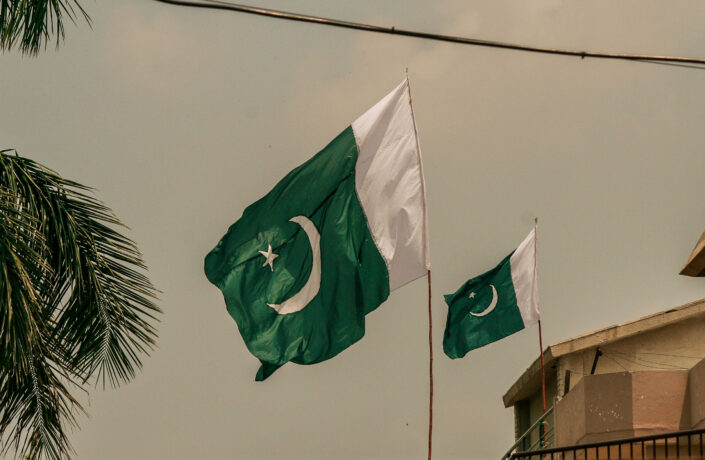
Yesterday’s attack by the Islamists, led by Pakistan, had the subtlety of a thin-bladed knife slipped silently under the ribs of the Human Rights Council. The amendment to the resolution to renew the mandate of the Special Rapporteur on Freedom of Expression requires him:
“To report on instances in which the abuse of the right of freedom of expression constitutes an act of racial or religious discrimination …”
For Canada, who had fought long and hard as main sponsor of this resolution to renew the mandate of the Special Rapporteur, this was too much. The internationally agreed limits to Freedom of Expression are detailed in Article 19 of the legally binding International Covenant on Civil and Political Rights. If abuse of freedom of expression infringed anyone’s freedom of religion or belief, for example, it would fall within the scope of the Special Rapporteur on Freedom of Religion or Belief. To add it here was unnecessary duplication, and “Requesting the Special Rapporteur to report on abuses of [this right] would turn the mandate on its head. Instead of promoting freedom of expression the Special Rapporteur would be policing its exercise … If this amendment is adopted, Canada will withdraw its sponsorship from the main resolution.”
Canada’s position was echoed by several delegations including India, who objected to the change of focus from protecting to limiting freedom of expression. The European Union, the United Kingdom (speaking for Australia and the United States), India, Brazil, Bolivia, Guatemala and Switzerland all withdrew their sponsorship of the resolution when the amendment was passed. In total, more than 20 of the original 53 co-sponsors of the resolution withdrew their support.
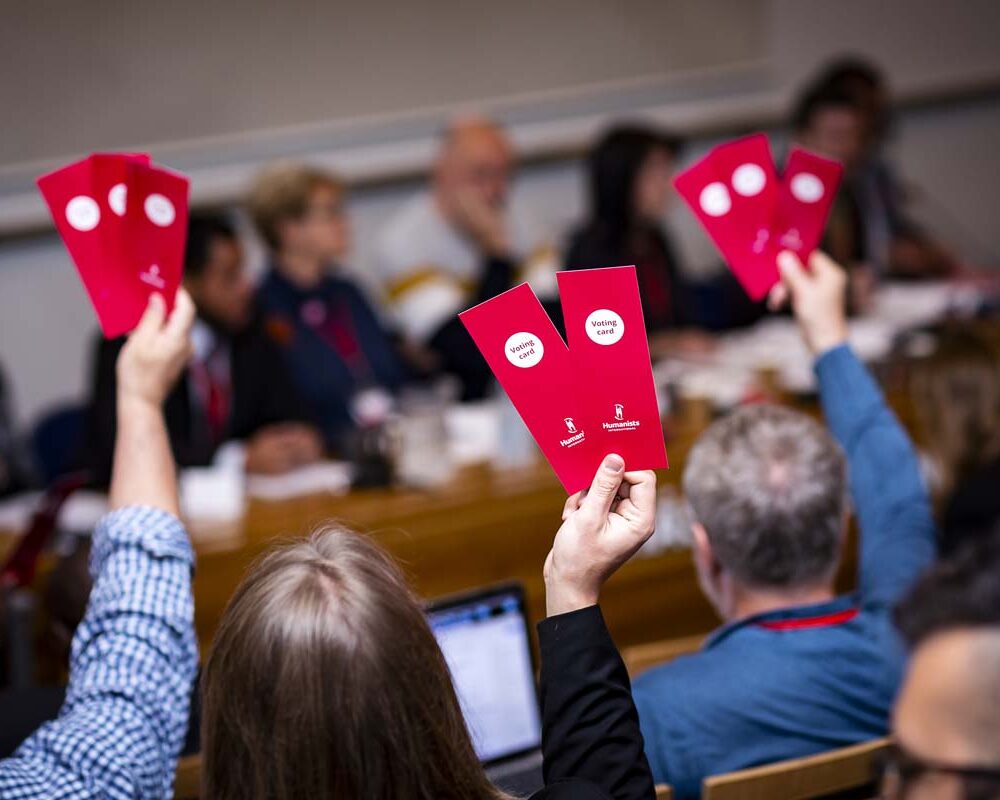
On the vote, the amendment was adopted by 27 votes to 15 against, with three abstentions.
The Sri Lankan delegate explained clearly his reasons for supporting the amendment:
“.. if we regulate certain things ‘minimally’ we may be able to prevent them from being enacted violently on the streets of our towns and cities.”
In other words: Don’t exercise your right to freedom of expression because your opponents may become violent. For the first time in the 60 year history of UN Human Rights bodies, a fundamental human right has been limited because of the possible violent reaction by the enemies of human rights.
The violence we have seen played out in reaction to the Danish cartoons is thus excused by the Council – it was the cartoonists whose freedom of expression needed to be regulated. And Theo van Gogh can be deemed responsible for his own death.
When the main resolution was put to the vote and was adopted by 32 votes in favour, none against, with 15 abstentions.
I used to wonder what States who felt it necessary to kill people because they change their religion thought they were doing in the Human Rights Council. Now I know.
The Universal Declaration of Human Rights is dead.
Freedom of Expression
Freedom of expression is that right which – uniquely – enables us to expose, communicate and condemn abuse of all our other rights. Without freedom of expression and freedom of the press we give the green light to tyranny and make it impossible to expose corruption, incompetence, injustice and oppression.
But however important freedom of expression may be for us who live in the West, its overwhelming importance for those who live under the tyranny of Islamic law was highlighted by a courageous group of 21 NGOs from the Islamic States who issued a statement yesterday appealing to delegations to oppose the amendment [1].
The NGO community now needs to think carefully about what purpose can any longer be served by continuing our engagement with the Human Rights Council, and by fighting for values that are no longer accepted within the UN system. I have personally been involved with the Human Rights Commission and Council for the past five years and can see little benefit in continuing. Our well-argued position papers are ignored, our speeches are interrupted with repeated and irrelevant points of order, and we are not even supported in our efforts by the western delegations who, shockingly, did not even vote against the resolution, but abstained.
The wafer-thin sham of an international consensus on the promotion and protection of human rights has finally been exposed for what it was – a sham. The fragmentation of human rights now appears inevitable. The proposed Islamic Charter on Human Rights (read “Duties towards Allah”) will certainly go ahead, as will the creation of a parallel Islamic Council on Human Rights. But the OIC will nevertheless continue to attend and dominate the UN Human Rights Council, thereby ensuring the continuing emasculation of the Council and its descent into total irrelevance.
Vieira de Mello’s wish
Just five months before he and more than 20 of his colleagues were killed by a terrorist bomb in Baghdad, the then High Commissioner for Human Rights, Sergio Vieira de Mello, wrote:
“Membership of the Commission on Human Rights must carry responsibilities. I therefore wonder whether the time has not come for the Commission itself to develop a code of guidelines for access to membership of the Commission and a code of conduct for members while they serve on the Commission. After all the Commission on Human Rights has a duty to humanity and the members of the Commission must themselves set the example of adherence to the international human rights norms – in practice as well as in law…”
States who are genuinely concerned with human rights should immediately withdraw from the Council until such time as all member states as well as those offering themselves for election agree to honour their pledges, and undertake to expel any member state which, having been put on notice regarding its human rights record, fails to put its house in order within a reasonable timescale. Failing this, what better tribute to Sergio de Mello could there be than to create an alternative organisation – Kofi Annan’s organisation of the willing - whose members agree to adopt Sergio de Mello’s guidelines and code of conduct – and are actually held to account.
Roy W. Brown is IHEU representative at UN, Geneva, and former President, IHEU
[1]http://www.article19.org/pdfs/press/petition-hrc.pdf
Trackback URL for this post:
- Login or register to post comments
- Printer-friendly version