The Necessity of Atheism: Impressions from the 6th World Atheist Conference
To assert atheism as a social programme atheists must practise and show at the individual level that whatever good is done in the name of God and religion can also be done without God and religion.
Shelley’s Theme
The theme of the 6th World Atheist Conference held at the Atheist Center in Vijayawada, India was The Necessity of Atheism which is the title of a pamphlet published by the British poet Shelley in 1811. As well as being a fine lyrical poet, Shelley was a radical thinker, which damaged his success as a poet. He put a fuller version of his thesis into the long poem Queen Mab – which led to its prosecution for blasphemy on a number of occasions. A full account of Shelley’s life and the specific pamphlet is found in articles in the fine souvenir book published with the conference, with articles by Dr. Vijayam (Executive Director of the Atheist Center), Vikas Gora (grandson of Gora), Roy Brown (the former President of IHEU) and many other important Humanists and atheists. Two very distinguished thinkers whose articles are included are Richard Dawkins and Amartya Sen.
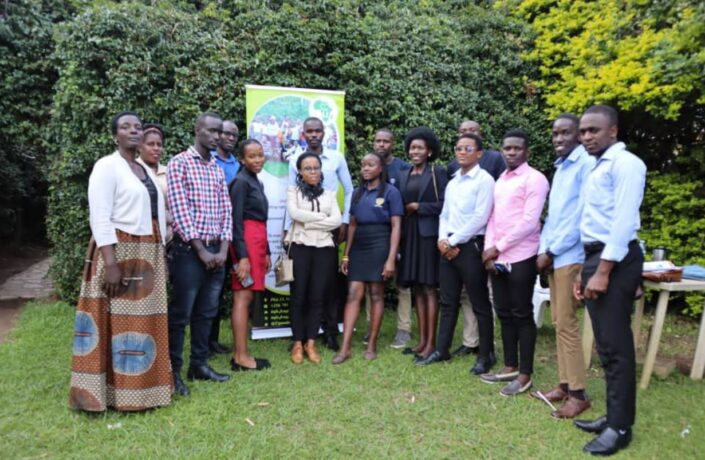
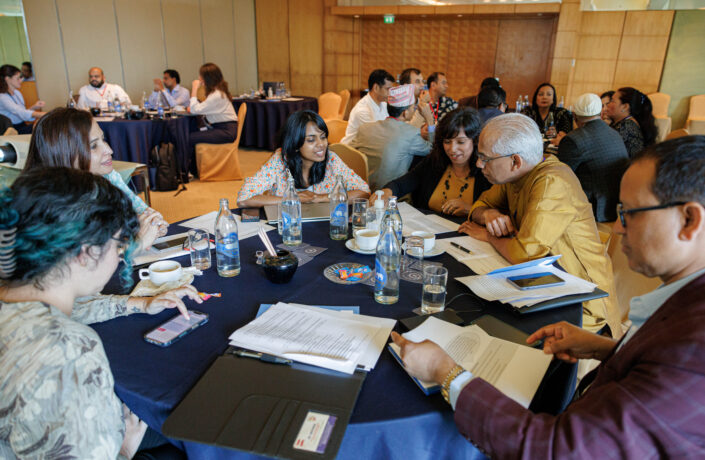
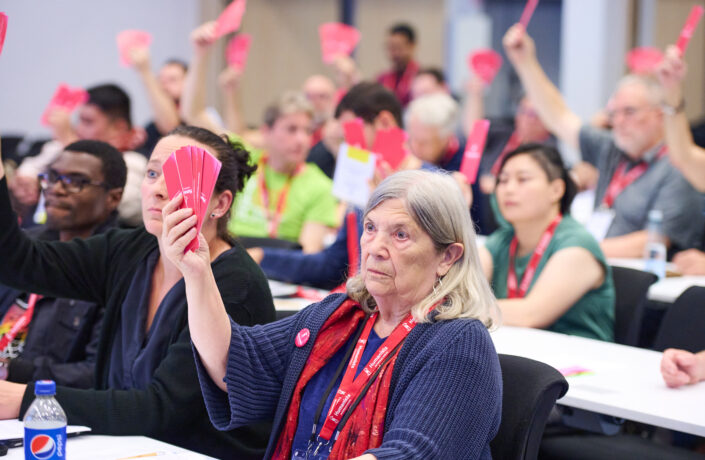
The events took place in the Siddhartha Arts and Science College in Vijayawada. Several hundred attendees gathered, including international representation from Iraq, Norway, Finland, Germany, Belgium, UK, USA and New Zealand.
The Argumentative Indian
Three days of speeches gave the participants more than enough to think about. Although some speeches were very good, I would have liked more interaction between the dais and the floor, between the speakers and the listeners. Amartya Sen has written about the tradition of discussion and debate in India in The Argumentative Indian: there was a great deal of debate around the conference – arguments and disagreements and new friendships being set up all over the place.
At the inaugural session the souvenir book was launched as well as a new English translation of Gora’s first Telugu work Atheism: There is no god. Lavanam, who assisted his father Gora as a young man writes in the introduction that the original book in 1941 “created ripples in the then Andhra society”. Let us hope these ripples continue ever further with the new translation.
IHEU’s Support
Sonja Eggerickx, the President of IHEU, played a vigorous part in the conference and praised the activities of the Atheist Centre. She made it clear that the IHEU is now planning to focus much of its activity in Asia and Africa. They were very concerned with ‘untouchability’ in India. During the conference Ms. Eggerickx inaugurated the new four-storey building of the Gora Center for Social Progress which was funded by IHEU.
Among the speakers, Dr Volker Mueller, President of the German Free Religious Association, stated that humans as social animals needed the ideas of freedom and moral responsibility found in the Atheist Centre. Dr. Kjartan Selnes, a sociologist from Norway, urged that religion would always have a role to play because of its cultural and existential function.
Lavanam, who attended all six World Atheist Conferences, pointed out that in order to assert atheism as a social action programme it is necessary for individual atheists to practise and show to everyone that whatever good is done in the name of god and religion, can also be done without god and religion.
Social Work and the Scientific Temper
This indicates the most remarkable aspect of the Atheist Centre – its wide range of social work. On my way from Vijayawada I stopped at a centre of village development and heard about the education, health care, skill programme and improved agriculture – all of which is aimed to make each village sustainable without long term assistance. The hospital, women’s development programs, prisoner reform, and emergency relief and reconstruction – in particular with the damage caused by the tsunami – are all an admirable part of the Centre’s activity.
At the concluding session the guest of honour was P. M. Bhargava, Vice-chairman of India’s National Knowledge Commission and founder director of the famous Center for Cellular and Molecular Biology in Hyderabad – known as one of the pioneers of DNA finger-printing technology and incidentally, a co- discoverer of HIV. He spoke of the necessity of the scientific temper. It is essential for the future, especially where people who believe in religion are clinging to the past. “Fear of the unknown leads to various kinds of god.” The theory of evolution shows that we are 99 per cent chimpanzees – a remark which brought laughter, either because we are pleased to be virtually chimpanzees or because we are glad that chimpanzees are 99 per cent human.
Roy Brown the former President of IHEU, spoke of his experience in the slums of Mumbai. He said that the situation was appalling, the degradation terrible. He said that Mahatma Ghandi was once asked what he thought of European civilisation and answered “it would be a good idea”. “Well if what I saw in Mumbai is the best that India can do after 5,000 years of civilisation, give me European civilisation every time” was Brown’s response The disease and malnutrition in babies and young children could be dealt with given action. Dealing with such a situation he said should be the priority of every human being.
One of the most original talks was on the subject of rationalism and the cinema. Young people were represented by Gurinder Singh Azad from the Punjab: he urged the need for critical thinking and also complained about the saffronisation (Hindu nationalism) of education, with, for instance, diplomas in astrology and palmistry being presented at some universities. Bill Cooke, Editor of Open Society from New Zealand described humanism as a “winged anchor” that is the flight of poetry and art being kept on earth by science.
A concluding declaration set out priorities for atheists, pinpointing problems such as “climate warming, population pressure, growing inequalities, and the resurgence of religions and ethnic hatred … which affect us all.” The specific points made were the autonomy of the individual, responsibility for the natural world, equality of men and women, the right to follow any religion or belief, secularism or the neutrality of the state towards religion, freedom of expression, universal right to education, the rejection of violence in disputes, and freedom of inquiry in all spheres of life.
The whole programme was held together by the indefatigable Vijayam, leader of the Centre.
Education and Entertainment
Not the least part of the conference was the entertainment. I have seen a number of didactic dances at these events and they never fail to impress – not only the beauty of the colour and movement but the ability to get across a message – enhanced our enjoyment. There was also a demonstration of the way religious gurus deceive their followers with magical tricks. Previously I have seen such a show conducted by the veteran B. Premanand, but alas he was too ill to attend. However, Narendra Naik presented The Myth of Miracles with great aplomb. An impressive young conjuror added to the occasion with an accomplished display.
Bill Cooke and I both said that the earnestness of social reform should be leavened by the qualities of happiness and joy. Perhaps the idea was in the zeitgeist. Gora felt that positive atheism should influence all our actions and daily life. In an introduction to the Panchatantra, there is a phrase “the harmonious powers of man, a life in which security, prosperity, resolute action, friendship and good learning are so combined as to produce joy.” We must take fellowship and joy away from such a Conference.
But we should also remember the suffering in the world and the imperative – which the Atheist Centre follows – to deal with global social injustice.
Jim Herrick is former Editor of New Humanist and of the International Humanist News.