The Plight of a Muslim Intellectual

 Islamic states

An Alien at Home

When a Muslim intellectual – reared and educated in a Western country – returns home, he finds himself in an alien land. His way of life and his outlook on the world is not approved by those with whom he has social relations, and more especially by those with whom he lives. In social gatherings, he remains guarded, fearing his views may cause offence. Owing to differences in tastes and convictions, he is virtually treated as a pariah. He cherishes ideas which are anathema to the public. At best, he is viewed as a campaigner of Western liberal thought, culture, and civilization.

During his stay in the West, the intellectual was inspired by the democratic traditions. To his utter chagrin, his country and most of the Islamic World are ruled by authoritarian and oppressive regimes, masquerading as democracy. Contempt for democracy, covert or overt, is rife among the beneficiaries of military dictatorship, sham democracies, mullahs, and politicians who have no chance of winning elections.

The Plight of the Dissenter

Politically motivated charges are framed against advocates of democracy and human rights. The state apparatus is used to intimidate dissidents and activists. Without a fair trial, the courts assign severe punishments to them. In detention, they are denied free access to effective counsel, and facility of proper treatment. They spend long periods in solitary confinement, without permission to read or write. They are not even allowed to phone their relatives.

The intellectual is pained to read news about the treatment meted to dissidents and reformists in the Islamic world. Mohsin al-Awaji, the Saudi scholar, was detained with scores of Islamists and writers during the 1990 for four years for demanding introduction of democratic reforms into the kingdom. For signing a petition calling for constitutional reforms that ensure people’s participation via an elected parliament, harsh prison sentences were awarded to three Saudi reformists. Ali al-Demaini, Abdullah al-Hamed and Matrouk al-Faleh were sentenced to nine, seven and six years of imprisonment, respectively.

Ayman Nour, the main challenger to President Hosni Mubarak in the forthcoming election, was jailed on trumped charges of forging signatures on election petitions. He was subjected to ill-treatment and tortured. Likewise, Saad Eddin Ibrahim was sentenced to seven years imprisonment in Egypt for writing about human rights and democracy. Neila Charchour Hachicha, a Tunisian activist, is under police surveillance for speaking at the American Enterprise Institute about the need for democracy.

As freedom of expression is conspicuous by its absence, the intellectual is not free to air his views, fearing social hostility, which his opinions may provoke. He incurs the wrath of the government if he spreads views contrary to official policy. He also becomes victim of religious fascists if he disseminates views inconsistent with their beliefs. As a consequence, he either conceals his beliefs or suffers persecution and harassment.

To conceal their wrongdoings and crimes, the governments gag their critics by imposing restriction on free speech. Because journalists can mould public opinion, they become a special target of state oppression.

For instance, Iranian journalist Akbar Ganji was arrested in 2000 for implicating leading figures, including former President Hashemi Rafsanjani and former intelligence minister Ali Fallahian, in a series of political killings in 1998. He was also accused of taking part in a conference in Berlin at which political and social reforms in Iran were openly discussed. Because of prison conditions, his health deteriorated. He was sentenced to six years in prison in 2001.

Fawaz Turki, a senior columnist, was unceremoniously fired by Arab News – a leading Saudi-based English newspaper. His criticism of Egyptian leader, Hosni Mubarak, after he clamped down on human rights activists, resulted in his dismissal. Furthermore, his report about the atrocities Indonesia had committed during its occupation of East Timor was considered too outrageous.

As a writer, for harbouring liberal and progressive ideas, the intellectual is banned from presenting his work on television, radio or the print media. Writing even on innocuous topics may result in public persecution or prosecution for blasphemy – a crime for which he may be murdered by a mob or sentenced to death.

Fatwas Against Freedom

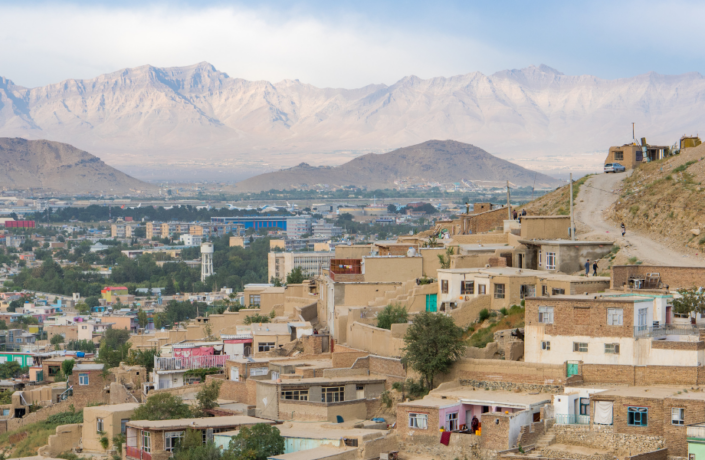
During his studies, the intellectual embraced the idea that religious freedom is a vital element of democracy. To the contrary, in some Islamic countries, apostasy is a crime punishable by death, in others where law allows conversion, an apostate is murdered by a mob. The recent verdict of an Afghan court proclaiming death sentence to Abdul Rahman, a Christian convert from Islam, is a case in point.

Instigated by a fatwa, religious zealots murdered Farad Foda – a well-known writer, and columnist in Egypt. Before his death, Farag Foda was declared an apostate. His death went unpunished because Mohammad Al-Ghazali, a religious scholar, declared that it was not wrong to kill a foe of Islam. The court followed his view and those who killed Foda were released.

Many people accused of apostasy are not converts at all, but rather Muslims who have questioned fundamentalist interpretation of Islam and called for a more tolerant approach. For example, the Sudanese Islamic scholar, Mahmoud Mohamed Taha, was executed for apostasy in 1985 after he published a leaflet calling for the reform of Islamic law to make it more just and humane.

Slavery

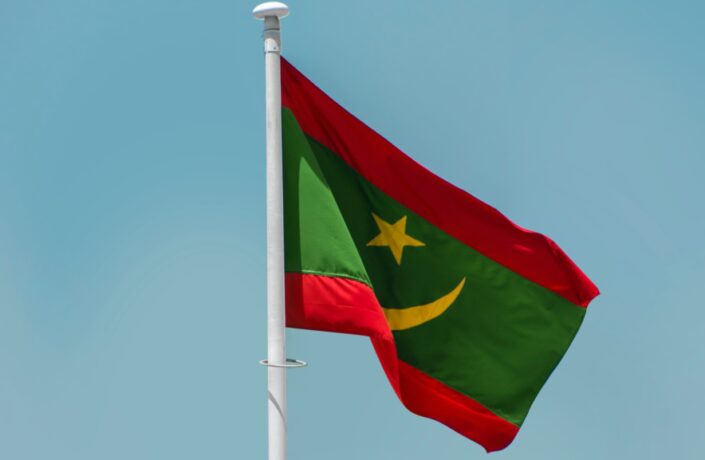
Much to the intellectual’s annoyance, slavery still survives in some Muslim countries. The government of Mauritania abolished slavery more than 20 years ago.

But despite the government’s persistent denials, the practice continues in one form or another. Sudan has a long history of slavery. The slave trade still persists and the lengthy civil war that resumed in 1983 has added a new dimension to the strife. Government backed armed militias raid to capture children and women, who are treated as slaves. They are forced to work in homes and in the fields, punished when they refuse, and abused physically and sometimes sexually.

Although slavery was abolished in Saudi Arabia in 1962, the practice still flourishes there. The intellectual is shocked to learn that ranking Saudi religious authorities sanction slavery. For example, Sheikh Saleh Al-Fawzan, a leading Saudi government cleric asserts that slavery is a part of Islam; slavery is a part of jihad and jihad will remain as long as there is Islam. The cleric also insists that Muslims who contend that Islam is against slavery are infidels! His religious books are used to teach five million Saudi students, according to Saudi Information Agency.

The intellectual is appalled to see that inhuman punishments, such as stoning to death, amputation of hands, and flogging, continue to remain on the statute books in some Islamic countries. He is shocked to read that a Saudi Arabian court sentenced an Indian migrant worker to have an eye gouged out as punishment for partially blinding a Saudi man in a brawl.

Women and Children

Emancipation of Western women made a profound impression on him. Much to his dismay, the intellectual finds that women are considered inferior in all respects to men: physically, morally, and intellectually. Women are greatly disadvantaged – both legally and socially – and oppressed in Muslim countries. Women struggle to exist in an environment characterized by lack of equal rights and equal opportunities. They are subjected to unfair treatment in matters of marriage, divorce, inheritance, and while appearing as a witness in a court of law. Women are debarred from holding a public, civil, military or ecclesiastical office. They cannot assume the office of the head of the state or judge or lead prayers.

In Saudi Arabia women are forbidden to drive! In some countries, women cannot work, and leave their houses without their fathers’ or husbands’ permission. Wife beating is quite common, and most men consider it their divine right. The veil is imposed on women in many countries, either legally or under cultural and social pressure.

Child-brides are a common sight because girls are forced to marry at an early age. Girls, who marry before attaining physical and psychological maturity, are more prone to the risks of maternal fatalities, miscarriages, and infant deaths. Given that facilities for obstetric care are inadequate in most of the Islamic countries, teenage mothers suffer to a great extent. The practice of marriage of girls at an early age is strongly supported by the clergy. Children are considered the property of the father with the mother being merely the caretaker. Upon divorce, fathers win custody of boys over the age 7 and girls on the onset of puberty.

Monogamous marriage is the very basis of Western civilization, while polygamy is legalized and socially acceptable in most of the Islamic world. The intellectual is baffled to see that marriage is restricted to the matters of sex and subsistence; somehow ideas of companionship, love and understanding are alien to the Islamic mindset.

Sexual Segregation

Segregation of the sexes is enforced in most of the Islamic countries, legally or under the pressure of the community. In addition to curtailing mobility of women, this practice is causing them numerous handicaps and disabilities: denial of easy access to educational institutions, especially those imparting higher education; curtailment of job opportunities; and debarring women from pursuing a political career. Adherents of gender segregation believe that sexual desire is easily aroused in both sexes if a man is left alone with a woman – unregulated sex can lead to mayhem and disorder. Therefore, a woman must not ride in a car alone with a hired driver, and a female servant should not stay in the house alone if men are present.

A fire at a public school for girls in Mecca, Saudi Arabia, resulted in the death of fourteen girls. Religious police prevented some girls from leaving the burning building because girls were not wearing abaye – a black coat worn with a headscarf and a second scarf over the face. The police force also beat firemen who were attempting to enter the building while the students were still inside. Some deaths could have been avoided had the firemen not been stopped by the police, according to the Saudi Gazette daily. The watchman refused to open the gate of the building, preventing the girls’ exit. To protect their modesty, every public building for Saudi women is guarded by men.

Islamic protesters tried to disrupt a mixed-sex marathon in Pakistan. The government had to deploy thousand of policemen to protect participants of the marathon. BBC reported that some 500 women took part in the race, although 2000 due to run had backed out for fear of violence. The marathon was organized to raise funds for the victims of the earthquake which devastated part of northern Pakistan and Kashmir.

Islamic protesters had demanded women be barred from taking part, arguing their presence was against the basic tenets of Islam.

Honour Killings

Honour killings are carried out by men against women in their family for suspected sexual transgression. Even women who have been raped are killed for defiling the family honour. The intellectual is horrified to note that the custom of female genital mutilation is still practiced in African countries, the Middle East, Malaysia, and Indonesia.

In most of the Islamic countries women do not have the right to vote; where the law permits this, male members do not allow them to cast their vote. In Pakistan, the incumbent political party and the opposition contesting an election agree to exclude women from the voting process in some constituencies.

Democracy protects the rights of minorities. The intellectual is dismayed to observe that the rights of minorities enshrined in Universal Declaration of Human Rights and other such convents are consistently violated in Iran, Pakistan, and Saudi Arabia. In three countries, the rights of their Bahai, Ahmadi and Shiite minorities have been denied, respectively. The record of other Islamic states in this respect is not very commendable either.

As a teacher, he does not enjoy the intellectual freedom, essential to the proper fulfilment of his function. If he teaches topics such as Darwin’s theory of evolution, he is labelled as an infidel or apostate and faces political action by armed groups of religious fanatics, who demand his expulsion from the institution where he is working. Saudi universities are not allowed to teach the theory of evolution.

The intellectual is disturbed on observing that some educational institutions are in the grip of dogmatists, who practically control every aspect of life on the campus. They indoctrinate students and indulge in violent activities, such as intimidation of vice-chancellors, and beating of faculty members and students who oppose their philosophy and resist their hegemonic control.

Art

If he admires art, he is told that all art is immoral except calligraphy. Strong taboos against dance, music, painting, and sculpture infuriate him. Only artists toeing the official line are permitted to present their work on the print and print media. Officially approved art fails to attract his attention. The tendency to jettison pre-Islamic heritage and history, such as ancient Egyptian monuments and artefacts, baffles him.

He reacts with grief and sadness on learning that Afghanistan’s Taliban have destroyed two gigantic statues of Buddha at Bamiyan. Carved out of the solid sandy rock in the third century C.E.., they were among Asia’s great archaeological treasures. The Taliban considered them offensive to Islam and boosters of idolatry. The fatwa of Grand Mufti Ali Gomaa, one of Egypt’s highest authorities, declaring that Islam forbids ancient sculptures, annoys him. His predecessor, Mufti Nasr Farid Wasel, issued a fatwa that forbade beauty pageants.

The Central Dilemma

The central dilemma for the intellectual is this: How can he express his views without being persecuted or punished? How can he reconcile the liberal views he acquired during his stay in the West with the beliefs he inherited from his ancestors?

He survives in hostile surroundings by practicing restraint. Knowing that he cannot bring people around to his point of view by appealing to their reason, the intellectual supports his views with scriptural writings or by modifying Islamic tenets so as to bring them in conformity with modern thought.

He even goes to the extent of presenting un-Islamic ideas as Islamic by invoking the concept of ijtiehad. Calling for an end to literal readings of Koran, he argues for a new interpretation of the sacred text, which is in harmony with liberal concepts, such as human rights, democracy, equality before law, religious freedom and freedom of speech.

For instance, in an Islamic system, conceived by the clergy, women do not enjoy equal rights and status with men. The intellectual does not reconcile to this belief and in accordance with the thought of his Western mentors declares that Islam guarantees equal rights to the two sexes. Similarly, he justifies polygamy by maintaining that it was intended for the protection of orphans and widows.

He explains slavery by assuming that Islam had adopted a gradual process to eliminate the institution because of social conditions prevalent in Arabia at that time. An immediate order of prohibition would have created immense social and economic problems. He mentions steps prescribed by Islam for the welfare of slaves which would, in his opinion, result in eventual elimination of the evil: appeal to the Muslims to liberate as many slaves as they could and to treat slaves in a just and humane manner; for the atonement of many sins manumission of slaves was divinely ordained. Despite all these commands, slavery has survived in the Muslim world.

According to all the traditional sects of Islam, apostasy is punishable by death, but the intellectual argues that Koran does not prescribe any punishment for renunciation of faith. Declaring them as illiterate, he challenges the authority of the clergy.

However, the clergy, schooled in the essentials of Koran and Hadith, support their claim with stronger religious evidence than the Western educated intellectual.

Such, alas, is the plight of the Muslim intellectual!

Dr. Hasan Abbas is a physician, Humanist and writer.