Verbatim transcript of AWE statment to UN meeting on Racism

 United Nations news

Verbatim Transcript from the UN tape (in English): Monday (from about 4:30 p.m.), 23 January 2006.

Intergovernmental Working Group on the effective implementation of the Durban Declaration and Programme of Action [Racism] - 4th Session: 16-23 January 2006 - Palais des Nations (Room XXII)

Chairman: Ambassador Juan Martabit (Chile)

Although delivering a joint statement for 3 NGOs, the Chairman requested the NGO speaker beforehand to restrict himself to 4 or 5 minutes. The passages in square brackets that were not said have been left in the text. There was one 'point of order' from the representative of Sudan and another from Iran's representative.. The Chairman intervened twice at some length. The text below is a verbatim transcript from the UN tape (English interpretation). The Chairman spoke Spanish, Sudan's delegate Arabic, the Swiss minister French, Iran's delegate in her English, and Mr. Littman spoke English [he has added a few comments in brackets].

ASSOCIATION FOR WORLD EDUCATION
Case Postale 205 - 1196 Gland - Switzerland

Intergovernmental Working Group on the effective implementation of the Durban Declaration and Programme of Action: Chairman: Ambassador Juan Martabit (Chile)

Thematic analysis on Racism and Globalization (item 6): Debate: 23 January (from 4:30pm)
Statement David G. Littman: Representative of the Association for World Education

[Because of the 5 minute limitation, only words in bold type were pronounced; the rest is left in brackets.]

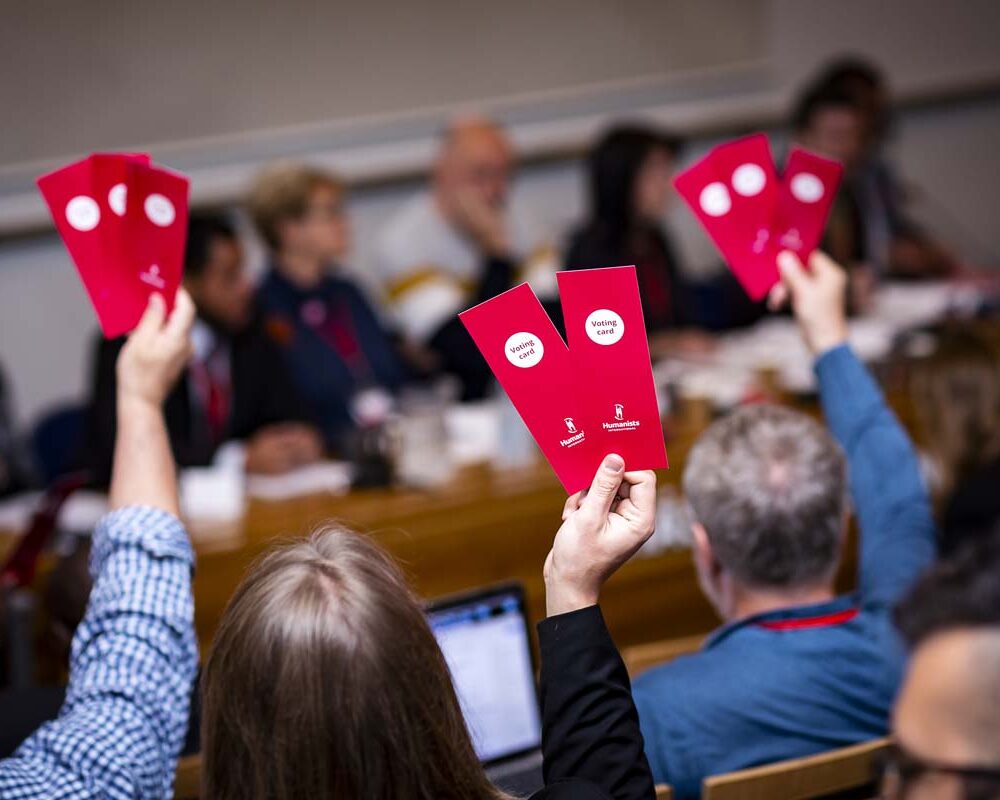
Mr Chairman, this is a joint statement on behalf of three NGOs: the Association for World Education, the International Humanist and Ethical Union, the Association of World Citizens. We wish to make a few comments to the Special Rapporteur on Racism - and ask him three specific questions [re: Darfur / Iran / 'Islamophobia']

But first let me say how shocked we were to read the remark by Roman Jäggi of the Swiss UDC party - reported in the Le Temps of Geneva on 14 January. He took umbrage at your criticism, Sir, of certain human rights issues in Switzerland because they emanated from "...a Senegalese." The same daily published a condemnatory reaction to this racist remark [letter from the Secretary-General of 'Carrefour de reflection et d'action contre le racisme anti-noir,' Le Temps, 19 January 2006].

We have consistently condemned ad hominem attacks at the UN, as indicated in our text [below].
Mr Chairman, your spontaneous no-nonsense reaction last Monday to one such unruly example was in that very spirit, and - as NGOs - we wish to thank you sincerely for upholding UN rules.

[In a written statement, we covered this same issue in detail (E/CN.4/2003/NGO/229: Improving UNCHR/ NGO relations: end ad hominem attacks on NGO and other representatives), and have recently submitted a written statement to the 62nd session covering this matter, and also various suggestions on NGO rights in a future Council (E/CN.4/2006/NGO/1). In view of the seriousness of such personalized attacks, especially at the Commission and the Sub-Commission, we have appealed for a legal opinion to be issued by the competent UN authority, and for a new general rule of procedure to be introduced by which any personal attack against a speaker would be ruled 'out of order' by Chairpersons of UN bodies.]

I. In regard to the destruction and desolation policy in Darfur, to which we referred in our statement at the opening meeting - all our texts, including this one are on the outside table - we did not quote the allegations provided in your Report to the Commission [CN.4/2005/18/Add.1], in which you refer to a consistent pattern of racial discrimination.

[Recently, the Secretary-General's Special Representative for Sudan, Jan Pronk, declared: "Looking back at three years of killings and cleansing in Darfur, we must admit that our peace strategy so far has failed. All we did was picking up the pieces and muddling through, doing too little too late." (13 Jan. UN website). And UN High Commissioner for Refugees, Antonio Guterres, commented a day before that Darfur represents "the most pressing political and humanitarian problem we have in Africa today." (Reuters, 12 Jan.) And on the very day this 4th session began, he was again quoted by Reuters as saying: "In my opinion, Darfur is the most dangerous crisis point in Africa and in the world in general," adding that the "deteriorating situation in [Darfur] threatens [African] regional stability." (Reuters, 17 Jan.).
This was also the opinion of AU Commission Chairman Alpha Oumar Konare of Ethiopia on 9 January 2005.]
On the 10th of December - Human Rights Day- we appealed to African Union Representatives at the UN in Geneva, expressing our astonishment that the AU Chairmanship for 2006 might go to Sudan, [a State whose policies and practices flout universally recognised human rights standards]. 50 African human rights and humanitarian organizations also expressed their total dismay, and we are still hoping that common sense will prevail on such a crucial issue for the stability and peace of Africa, especially as yesterday, according to reports by AFP [Sudanese police target rights groups before African Summit] and Reuters [Rights delegates detained cat AU summit in Sudan], Sudanese police targeted human rights groups even before the opening of the AU Summit in Khartoum today.

Our 1st question, Sir, relates to this ghastly, racist tragedy - qualified as 'genocide' by a 566 to 6 vote in September 2004 by the Parliament of the European Union, and by others. Sir, have you received a reply from the Government of Sudan, and - in view of recent UN reports to which we have referred - will you now recommend that article 2 of the Convention on the Prevention and Punishment of the Crime of Genocide be invoked for Darfur? [1st 'point of order': Sudan]
----------------------------------------------------------------------------------------------------------
Chairman:
Mr. Littman, there is a point of order. Sudan has the floor on a 'point of order'.

Sudan (Minister Counsellor O. Omer Dahar F. Mohamed or Counsellor El Mubarar Salah):
Thank you, Mr. Chairman, I would ask the assistance and the help on this debate. This meeting is to last from 3:00 to 6:00 p.m. In accordance with the agenda, the debate is globalization and racism. Mr. Chairman, could I ask you whether a statement like the one which is being made by a distinguished speaker - is that statement a part of the debate of globalization and racism, Mr. Chairman?

Chairman:
Yes, delegate of Sudan. Thank you for that 'point of order' and the way that you formulated it. I will say to Mr. Littman that he should confine his remarks to the subject of our debate and I would go a bit further. Mr. Littman, are you listening? [Speaking in English] Listen to me. I will speak slowly because I am thinking word by word what I will say to you. [Speaking Spanish again, interpreted into English]: It is not a debate on Sudan here. The debate that we are engaged in right now is general in nature. Please do not focus specifically on Sudan. If you wish to speak specifically about Sudan, than the NGO that you are representing could make a statement along the lines that you have been making in the General Assembly or in the Security Council of the United Nations [NGOs don't speak at either the GA ,or the SC], or in the Commission on Human Rights under the appropriate item of the agenda. [It was then not certain whether there would be a final 62nd 6-week session of the CHR from mid-March.] Right now we are meeting in a Working Group. I'm trying to be extremely constructive and I hope that all the delegates feel comfortable with this debate as it is. You - and we are also referring to the delegate of Sudan as well - you may be right in what you are saying. I am not saying, Mr. Littman, that you are not right, but I'm saying that this is not the right occasion to make this statement. We are in a working group, Mr. Littman, and I would like to extend.........[incoherent 5 words interpretation]. A Working Group has a different type of atmosphere. [This WG is under the auspices of the 62nd session of the Commission on Human Rights.] This is a Working Group, not a place for confrontational dialogue. If we were to engage in such confrontation, we would never achieve any of our goals. The objective on working group is to engage in a debate, not to have a confrontation of debate, even if the delegates in that confrontation may be right in some of their comments. In every part of the world now there are problems, in some areas of the world the problems are more serious than they are elsewhere but, at any rate, these are all delicate issues, because we're speaking about problems of human beings and violations of human rights. These violations occur everywhere in the world. In some cases these violations are worse than elsewhere. There are places in the world where there are real risks of genocide and true genocide. I'm not prejudging where this is happening or where there are serious threats or not, but the Working Group's task is not to discuss these issues. I would invite your NGO, with all due respect - and I have all due respect for you as well - you have other bodies: the UN General Assembly, the Security Council, the Commission on Human Rights [the Chairman here repeats himself], and here I am trying with the delegates seated here to do something different. None of the participants except for a few exceptions are ambassadors - no one can react in the appropriate way. We're talking about high-level officials, who have come together in a Working Group and have a very good understanding of the issues and have come, with a spirit of cooperation, to move forward on crucial issues. Have I made myself understood, Mr. Littman?

Mr. Littman: Yes, Mr. Chairman, may I continue.

Chairman (speaking in English):
Yes, please, you can continue, but please don't mention Sudan any more - it's clear? (laughter)

Mr. Littman:
Sir, I have only finished my first point to the Special Rapporteur.

Chairman:
Only the first point - I though you had finished.

Mr. Littman:
I did refer to the remarks of the Special Rapporteur on Sudan.

Chairman:
Please do not refer to Sudan and any particular country, please.

Mr. Littman:
Well, the 2nd point refers to a specific case, but I did refer to the racial discrimination remark of the Special Rapporteur on racism in reference to the country which you just named, which I will not. (general laughter)

II. Sir, on a second issue, and regarding your Report to the General Assembly of 19 August 2005 [A/60/283], we were struck by your analysis [§B 19] of a thematic discussion on genocide, which is quoted fully in our text: [ "the Special Rapporteur stressed the importance of achieving intellectual and cultural agreement on the need to prevent genocide." You referred, inter alia, to "the importance of memory in the prevention of genocide.... Forgetting, hiding or obliterating the history of genocide perpetrated against a people also contributes to weakening the universal struggle against genocide."]

Mr Chairman, at a Teheran conference on 26 October ['The World without Zionism'], the Iranian president called for Israel to be "wiped off the map". He predicted: "very soon the stain of this disgrace will be purged from the centre of the Islamic world." He warned peacemakers: "Anyone who recognizes Israel will burn in the fire of the Islamic nation's fury. (*)
[2nd 'point of order: Iran]

Chairman:
Mr. Littman, I think again your points are related specifically to countries where you may [incoherent words by interpretor], that you have every right to consider that there are problems of human rights, but please do not cite those countries in this room. I'm going to be as frank as possible because we're not going to get anywhere. The delegate of Iran is making a 'point of order.' She is right because she is going to respond, then you are going to respond and we're not going to get anywhere. Mr. Littman, listen to me, and all delegates. I'm here to contribute in my humble way, with my time and my competence, to build bridges, to deal with extremely complex issues. I don't think that anyone...everyone has the right to deal with problems, but please do not cite specific countries. You have mentioned Professor Doudou Diène and I will ask Doudou Diène to respond to the questions you have raised. Your problems with Sudan and Iran please raise them in a different meeting, not here. I'm going to be very blunt with you, and with everyone - if we're going to get into a country situation debate here at this Working Group, we will not make any progress. This doesn't mean that I am excluding or turning a blind eye to the problems that exist in different countries. If you have any positive examples to cite, you could mention those, but please do not create an atmosphere that would create tension and which will send us into a deadlock. I hope that you've finished Mr. Littman. Thank you very much. I will like to ask Prof. Doudou Diène...

Mr. Littman (microphone button not pressed, but his voice is just audible on the tape):
You have cut me, Sir. I am taking part in a debate next month in Holland regarding what is happening at the United Nations. To be stopped on such an issue, when I have not yet begun, is such that - after 20 years experience at the UN - I find incredible! Sir, if you allow me to continue, I shall be careful not to name another State.

Chairman:
OK, continue, please, but please don't mention any crucial issues of the international agenda of today by the name of the country. Continue, please. [This is the most extraordinary -and noteworthy - remark made by the Chairman.]
--------------------------------------------------------------------------------------------------------------------------------------------------------------------
[Subsequently, in his early December speech to the Organization of the Islamic Conference in Mecca, President Mahmoud Ahmadinejed stated that "the Islamic world faces many serious problems and challenges," but the major problem was "the presence of the Zionist occupation in the heart of the Islamic region." Its "judicious removal", he predicted, "will pave the way to the appearance of Islam's power in the successful management of global [matters]." This was followed in another speech by his assurance that all kinds of oppression would come to an end once the rule of Islam prevailed worldwide.] (*)

[The United Nations - often referred to as 'the international community' - should heed these words now and particularly his ideological reference in the Teheran speech to "the struggle between the Islamic world and the front of the infidels." This is the key to the strategic 'Ideology of Jihad' (Jihad means 'struggle'); Hitler's Mein Kampf ('My Struggle') was not so very different in spirit - with "true Aryans" pitted against non-Aryans. In this twenty-first century, a major clash could easily arise between tolerant democratic societies - whether "Western" or otherwise, where freedom of speech is enshrined - and those forces that wish to destroy the "Other" in the West, East, North or South, because they are still considered to be "infidels" and not "true believers."]

[As recently as three weeks ago on 5 January 2006, a television discussion on the Holocaust was shown on Iran's Channel 2. Excerpts translated into English by MEMRI were published under the title: 'Iran TV Discussion on the Myth of the Gas Chambers and the Truth of The Protocols of the Elders of Zion.' The concluding words of an Iranian political analyst (Dr Majid Goudarzi) confirmed the official goal of the President of the Islamic Republic of Iran: "I hope that one day humanity will reach the conclusion that the only solution for this cancerous growth is surgery." (**)

[Only a week ago, the day the Working Group began its 4th session, an International Herald Tribune article had the caption: "Teheran to convene conference on Holocaust 'myth.'" In this same context, we wish to quote from CHR resolution 2005/5: Inadmissibility of certain practices that contribute to fuelling contemporary forms of racism, racial discrimination, xenophobia and related intolerance, which reaffirmed "the provision of the Durban Declaration in which States condemned the persistence and resurgence of neo-Nazism, neo-Fascism and violent nationalist prejudice [that] could never be justified in any instance or in any circumstances."(§1)], which refers to practices that do "injustice to the memory of the countless victims of crimes against humanity committed in the Second World War (...) and poison the minds of young people, in particular in the year of the 60th anniversary of (...) the liberation of Auschwitz and other concentration camps, and that these practices may be incompatible with the obligations of States Members of the United Nations under its Charter and are incompatible with the goals and principles of the Organization."(§3) The Special Rapporteur was asked "to continue to reflect on this issue and to make relevant recommendations in his report." Governments and NGOs also.]

Yes, thank you, Mr. Chairman, may I just say that on 1st November [this "direct and public incitement" for the destruction of a Member State of the United Nations - in total defiance of article 2 of the UN Charter, and coupled with a reiterated denial of the Holocaust at a period when ] a decision was taken by the General Assembly to designate the 27th of January as: "an annual International Day of Commemoration in memory of the victims of the Holocaust."

During this very week at the United Nations in New York several events have been organised to mobilise civil society so as to help prevent current and future acts of genocide. It includes an NGO briefing on the 26th of January on a comprehensive theme: 'Remembrance & Beyond.' We hope that this shameless "direct and public incitement to commit genocide" [by the president of the Islamic Republic of Iran] and the reiterated [Iranian] denials of the Holocaust - will be evoked on that occasion, especially in relation to the pertinent article 3(c) of the 1948 Genocide Convention.

[Having read the 'Conclusions and Recommendations' of your Report [E/CN.4/2005/18/Add.4],
Our 2nd question to the Special Rapporteur on racism relates to this global matter. Sir, will you be in New York for any of these meetings and do you have any 'recommendations' to make concerning the remarks I have made earlier [about President Ahmadinejed's calls for genocide - and his Holocaust denials]?

III. And my last point, Sir, concerns 'Islamophobia'. [We shall quote an extract from your Commission Report 'Defamation of Religions and Global Efforts to Combat Racism: Anti-Semitism, Christianophobia and Islamophobia'].

In the 'Recommendations': E/CN.4/2005/18/Add.4, you state:
"the Special Rapporteur recommends that the Muslim minorities concerned & the Muslim countries [ promote dialogue with other religious and spiritual traditions, combat not only all forms, expressions and practices of discrimination, hostility or denigration of other religions, cultures and communities, including anti-Semitism and Christianophobia, but also, in the context of efforts to combat terrorism and to counter strategies associating Islam with violence](inter alia), oppose any use of Islam to legitimize or justify political violence. " [They must, in this spirit, promote internal debate within Islam, so that, in its theological, cultural and geographical diversity, Islam can affirm itself as the principal agent of its internal development and accept, in a spirit of dialogue, critical external commentary, not reduced to Islamophobia, which alone can respond to legitimate questions and to prejudices and stereotypes vis-à -vis Islam.]" [§34]

Since 2003, several NGOs - we as well - have tried in vain to stress this aspect by a simple request regarding Resolution 2005/3:Combating defamation of religions, sponsored since 1999 by the Organization of the Islamic Conference.

[In that same year, the representatives of different religious communities promulgated the 1999 Spiritual Appeal of Geneva (signed by UN Secretary-General Kofi Annan, Gro Harlem Bruntland (then Direct-General of the WHO), Mary Robinson (then HCHR), Cornelio Sommaruga (then President of the ICRC), and Sadako Ogata (then HCR). This same Spiritual Appeal brought Christians, Jews and Muslims together again on 22 March 2003 to St. Peter's Cathedral, Geneva to proclaim:
Together, we denounce all reference to God to justify and foster hatred.
Together, we appeal to resist all use of this conflict to bring communities into confrontation.
Together, we wish to consolidate community and religious peace.
Together, we bear witness to our hope and our faith in God.
On that occasion, Mr Hafid Ouardiri, representative of the Mosque in Geneva, joined all present in unequivocally condemning the use of any religious motive to justify the killing of civilians: men, women and children. Since then, various appeals have been made at both the Commission and the Sub-Commission - in particular to the OIC and its Members States - for two major paragraphs to be inserted:
1) Strongly deplores all references to God in order to justify any form of violence, hatred and the use of any religious motive to kill civilians: men, women and children;
2) Condemns all who blaspheme and defame religion by claiming to kill in the name of God.]

They asked to insert a paragraph: to condemn all those - from any religion - who kill or call on others to kill in the name of God or religion. [This sentence replaced the two paragraphs above.]
However, all such appeals have not yet been heeded [which, unfortunately, would seem to indicate that the OIC is not able - or authorised - to act on Islamic theological questions].

[We always refer in UN statements to those moderate and courageous Muslims who publicly condemn barbaric 'Jihadist-Martyrdom' bombings, carried out in the name of Allah - and we last quoted them in our joint NGO statement to the Sub-Commission on 26 July. (AWE, AWC, IHEU - see the website of the IHEU)] (***)

Mr Chairman, our 3rd and last question to the Special Rapporteur on Racism: Sir, do you agree with this request, and would you recommend to the OIC sponsors of the Commission resolution on 'Combating defamation of Religions' - that the above paragraphs should be inserted? Alternatively, that there should be an unambiguous and universal condemnation of all those who publicly 'defame' any religion by a theological justification for calls to kill in the name of God?

Mr Chairman, thank you very much.

Chairman:
And I would like to thank you, Mr. Littman, for understanding my point of view. It's essential to be clear as to the objective and the subject for which the Working Group has been convened. So we're going to continue. I'm giving the floor to two more NGOs who have asked for the floor, and then I will ask Prof. Doudou Diène to respond - in whatever way is relevant to our Working Group - to the questions you have asked. [Two NGOs then spoke, each for a relatively long period - one of them for much longer time than the time allotted for our joint NGO statement.]

Chairman:
Prof. Diène would you like to take the floor now?

Doudou Diène (Special Rapporteur on Racism, speaking in French - English interpretation):
Mr. Chairman, I would like to answer two questions that have been raised by Mr. Littman - and I'd like to respect your ruling which I find to be correct. The first answer relates to the comment by the UDC after my visit to Switzerland as Special Rapporteur. I will deal with this issue in my report. I will quote this comment in detail, but I will also quote the critical comments made by the Swiss Ministry of Justice and the Foreign Ministry... [Prof. Diène then went into details.]
[Mr. Littman had not asked a question to the UNSR on this matter, but merely made a comment on it. There was no reluctance to mention a country - "Switzerland" - by name, and at some length, positively.]

And the 2nd question relates to 'Islamophobia'. In my report to the Commission last year, where I talked about three grand phobias that exist, I came up with three main conclusions. The first conclusion was that 'Islamophobia' was the most serious form which exists in the current context of religious defamation. The second conclusion was that I stressed the resurgence of anti-Semitism and 'Christianophobia' in this part of the world [the SR seemed to be referring to Europe or the West]. And the third conclusion was that the fight against phobias involved, without any doubt, cultural and political approaches in line with existing international instruments, but also with a need for each religion to have a vision and a critical look at the reasons why, through their historical development - in its own logic and alix [?..... incoherent word used by the interpreter] with political forces, for internal reason to each religion, reasons that led and influenced the existences of these phobias. These are the three conclusions that I made in my report last year and I will come back to these issues in my next report that I will submit in March.
[The Special Rapporteur refrained from replying on the Darfur genocide or the Iraniandirect and public threat..]

Chairman:
Thank you very much professor. I would like to give the floor to the delegate of Switzerland.

Jean-Daniel Vigny ( Minister of Switzerland, speaking French - this is the English interpretation):
Thank you. I'd like first of all to thank Mr. David Littman, who reminded us of the statement that he qualified as 'racist', statement by the representative of the Conservative 'right' in Switzerland, after the visit of the Special Rapporteur, Mr. Doudou Diène about two weeks ago.(...)
[The Swiss delegate gave several more details on this matter, thereby referring specifically to his own 'country' situation (Switzerland). He was followed immediately by one of the panellists, José Bengoa (of Chile), who gave one specific example in regard to "my own country, and as you're not interrupting me, so I can continue....."]

Chairman:
I would now like to give the floor to the distinguished representative of Iran.

Forouzandeh Vadiat (First Secretary of the Islamic Republic of Iran (this is her own English):
Thank you, Mr. Chairman. With respect to your ruling, I have two points to make. First of all, regarding the panellist presentation this morning, actually I appreciate them for a useful intervention and presentation, and I have one point in this regard that, this morning two speakers referred to the evaluation of relationship between globalization and racism in the context of - in the current context. And one of them referred to a long and torturous relationship of Africa with globalization, and I would like to remind and draw their attention to this painful experience now - it's happening in our region, and after 11 September, and I think everybody knows, and it's not bad to focus also on this painful experience. My second point is - actually, the logic is that to look at any statement in the context which has been made. And, Mr. Chairman, my country has a long history of coexistence within different religions and groups. Our history in the protection of minorities, including the Jews [this word was pronounced with much difficulty by the speaker] belongs to 5,000 years ago. As initiator of "Dialogue among Civilizations," Iran always condemns genocides of all people, from all races and religions. In the history of mankind, unfortunately, we have been witness of painful genocide and mass killing of people. We believe that the facing this painful historical experience requires the necessary means and measures. Respect for democracy and freedom of speech and expression, of course, requires also to open the doors to study different dimensions of painful historic events such as Holocaust. And, Mr. Chairman, I wish to conclude this speech...I wish the speaker also to try, in addition to my country and the others, try and focus on the people who are victims on a daily basis killings and genocide, on foreign occupation [the implication here was very clearly - "Israel"]. Thank you very much.

Mr. Chairman:
With full respect to the representative of Iran, I'd like to say that I do understand your statement, but, quite frankly, I'd like to say that sometimes - there are sometimes interventions by the high authorities of countries that are very difficult to listen to, so I hope that I'm clear. [The Chairman's implied reference to Iran was clear to everyone.] Not everything is white and black, but where there is, indeed, something obvious, we have to be clear in our own statement, and it is unfortunate that some relationships are very difficult, and sometimes we wonder what makes representatives of governments to make statements that will only exacerbate the situation in regions that are already quite unstable. So I'll not come back to this, I'd not wish to reopen the discussion here. In fact, there's no debate to reopen, we are all adults here, and we read the press, and we can make our own opinions here. I now give the floor to Ambassador Salama [of Egypt]...[The general debate continued until the end of the meeting.]
---------------------------------------------------------------------------------------------------------------------
(*) For references / translation into English, see MEMRI Special Dispatch No. 1013, "Iranian President at Tehran Conference: 'Very Soon, This Stain of Disgrace [i.e. Israel] Will Be Purged From the Center of the Islamic World and this is Attainable'", 28 Oct. 2005, .http://memri.org/bin/articles.cgi?Page=countries&Area=iran&ID=SP101305 and MEMRI, Special Report - N° 39, 5 January 2006: "Iranian Leaders: Statements and Positions" (Part I): Challenges Facing Islam, 1. Iranian Pres. Ahmadinejad, p.13. http://memri.org/bin/opener_latest.cgi?ID=SR3906 ; also two reference to Iranian sources: Joumhourie-e Eslami (Iran) 8 Dec. 2005; IRNA (news agency) 18 Dec. 2005.

(**) To view this Special Dispatch in HTML, visit MEMRI: "Iran/Antisemitism Documentation Project N° 1072, 18 January 2006: http://www.memri.org/bin/opener_latest.cgi?ID=SD107206 To view the clip, visit:
http://www.memritv.org/search.asp?ACT=S9&P1=997

(***) See the website of the International Humanist and Ethical Union at: www.iheu.org/uncampaign/complaint The very latest translations into English refer to the bombings in Amman, Jordan - see in MEMRI, Special Dispatch Series - N° 1073: Arab Columnists Criticize the Justification of Terrorism, , 19 January 2006. To view this Special Dispatch in HTML, visit: http://www.memri.org/bin/opener_latest.cgi?ID=SD107306

Trackback URL for this post:

http://www.iheu.org/trackback/1903