Universal rights vs. group rights

World Humanist Congress 2005
Azam Kamguian

Multiculturalism is Upside-down Racism

By Azam Kamguian

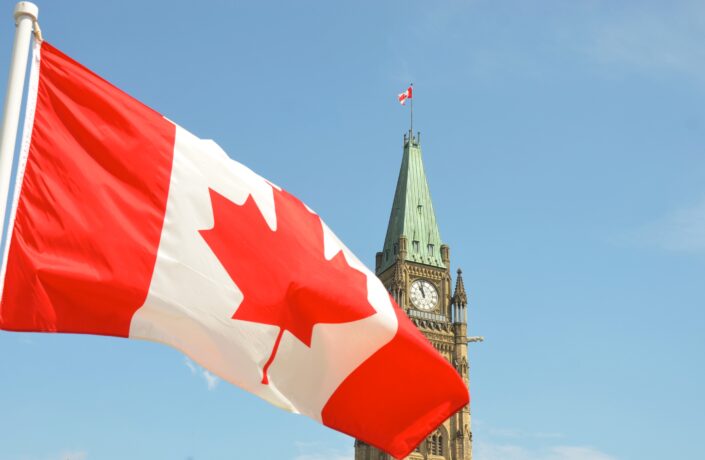
In the debates surrounding the banning of religious insignia in state schools and state institutions in France, and the establishment of Sharia-based arbitration in Canada, the issue of group (minority) rights has been raised. To what extent should we respect cultural customs and traditions, particularly of minority cultures? How can we respect individual rights and freedom if the emphasis is on cultural differences? Should we restrict the role of religion in the affairs of civil society? Is there a conflict between the rights of the individual and the rights of ethnic minorities?

Defenders of multiculturalism argue that all cultures are equal expressions of our human variability. In fact, some proponents of diversity even portray traditional cultures as superior to the universal values, the fruits of the Enlightenment and of progressive, egalitarian movements. Colourful ethnic attire and interesting cuisine may seem interesting and attractive. But with the reality of women's and children's oppression worldwide, multiculturalism is increasingly seen as a policy to maintain that oppression. Indeed, it supports the continuation of the monstrous crimes against women by its "celebration" of traditional cultures and religions while ignoring the dark side.

Politicians and other advocates of politically correct diversity preach a multicultural paradise, but few leaders care to notice the dark side of cultures that are inhumane and brutal. Western governments have actively used the policy of multiculturalism in the recent past, encouraging and supporting demands for group rights from indigenous native populations, minority ethnic or religious groups. These groups, it is argued, have their own "societal cultures" which provide "members with meaningful ways of life across the full range of human activities, including social, educational, religious, recreational, and economic life. Because societal cultures play an important role in the lives of members, and because such cultures are threatened with extinction, minority cultures should be protected by special rights. That, in essence, is the case for group rights. But some societal norms, including slavery, female genital mutilation, forced marriages, honour killing and other horrors should not be respected. Such unacceptable practices are part of the multicultural package, but they ought to be eradicated.

Community leaders and group leaders eagerly advocate segregation not only to ensure that religious traditions and culture are preserved but also to maintain power, influence and control in their communities. Many of them are influential within the mosques. Mr. Al-Masry, an Islamic leader in Canada has expressed concerns over the urge of people of Muslim origin to integrate into the mainstream of Canadian society. He recently commented:

"I am worried, and It is because I see an increasing and alarming pattern in news reports that point to a very dangerous phenomenon - the crisis of a people who are literally dying to "fit in." The inevitable end result of such behaviour is usually a loss of identity, self-respect and - you guessed it - losing the respect of others. Worse still, those who are dying to fit in will remain marginalized. During the recent public debate in Ontario on whether to use Islamic (Sharia) law in family arbitration cases, a number of Canadian Muslims expressed shame over the word Sharia, others defended the usage of the word but felt it had significant shortcomings, and others rejected it totally. Are these people also caught up in the phenomenon of dying to fit in and thereby losing some basic principles of faith?"

Exponents of multiculturalism usually put forward two kinds of arguments in its favour. First, they claim that multiculturalism is the only means of ensuring a tolerant and democratic policy in a world in which there are deep-seated conflicts between cultures embodying different values. This argument is often linked to the claim that the attempt to establish universal norms inevitably leads to racism and tyranny. Second, they suggest that human beings have a basic need for cultural attachments. This need can only be satisfied, they argue, by publicly validating and protecting different cultures.

Proponents of multiculturalism argue that individual rights are not sufficient to protect minority cultures or ways of life, which as a consequence should also be protected with special group rights or privileges - such as arbitration based on Sharia or Judaism in Canada, or legal allowances for polygamous men in France. In France, for example, the right to contract polygamous marriages clearly constituted a group right, not available to the rest of the population. In other cases, groups claim rights to govern themselves, have guaranteed political representation, or are exempt from generally applicable law.

Most cultures are patriarchal and many (though not all) of the cultural minorities that claim group rights are more patriarchal than the surrounding cultures. A 1986 paper about the legal rights and culture-based claims of various immigrant groups and gypsies in contemporary Britain mentions claims put forward by members of groups for special legal treatment on account of their cultural differences. A few are non-gender-related claims: about a Muslim schoolteacher's being allowed to be absent part of Friday afternoons in order to pray, and gypsy children have less stringent schooling requirements than others on account of their itinerant lifestyle. But the vast majority of the examples concern gender inequalities: child marriages, forced marriages, divorce systems biased against women, polygamy, and clitoridectomy. Almost all of the legal cases stemmed from women's or girls' claims that their individual rights were being truncated or violated by the practices of their cultural groups.

There is a tension and conflict between autonomy of a family and the desire to protect the rights of individual members within a family, especially women and children. There must be a firm legal barrier against customs that fundamentally contradict the right of the individual. Examples of such customs include forced marriages, honour killings, death for dowry payment in the Asian communities, and circumcision.

This respect for culture and religion has resulted in a lack of support and voice for women and girls and the marginalisation of progressive forces. When one peers into the life of these minority communities, one finds that there are large numbers who feel trapped by oppressive and repressive practices that are foisted on them from within their own communities.

The ideology of multiculturalism, with its accusations of racism toward anyone who will not submit, has intimidated people into believing that it is desirable to welcome and respect cultures that consider women inferior. People naively welcome retrograde diversity in institutions and in society as a whole, evidently to prove their rejection of racism. How could we respect cultural traditions such as slavery, purdah, "honour killing," female genital mutilation, and exoneration from the crime of rape if the perpetrator marries the victim?

Cultures change

Western majority cultures, largely due to the Enlightenment and the urging of powerful women's movements for equal rights, have made substantial efforts to avoid or limit excuses for brutalising women. Well within living memory, American men were routinely held less accountable for killing their wives if they explained their conduct as a crime of passion, driven by jealousy on account of the wife's infidelity. When a woman from a religious, patriarchal culture comes to the West, why should she receive less protection from male violence than other women? Many women from minority cultures have protested against the double standards that are applied to their aggressors.

The truth is that multiculturalism is a modern version of tribalism, respecting the backward and pre modern as it respects 1400 year-old tradition and customs. Multiculturalism is incapable of criticising any culture or of making cross-cultural judgments. The truth is that not all cultures have the same values and not all values are worthy of respect. Human beings are worthy of respect but not all religious and cultural traditions and practices can or should be respected. Cultural traditions do change with time and in response to criticism. In celebrating the differences that divide people, multiculturalism sets itself against universal moral claims of equal dignity and individual freedom.

Not all cultures are equal

The fact that all humans possess a culture does not mean that all cultures are equal. Some ideas, some laws, practices and policies, some technologies, some political systems are better than others. And some societies and some cultures are better than others: more just, more free, more enlightened, and more conducive to human progress. Indeed the very idea of equality is the product of the Enlightenment and the political and intellectual revolutions that it unleashed.

To view humans as having to bear specific cultures is, on the contrary, to deny such a capacity for transformation. It suggests that every human being is so shaped by a particular culture that to change that culture would be to undermine the very dignity of that individual.
The quest for equality has increasingly been lost in the face of claims for a diverse society. Campaigning for equality means challenging accepted practices, and believing in the possibility of social transformation. Conversely, celebrating differences between peoples allows us to accept society as it is.

Why should I, as an atheist and women's rights activist, be expected to show respect for Christian, Islamic or Jewish cultures whose views and arguments I find reactionary and often despicable? Why should public arrangements be adapted to fit in with the backward, misogynistic, homophobic claims that religions make? What is wrong with me wishing such cultures to change for the better? And their inhumane elements are eradicated?

Culture, religion, lifestyle, feelings - these are all aspects of our private lives and should be of no concern to the state or other public authorities. Yet governments in the West pour public money into what should be private, to separate and divide people even more. A truly plural society would be one in which citizens have full freedom to pursue their different values or practices in private, while in the public sphere all citizens would be treated as equals whatever the differences in their private lives. Today, however, pluralism has come to mean the very opposite. The right to practise a particular religion, speak a particular language, follow a particular cultural practice is seen as a public good rather than a private freedom. Different interest groups demand to have their 'differences' institutionalised in the public sphere.

We should restrict religious and cultural customs and traditions but not individual rights. Restricting religion will help to create a more equal and just society particularly for women and children. Banning religious insignia such as the veil in state schools and workplaces in France is not a restriction of religious freedom because it is a public ban to prevent religious influence on civil life. In a civil society religion and religious practices must be free as long as they remain the private affair of the individual. In a civil society there should be no place for organised religion in public life, yet the religious freedom of individuals in private life should be respected.

What needs to be done?

How can we protect individual rights in a pluralistic society? We need: Universalism, Secularism and Egalitarianism.

  • Secular education
  • Banning religious symbols and all religious influence in state schools and workplaces
  • Secular and impartial laws / one law for all and universal citizen rights
  • Banning religious schools altogether
  • Providing support and encouragement for young girls, protecting them from violence inflicted on them in patriarchal and religious environments

It is time to shake free from the deception of diversity and renew our faith in individual freedom. We should fight for secularism, gender equality and a universal equal law for all.

Adapted from a speech delivered by Azam Kamguian at the 16th World Congress of the International Humanist and Ethical Union on 7th July 2005, in Paris, France.

Kai M. Becker's picture

Same direction

Bassam Tibi goes in the same direction with his Leitkultur (German) discussion.

He adapts Jürgen Habermas' "cultural modernity" and demands the following as the basis for a modern society:

  • Primacy of rationality instead of religious epiphany,
  • Democracy, based on secularization
  • Pluralism (not laissez faire) and
  • Tolerance

Comment viewing options

Select your preferred way to display the comments and click "Save settings" to activate your changes.