Women victims of intégrisme
Caroline Fourest
As a sociologist and as a journalist, I have worked for ten years on the question of intégrisme, in particular the question of intégrisme and women. In 2003, I published a book with Fiammetta Venner, who is here today -- Tirs Croisés. La laïcité à l'épreuve des intégrismes (Crossfire. Laïcité put to the test by intégrismes) -- that compared the three monotheist intégrismes on the question of women, sexuality, culture, political influence and violence.
In the post-September 11 context, the question raised by this book was whether the danger of intégrismes could be explained by what the religions producing it have in common or as a function of the countervailing powers which operate, or not, to oppose such intégrisme?
But first of all, before going any further in developing my theme, allow me to define my terms so that we are all speaking about the same thing. I use two French words that in general are untranslatable into English or Arabic, which is not an accident since they both result from a rather French notion of the relationship between religion and politics.
- The first is 'intégrisme'. It is the term often translated into English as 'religious extremism' but which is not exactly correct in my submission. By 'intégrisme', I mean religious movements which are not only extremist, violent or terrorist but which may be simply opponents of liberty from the political point of view, including Moslem movements like the Moslem Brotherhood as well as the Christian Coalition. This word is important so as not to minimize the damage which religious and political movements are able to do to personal freedoms such as women's rights. By contrast, use of the term 'religious extremism' tends to minimize impact in comparison with the question of terrorism for example.
- There is a second term that I will also use in French, because it too is untranslatable into English or Arabic: 'Laïcité'. In France, we understand it as a system that guarantees strict separation of religion and state. Whereas in many other countries of the world, it is often understood as the neutrality of the state towards the faith of its citizens, seen as the state's guarantee of religious pluralism, which is of course very different. It is translated into English as 'secularism', which evokes in particular a process of modernization not necessarily implying separation of religion and state. This word is often translated into Arabic as 'atheism', which is obviously a way of characterising separation of religion and state as 'blasphemy'.
Having defined these two terms, I come back to the question that I posed in the first place, which I can also put thus: why do Taslima Nasreen or Hirsi Ali need more courage to fight Moslem intégrisme than I needed when I confronted Christian intégrisme in France for ten years?
Must we seek the explanation in what religions have in common? I do not believe so, for a simple reason: sexism and the oppression of women are the values most in common between the intégristes of the three religions.
St Paul recommended the veil for women as a sign of subjection to God and he denied them the right to speak in public. Certain intégriste Christians continue to believe in his teachings.
An ultra-orthodox Jew begins his morning prayer with the words: 'Thanks be to God that he did not create me a woman" and when one sees the few rights granted to ultra-orthodox women one understands why: they are deprived of the right to sing or to study the Torah, they are obliged to shave their heads or to wear wigs, and they are rejected if they are suspected of being barren. Which comes down to saying that they are only useful as mothers.
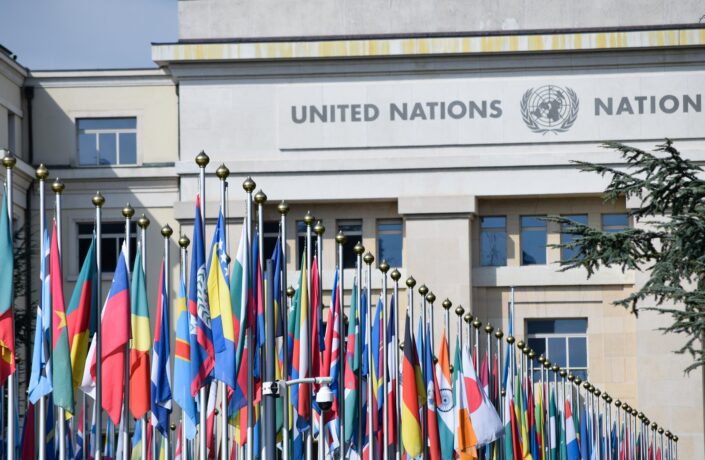
Intégriste Jews, Christians and Moslems share the same vision of women to such an extent that they work hand in hand in the United Nations against abortion, family planning and the rights of the sexual minorities. Several resolutions promoting AIDS prevention and family planning had to be called off because of joint pressure from the Vatican, the American pro-life delegation and from Islamic countries. But then why does Moslem intégrisme today seem more threatening towards women's rights?
- The first explanation comes from the fact that intégriste Moslem groups, as they develop, dream of becoming a form of resistance to the westernisation of the world. However, equality between men and women in their eyes represents the height of Western decadence, which pushes them on the contrary to redouble sexism, even if it means taking women hostage twice over: through their sexism and through their anti-Western escalation.
- Second explanation: the degree of secularization and of application of the laïcité makes all the difference. Moslem intégrisme is all the more threatening as it develops in an increasing number of countries where religion pervades the cultural, social and political climate. The Jewish women of Me Shéarim have the same life as Iranian or Saudi women. With one small difference: a woman of Mea Shéarim who does not wish to submit to the diktats of the ultra-orthodox can take advantage of Israeli justice, in theory laïque, and obtain restitution. In Saudi Arabia or in Iran, if a woman brings a case because her husband has forced her to wear the veil, the State itself will put her in prison. To that extent, the life of an Jewish intégriste is the same as that that of a Moslem intégriste and the life of a democrat or a laïque is not the same at Mea Shéarim or in Teheran. That makes all the difference.
- Even when the state claims to be secularized but it is not truly laïque, in the sense that I defined it, where it does not completely renounce a formal position for religion to give it legitimacy, the climate is favourable to intégristes to the detriment of laïques and women, who then have more evil to resist.
Question: why are there more Islamic theocracies than Christian or Jewish theocracies? Is it because the Islamic religion makes no distinction between religion and politics? The fact that Jesus said, "Return to Caesar that which is Caesar's" did not prevent Constantine from building a Christian empire, nor does it prevent the Vatican from exerting political pressure on the UN or the EU against laïcité and women's rights. And if the American religious right has not yet transformed America into a theocracy, it is because the Supreme Court holds on. For now.
On the other hand, many regimes in the Maghreb and Machrek still have not given up a formal role for religion to give them legitimacy, clearly in Saudi Arabia but also in Egypt or Syria in a different way, at the risk of building a fire that one day will consume them.... Because by avoiding real democratization in their countries, whilst still not breaking the link between religion and state, they can only maintain the intégriste movements' flame, claiming that religion constitutes a political alternative. Although they are reactionary and, to some, fascist, these movements seem the only possible alternative in the view of progressive and European movements, thus depriving the laïque and modernist movements of their support, which at the same time are fighting authoritarian regimes and the intégristes. What brings me to the second factor explaining the danger of Moslem intégrisme to women: cultural relativism.
- Even in the countries where Islam is a minority religion, women's rights are threatened. In this case, perhaps precisely because of this minority status, which Moslem intégriste movements know exactly how to exploit to appear like martyrs of the policy security, racist, neo-colonialist policies, as we say in France.... On the pretext of freedom of expression and not being judgemental, the veil, the female genital mutilation or even lapidation are presented as 'cultural' or community rights that must be respected in order to avoid the racist label. Which is another way of saying that women born in Europe, of Christian culture, have fewer rights than immigrant women or those born in Europe of Moslem culture. This kind of differentialist reasoning, to my truly racist eyes, supports Moslem intégrisme still further by depriving those who resist of the support which they should expect to get from progressive thinkers, in the rare secularized countries, where religion should be called into question by politics. Ambassadors of intégriste Islam, in particular those close to the Moslem Brotherhood, are particularly saddled with spreading a differentialist vision to destroy a critical spirit against intégriste Islam in Europe and thus to abandon women of Moslem culture into the hands of the intégristes. They represent in my eyes one of the dangers that must be combated first.
More generally, three paths must guide us in trying to reinforce our vigilance vis-a-vis the threat of intégrisme to women's rights:
1) First, the use of a precise vocabulary, which does not play the intégristes' games and does not minimize their impact on women's rights, and thus the importance of publicising -- without distorting them or even translating them -- the terms 'laïcité' and 'intégrisme'. Just as it is necessary to cease using the term "islamophobia" -- which deliberately confuses criticism of religion with racism -- with the emphasis on "racism". This is needed to distinguish legitimate debate from real racism.
2) Urgently to put an end to this intolerable and clearly racist cultural relativism that excuses in Moslem intégrisme what we would not excuse in Christian intégrisme. We must say no to this trap that presents feminism as a Western value or the defence of equality between men and women like as a form of cultural colonization. The right to equality and freedom does not belong to the West but to mankind and must be able to be shared by all.
3) Finally, starting from these principles, to weave bonds from the South to the North between those resisting intégrisme in all cultures. In the name of feminism, laïcité and the right to live in a better world, so that the blooming of individuals, and not obscurantism, remain the Utopia of our years to come.
Caroline Fourest
Graduate of l'Ecole des Hautes Etudes en Sciences Sociales et en Sciences politiques, editor in chief of the journal ProChoix (devoted in particular to information and thought on intégrisme, this journal fights for all the personal freedoms arising from the principle of laïcité), investigative journalist, Caroline Fourest has worked for ten years on religious movements.
She has published in particular:
- Frère Tariq, discours, stratégie et méthode de Tariq Ramadan (Brother Tariq, the speech, strategy and method of Tariq Ramadan) (2004, Grasset)
- Foi contre choix. La droite religieuse et le mouvement prolives aux Etats-Unis (Faith against choice. The religious right and the pro-life movement in the United States) (2001, Golias)
with Fiametta Venner :
- Tirs croisés. La Laïcité à l'épreuve des intégrismes juif, chrétien et musulman (Crossfire. Laïcité put to the test by intégrismes) (2003, Calmann Lévy
Trackback URL for this post:
- Login or register to post comments
- Printer-friendly version