Sidmennt - Felag siðraenna humanista a Islandi (Icelandic Ethical Humanist Association)
Submitted by admin on 14 June, 2005 - 08:22.
Contact:
Hope KnútssonPosition:
formaðurDetails:
Sidmennt, the Icelandic Ethical Humanist Association
A Secular Organization at the Top of the World - The story of Sidmennt, the Icelandic Ethical Humanist Association
Background - Land of the Midnight Sun
Iceland is an island nation in the North Atlantic with an affluent population of 293,000. It is a modern democratic republic which prides itself on its human rights orientation. However it still has a state church, the Evangelical Lutheran church. While on paper 85% of Icelanders are members of the state church, on any given Sunday no more than 2% of the population attends church.
The number of Icelanders who attend church once a month is 8%. In recent years, the Icelandic state church has been beset by various scandals and conflicts and lost many members. The media report these figures regularly and there is now public discussion about separation of state and church. Public surveys in recent years consistently show that two thirds of Icelanders are in favor of separation.
Enter Sidmennt
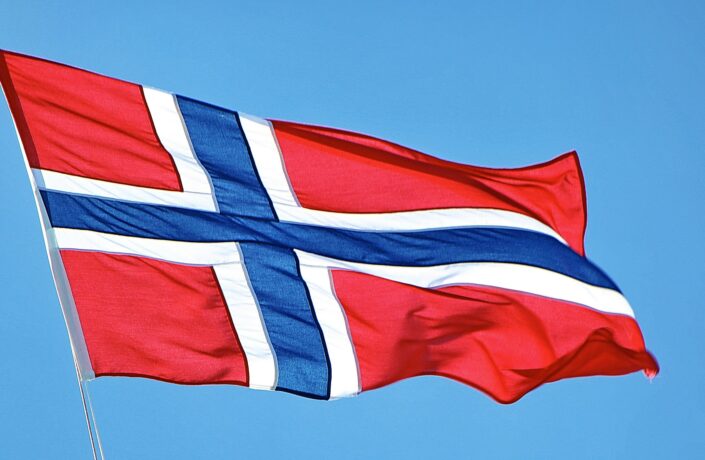
Sidmennt was founded in 1990 by a small band of people who had organized the first civil confirmation in Iceland, which took place in 1989 after a year of preparation. Civil confirmation is our main activity although we also assist people with information about how to organize secular funerals and name-giving ceremonies. We have close to 200 members, a 5-member voluntary executive board, and a web site but no office. We hold occasional lectures and meetings about life stance issues. Sidmennt is active in the movement for separation of church and state in Iceland. Sidmennt members write articles in the newspapers about issues concerning religious belief and the secular life stance. We've been involved in TV, radio, and newspaper debates and a number of conferences on the subject over the past decade. We have always maintained close contact with the Norwegian association, Human Etisk Forbund (HEF) and are a member of the International Humanist and Ethical Union (IHEU).
An elderly Sidmennt member living in a small village in northern Iceland almost single-handedly established a nationwide organization for the sole purpose of achieving separation of church and state. This group began as an offshoot of Sidmennt in which people of different religious affiliations have joined forces to achieve this goal.
In 1998 an atheist discussion group was established within Sidmennt which meets monthly for a Saturday brunch. Sidmennt members are a varied group and not all of them define themselves as atheists or humanists. In the early years of our development as an organization it was extremely difficult to promote humanism in Iceland because there is a small humanist political party here. If we said we were humanists we had to explain that we're not connected with them. Basically our members are secularists. We don't ask them what their life stance is when they join. One doesn't have to be a member to participate in our ceremonies but we appeal to those families, after they have appreciated using our services, to support Sidmennt so we can continue to offer Icelandic society a choice. As Sidmennt has become better known and taken more public stands on human rights and church/state issues, we have decided the time is right to educate Icelandic society about what humanism is and to promote it more actively. As of 2005, we adopted a new vision and policy statement which reflects this decision and is similar to the most recent IHEU Humanist Manifesto.
Over the past 3 years Sidmennt applied twice for official registration and funding from the Icelandic government as a religious organization, even though we describe ourselves as a life stance organization. We have done this to test the current law about religious associations which we feel is unconstitutional. Our application has been turned down both times. We have been told that Sidmennt does not meet the requirements even though the law does not state that belief in an invisible, supernatural deity is one of the requirements. We were asked to prove that our life stance has historical roots and international connections. We did this in far greater detail in our second application which was accompanied by a letter of support from our Norwegian sister-organization (HEF) which has held equal status with religious groups in Norway since 1981.
Sidmennt aims to provide secular versions of all the services religious organizations offer. We already provide services to hundreds of people and thousands of people attend our ceremonies. Our dream is to open a small center for inquiry to house a Free thought library and classrooms for our courses for teenagers as well as lectures and discussion groups for adults. We would also like to train celebrants to perform a wider range of secular ceremonies. We have gathered information about secular weddings and funerals in order to popularize them, even though we are not in a position to conduct them yet. We wrote to every district registrar about choices people have in secular wedding services and have met with funeral directors to discuss secular funerals. We post updated information on our website and notify the media.
A new committee has been formed in Sidmennt to develop strategy for the next step in our struggle for equal legal status with religious organizations. We are planning a multi-pronged approach. We are appealing to the Ombudsman of the Icelandic Parliament about our rejected application. We are involved in helping members of Parliament frame bills specifically providing for equal status of life stance organizations, and banning the current automatic registration of newborn children into the religious organization of the mother. We are hoping to dismantle some of the privileges of the State Church in small steps in order to pave the way for separation of church and state. We have sought legal counsel about suing the Icelandic government for its repeated rejection of our application for equal status. We are prepared to take our human rights case to the Icelandic Supreme Court and if we do not win, we are prepared to go all the way to the European Court of Human Rights in Strasbourg.
Civil Confirmation Program
Ninety-eight per cent of Icelandic teenagers get confirmed at age 13 in the state church, whether they are believers or not. We think it is hypocritical to pretend to believe something if you don't. We feel most 13 year olds don't know exactly what they believe. So we offer an alternative way of marking the transition from childhood to young adulthood.
The preparation course for civil confirmation is about: ethics, human relations, human rights, equal rights, critical thinking, relations between the sexes, prevention of substance abuse, skepticism, protecting the environment, getting along with parents, being a teenager in a consumer society, and what it means to be an adult and take responsibility for your views and behavior.
Our teachers are usually philosophers. There are 2 main rules in our course: 1) it is all right to be different, to dress differently, look different, and hold different views from the majority. And 2) One should be honest.
At the end of the course there is a formal graduation ceremony in which some of the kids in the group perform. The hall is decorated with flowers and flags and a trumpeter plays a festive march as the kids parade in. There is music, speeches, and poetry. A couple of prominent members of Icelandic society give keynote speeches on subjects such as diversity, respecting people who have the courage to not blindly follow the crowd, or what it means to be a responsible human being. Each confirmand receives a diploma expressing the hope that he or she will become a broad-minded, tolerant person of great integrity. We've held our ceremonies in a cultural center, an art museum, the Reykjavik City Hall, and we now fill one of the largest auditoriums in Iceland with 1000 guests at each ceremony. Many grandparents tell us afterwards how surprised and impressed they are at how moving and beautiful the ceremony was.
In 1996 we began a direct mail campaign, sending information about civil confirmation into the homes of the 2500 families in the capital area each year with children of confirmation age. That annual campaign resulted in a doubling of enrollment in the program from an average of 25 kids a year to around 50. Our course is 12 weeks long, once a week, for an hour and a half after school. A few years ago we added a concentrated version of the course to people in rural communities. The 2-weekend course was held in Reykjavik and teens from rural areas stayed with relatives and friends in the capital. This experiment was a great success, resulting in a record enrollment of 75 kids, an increase of 50% in one year. In 2000 we expanded our direct mail campaign to the entire nation, sending material to 4000 homes annually. As a result, enrollment in civil confirmation increased to over 90 participants per year. In the 17 years since this alternative service has been available in Iceland 755 families have participated and close to 9000 guests have attended our ceremonies.
Some Icelandic Paradoxes Seen Through the Eyes of a Foreigner
I am one of the founders of Sidmennt and its current president. I'm not a native Icelander; I'm a Humanist from New York City. I've lived in Iceland for 31 years. I think Icelanders are basically pagan at heart, just as they were a thousand years ago when the Vikings first settled the island. Most of them say they are Christian if you ask them. But inquire further about whether they accept Christian dogma such as the virgin birth, original sin, the holy trinity, or the resurrection of Christ, and most of them look at you as if you are daft and say no, that they just ignore those things, choose what they like, and call it being Christian. If I ask people "Do you believe in God?" most Icelanders say yes. So I ask them to define God. They say "The Force", "Mother Nature" or "The best qualities in man" and when I say "That's humanism", they say "Huh?"
It's easier to promote alternatives when there is a strong religious movement. The choice is clearer. In Iceland most people are lackadaisical about religion. The state church rarely takes a stand on anything. Iceland has one of the highest rates of out-of-wedlock births in the world; people live together for years and marry after they've had several children. Gays are allowed to marry. But there are frequent squabbles in the state church and billions of kronur are spent on its mostly empty buildings. Its priests are government employees. People don't view them as spiritual leaders as much as civil servants.
During my early years as a non-Christian foreigner in Iceland, I yearned for contact with fellow humanists, atheists, freethinkers. When my kids approached confirmation age everyone assumed they would go along with the crowd and be confirmed in the state church. When they protested loudly people asked why. We said "because we are not Christian and think it's hypocritical to stand up in front of a congregation and proclaim a belief that is not there".
I had heard of civil confirmation in Norway and wrote to HEF asking for advice. I put an article in a newspaper here saying that my children were going to be the first Icelanders to be civilly confirmed, described the preparation course and ceremony as done in Norway, and asked if there were other families out there who wanted to do this with us. Fifteen families responded. My husband, being a laid back Viking and not caring much about religion, went along with it all. My telephone started ringing and it hasn't stopped since. What I thought I was going to do once has turned into a lifetime job!
The Minister of Education and Culture was a speaker at our first civil confirmation ceremony and he was severely condemned afterwards for participating in this "un-Christian event"! Debates raged in the newspapers that first year. Some said that if it was not Christian, then it must be anti-Christian and next thing you know there will be unholy funerals as well. I replied that indeed we would help people organize secular funerals. I asked how they would feel if they'd lived as Christians all their lives and were then buried in a funeral service conducted by a clergyman of some totally different religion or life stance. I said most people want a funeral that is consistent with their values. I said we are not against anything but hypocrisy and that even in Iceland where people are so much the same, not everyone thinks and acts in the same way.
I said we are not trying to take anybody's Christianity away and indeed we respect those children who choose church confirmation because they sincerely believe. We simply offer an alternative to people who are not religious, not sure yet what they believe, not ready to swear an oath to Jesus for life. Now, 17 years later, there are more and more foreigners in Iceland who are not Christian and many of them choose civil confirmation because it is independent of religion but all about being a responsible human being.
Every time we get criticized by religious people, more people enroll in our program and join our organization! The TV stations have put clips of our ceremony on their newscasts and all the newspapers carry major articles about civil confirmation every year in their special sections about confirmation. Every year it becomes more accepted. Our main selling point is that it is valuable to have a choice because it makes you think.
Many people including most of the state church's clergymen say they think our program and having an alternative is good but they still complain about us using the word confirmation. We say that in most places where this is done, it is called civil confirmation. Sidmennt members voted about whether to give in to the critics and just call it a rite of passage but we chose to stick with civil confirmation. Icelanders' word for Christmas is the pagan word "jol", similar to the English Yule. We sometimes say that when the Christian Icelanders give the word "jol" back to the pagans, then we will give up the word confirmation.
It is difficult everywhere to establish humanist, atheist, and Free thought organizations. Most groups are small except for the Norwegians who have been most successful and now have close to 70,000 members! I'm not sure which is a more difficult environment to deal with, a religious one or an apathetic one.
Atheist Brunch Group and the Christianity Festival
Our atheist brunch discussion group is a lot of fun. Its members range from 16-75 years old. We stuff our faces with food and laugh a lot. We also organize actions to focus public attention on the rights of non-believers.
In the year 2000 the Icelandic government spent billions of kronur on a year's worth of anniversary celebrations of 1000 years of Christianity in Iceland. They prepared an outdoor weekend Christianity festival that they estimated 75,000 people would come to and re-routed traffic for that part of the country. Only 8000 people showed up in addition to the staff, performers, and foreign dignitaries. It was called the flop of the century but government and church leaders tried desperately for the next year to justify the wasted money. That farcical event provoked a spate of critical articles for the next half year about the anachronism of having a state church in a nation that calls itself a democracy in the 21st century.
The result was a ground swell of voices calling for separation of church and state. There are now bills in the Icelandic parliament proposing a gradual separation over a 10 year period. Since Sweden has led the way, the other Nordic countries are sure to follow. We think it is only a matter of time until there is true religious freedom in Iceland.
Naturally our group held an outdoor atheist festival on the same weekend in 2000 as the state church's flop of the century. We had a great time and never expected more than the 20 in our brunch discussion group. And no traffic had to be re-routed for our festival.
It was announced in the media that the Icelandic Parliament had spent 60 million kronur on producing a book about the history of Christianity in Iceland and was further subsidizing the price of the book to the public. So we sent a press release to the media announcing that the Atheist Society, after careful deliberation, had decided NOT to apply to Parliament for a grant to publish a history of atheism in Iceland, even though many noteworthy atheists have existed here. We said the reason we were NOT asking for money for this project was because we felt the money could be better spent on more important matters like education and health care. We said that we maintain a web site and support our own activities. We got loads of coverage, one of us was interviewed on the news on TV, and the separate web site of the Atheist Society got hundreds of hits in one 24 hour period! We are always brainstorming clever moves like this, which is why we spend so much time laughing at our Saturday brunches!
A Secular Organization at the Top of the World - The story of Sidmennt, the Icelandic Ethical Humanist Association
Background - Land of the Midnight Sun
Iceland is an island nation in the North Atlantic with an affluent population of 293,000. It is a modern democratic republic which prides itself on its human rights orientation. However it still has a state church, the Evangelical Lutheran church. While on paper 85% of Icelanders are members of the state church, on any given Sunday no more than 2% of the population attends church.
The number of Icelanders who attend church once a month is 8%. In recent years, the Icelandic state church has been beset by various scandals and conflicts and lost many members. The media report these figures regularly and there is now public discussion about separation of state and church. Public surveys in recent years consistently show that two thirds of Icelanders are in favor of separation.
Enter Sidmennt
Sidmennt was founded in 1990 by a small band of people who had organized the first civil confirmation in Iceland, which took place in 1989 after a year of preparation. Civil confirmation is our main activity although we also assist people with information about how to organize secular funerals and name-giving ceremonies. We have close to 200 members, a 5-member voluntary executive board, and a web site but no office. We hold occasional lectures and meetings about life stance issues. Sidmennt is active in the movement for separation of church and state in Iceland. Sidmennt members write articles in the newspapers about issues concerning religious belief and the secular life stance. We've been involved in TV, radio, and newspaper debates and a number of conferences on the subject over the past decade. We have always maintained close contact with the Norwegian association, Human Etisk Forbund (HEF) and are a member of the International Humanist and Ethical Union (IHEU).
An elderly Sidmennt member living in a small village in northern Iceland almost single-handedly established a nationwide organization for the sole purpose of achieving separation of church and state. This group began as an offshoot of Sidmennt in which people of different religious affiliations have joined forces to achieve this goal.
In 1998 an atheist discussion group was established within Sidmennt which meets monthly for a Saturday brunch. Sidmennt members are a varied group and not all of them define themselves as atheists or humanists. In the early years of our development as an organization it was extremely difficult to promote humanism in Iceland because there is a small humanist political party here. If we said we were humanists we had to explain that we're not connected with them. Basically our members are secularists. We don't ask them what their life stance is when they join. One doesn't have to be a member to participate in our ceremonies but we appeal to those families, after they have appreciated using our services, to support Sidmennt so we can continue to offer Icelandic society a choice. As Sidmennt has become better known and taken more public stands on human rights and church/state issues, we have decided the time is right to educate Icelandic society about what humanism is and to promote it more actively. As of 2005, we adopted a new vision and policy statement which reflects this decision and is similar to the most recent IHEU Humanist Manifesto.
Over the past 3 years Sidmennt applied twice for official registration and funding from the Icelandic government as a religious organization, even though we describe ourselves as a life stance organization. We have done this to test the current law about religious associations which we feel is unconstitutional. Our application has been turned down both times. We have been told that Sidmennt does not meet the requirements even though the law does not state that belief in an invisible, supernatural deity is one of the requirements. We were asked to prove that our life stance has historical roots and international connections. We did this in far greater detail in our second application which was accompanied by a letter of support from our Norwegian sister-organization (HEF) which has held equal status with religious groups in Norway since 1981.
Sidmennt aims to provide secular versions of all the services religious organizations offer. We already provide services to hundreds of people and thousands of people attend our ceremonies. Our dream is to open a small center for inquiry to house a Free thought library and classrooms for our courses for teenagers as well as lectures and discussion groups for adults. We would also like to train celebrants to perform a wider range of secular ceremonies. We have gathered information about secular weddings and funerals in order to popularize them, even though we are not in a position to conduct them yet. We wrote to every district registrar about choices people have in secular wedding services and have met with funeral directors to discuss secular funerals. We post updated information on our website and notify the media.
A new committee has been formed in Sidmennt to develop strategy for the next step in our struggle for equal legal status with religious organizations. We are planning a multi-pronged approach. We are appealing to the Ombudsman of the Icelandic Parliament about our rejected application. We are involved in helping members of Parliament frame bills specifically providing for equal status of life stance organizations, and banning the current automatic registration of newborn children into the religious organization of the mother. We are hoping to dismantle some of the privileges of the State Church in small steps in order to pave the way for separation of church and state. We have sought legal counsel about suing the Icelandic government for its repeated rejection of our application for equal status. We are prepared to take our human rights case to the Icelandic Supreme Court and if we do not win, we are prepared to go all the way to the European Court of Human Rights in Strasbourg.
Civil Confirmation Program
Ninety-eight per cent of Icelandic teenagers get confirmed at age 13 in the state church, whether they are believers or not. We think it is hypocritical to pretend to believe something if you don't. We feel most 13 year olds don't know exactly what they believe. So we offer an alternative way of marking the transition from childhood to young adulthood.
The preparation course for civil confirmation is about: ethics, human relations, human rights, equal rights, critical thinking, relations between the sexes, prevention of substance abuse, skepticism, protecting the environment, getting along with parents, being a teenager in a consumer society, and what it means to be an adult and take responsibility for your views and behavior.
Our teachers are usually philosophers. There are 2 main rules in our course: 1) it is all right to be different, to dress differently, look different, and hold different views from the majority. And 2) One should be honest.
At the end of the course there is a formal graduation ceremony in which some of the kids in the group perform. The hall is decorated with flowers and flags and a trumpeter plays a festive march as the kids parade in. There is music, speeches, and poetry. A couple of prominent members of Icelandic society give keynote speeches on subjects such as diversity, respecting people who have the courage to not blindly follow the crowd, or what it means to be a responsible human being. Each confirmand receives a diploma expressing the hope that he or she will become a broad-minded, tolerant person of great integrity. We've held our ceremonies in a cultural center, an art museum, the Reykjavik City Hall, and we now fill one of the largest auditoriums in Iceland with 1000 guests at each ceremony. Many grandparents tell us afterwards how surprised and impressed they are at how moving and beautiful the ceremony was.
In 1996 we began a direct mail campaign, sending information about civil confirmation into the homes of the 2500 families in the capital area each year with children of confirmation age. That annual campaign resulted in a doubling of enrollment in the program from an average of 25 kids a year to around 50. Our course is 12 weeks long, once a week, for an hour and a half after school. A few years ago we added a concentrated version of the course to people in rural communities. The 2-weekend course was held in Reykjavik and teens from rural areas stayed with relatives and friends in the capital. This experiment was a great success, resulting in a record enrollment of 75 kids, an increase of 50% in one year. In 2000 we expanded our direct mail campaign to the entire nation, sending material to 4000 homes annually. As a result, enrollment in civil confirmation increased to over 90 participants per year. In the 17 years since this alternative service has been available in Iceland 755 families have participated and close to 9000 guests have attended our ceremonies.
Some Icelandic Paradoxes Seen Through the Eyes of a Foreigner
I am one of the founders of Sidmennt and its current president. I'm not a native Icelander; I'm a Humanist from New York City. I've lived in Iceland for 31 years. I think Icelanders are basically pagan at heart, just as they were a thousand years ago when the Vikings first settled the island. Most of them say they are Christian if you ask them. But inquire further about whether they accept Christian dogma such as the virgin birth, original sin, the holy trinity, or the resurrection of Christ, and most of them look at you as if you are daft and say no, that they just ignore those things, choose what they like, and call it being Christian. If I ask people "Do you believe in God?" most Icelanders say yes. So I ask them to define God. They say "The Force", "Mother Nature" or "The best qualities in man" and when I say "That's humanism", they say "Huh?"
It's easier to promote alternatives when there is a strong religious movement. The choice is clearer. In Iceland most people are lackadaisical about religion. The state church rarely takes a stand on anything. Iceland has one of the highest rates of out-of-wedlock births in the world; people live together for years and marry after they've had several children. Gays are allowed to marry. But there are frequent squabbles in the state church and billions of kronur are spent on its mostly empty buildings. Its priests are government employees. People don't view them as spiritual leaders as much as civil servants.
During my early years as a non-Christian foreigner in Iceland, I yearned for contact with fellow humanists, atheists, freethinkers. When my kids approached confirmation age everyone assumed they would go along with the crowd and be confirmed in the state church. When they protested loudly people asked why. We said "because we are not Christian and think it's hypocritical to stand up in front of a congregation and proclaim a belief that is not there".
I had heard of civil confirmation in Norway and wrote to HEF asking for advice. I put an article in a newspaper here saying that my children were going to be the first Icelanders to be civilly confirmed, described the preparation course and ceremony as done in Norway, and asked if there were other families out there who wanted to do this with us. Fifteen families responded. My husband, being a laid back Viking and not caring much about religion, went along with it all. My telephone started ringing and it hasn't stopped since. What I thought I was going to do once has turned into a lifetime job!
The Minister of Education and Culture was a speaker at our first civil confirmation ceremony and he was severely condemned afterwards for participating in this "un-Christian event"! Debates raged in the newspapers that first year. Some said that if it was not Christian, then it must be anti-Christian and next thing you know there will be unholy funerals as well. I replied that indeed we would help people organize secular funerals. I asked how they would feel if they'd lived as Christians all their lives and were then buried in a funeral service conducted by a clergyman of some totally different religion or life stance. I said most people want a funeral that is consistent with their values. I said we are not against anything but hypocrisy and that even in Iceland where people are so much the same, not everyone thinks and acts in the same way.
I said we are not trying to take anybody's Christianity away and indeed we respect those children who choose church confirmation because they sincerely believe. We simply offer an alternative to people who are not religious, not sure yet what they believe, not ready to swear an oath to Jesus for life. Now, 17 years later, there are more and more foreigners in Iceland who are not Christian and many of them choose civil confirmation because it is independent of religion but all about being a responsible human being.
Every time we get criticized by religious people, more people enroll in our program and join our organization! The TV stations have put clips of our ceremony on their newscasts and all the newspapers carry major articles about civil confirmation every year in their special sections about confirmation. Every year it becomes more accepted. Our main selling point is that it is valuable to have a choice because it makes you think.
Many people including most of the state church's clergymen say they think our program and having an alternative is good but they still complain about us using the word confirmation. We say that in most places where this is done, it is called civil confirmation. Sidmennt members voted about whether to give in to the critics and just call it a rite of passage but we chose to stick with civil confirmation. Icelanders' word for Christmas is the pagan word "jol", similar to the English Yule. We sometimes say that when the Christian Icelanders give the word "jol" back to the pagans, then we will give up the word confirmation.
It is difficult everywhere to establish humanist, atheist, and Free thought organizations. Most groups are small except for the Norwegians who have been most successful and now have close to 70,000 members! I'm not sure which is a more difficult environment to deal with, a religious one or an apathetic one.
Atheist Brunch Group and the Christianity Festival
Our atheist brunch discussion group is a lot of fun. Its members range from 16-75 years old. We stuff our faces with food and laugh a lot. We also organize actions to focus public attention on the rights of non-believers.
In the year 2000 the Icelandic government spent billions of kronur on a year's worth of anniversary celebrations of 1000 years of Christianity in Iceland. They prepared an outdoor weekend Christianity festival that they estimated 75,000 people would come to and re-routed traffic for that part of the country. Only 8000 people showed up in addition to the staff, performers, and foreign dignitaries. It was called the flop of the century but government and church leaders tried desperately for the next year to justify the wasted money. That farcical event provoked a spate of critical articles for the next half year about the anachronism of having a state church in a nation that calls itself a democracy in the 21st century.
The result was a ground swell of voices calling for separation of church and state. There are now bills in the Icelandic parliament proposing a gradual separation over a 10 year period. Since Sweden has led the way, the other Nordic countries are sure to follow. We think it is only a matter of time until there is true religious freedom in Iceland.
Naturally our group held an outdoor atheist festival on the same weekend in 2000 as the state church's flop of the century. We had a great time and never expected more than the 20 in our brunch discussion group. And no traffic had to be re-routed for our festival.
It was announced in the media that the Icelandic Parliament had spent 60 million kronur on producing a book about the history of Christianity in Iceland and was further subsidizing the price of the book to the public. So we sent a press release to the media announcing that the Atheist Society, after careful deliberation, had decided NOT to apply to Parliament for a grant to publish a history of atheism in Iceland, even though many noteworthy atheists have existed here. We said the reason we were NOT asking for money for this project was because we felt the money could be better spent on more important matters like education and health care. We said that we maintain a web site and support our own activities. We got loads of coverage, one of us was interviewed on the news on TV, and the separate web site of the Atheist Society got hundreds of hits in one 24 hour period! We are always brainstorming clever moves like this, which is why we spend so much time laughing at our Saturday brunches!