Secular Values in Bangladesh
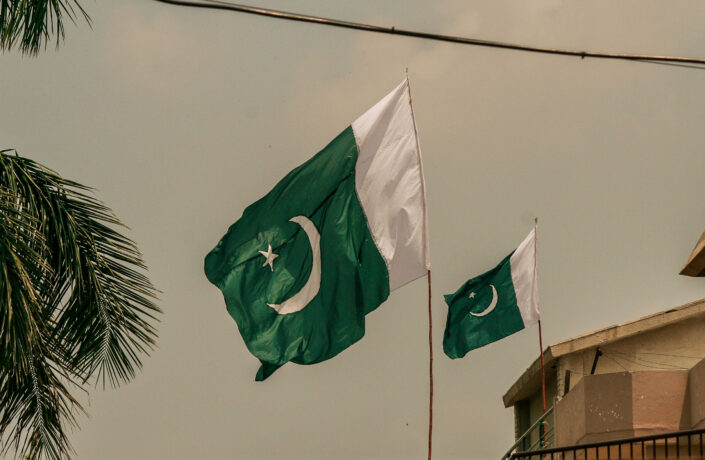
Bangladesh came into being as a sovereign state in 1971 after a bloody war of independence & broke away from the Islamic Pakistan. In 1947, when the British gave up their rule of India, Pakistan was created for the Muslims of India (In 1956 Pakistan was declared an Islamic Republic by the military junta, though the founder of Pakistan Mr Jinnah had said citizens of Pakistan would be known as Pakistanis rather than by their religious identity).
As the majority of Muslims in India lived in the eastern and western part of India, the Pakistani state was created with two separate regions: the western region (consisting of Sind, Punjab, frontier province and Baluchistan) became known as West Pakistan and the eastern region (of East Bengal) became known as East Pakistan. It was an absurd situation, a country in two halves with the Indian state in between. The two regions had nothing in common except religion.
The Bengali Tradition
The Bengalis by tradition were, if not secular, tolerant of other faiths because for centuries they lived side by side in an atmosphere of mutual tolerance. It must be said here that when Islam came to Bengal it hit softer grounds because Islam came to Bengal via Sufis and Islamic preachers who settled in Bengal and adopted the local cultural customs unlike other parts of the world where Muslims came as conquerors and invaders. It was first the British with their imperialistic policy of divide and rule and then the Pakistanis and during the Bangladesh period the various military/autocratic regimes tried to instil this idea that the Bengali Muslims were Muslims only.
During the Pakistani (1947-1971) period various measures were taken to make the Bengali Muslims pukka Muslims because the Bengali Muslims were converted Hindus (the West Pakistanis were converts as well, Islam did not originate in Pakistan!). The first onslaught came on the Bengali language. It was said the Bengali language was not a Islamic language, it was the language of the Hindus because Bengali Hindus also spoke in Bengali. Urdu (the language of West Pakistani rulers most of whom came from India-primarily from Bihar and Uttar Pradesh, only 7% of the West Pakistanis spoke Urdu) was declared the state language of Pakistan arguing it was the language of Muslims (there is no such thing as language of Muslims, the Koran is written in Arabic and the Prophet Mohammed was an Arab speaker). They tried to introduce Arabic words into the Bengali language and attempted to write Bengali language in Arabic script. The Pakistani regime even banned Tagore only because he happens to be a Bengali. Indian Bengali films were banned. Bengali New Year and other local festivals were termed as Hindu influenced cultural activities. As a reaction to this the Bengali frustration grew against the so called Muslim Homeland concept of Pakistan and asserted their own distinct Bengali identity. The students and the intelligentsia protested against the onslaught on their cultural heritage in the name of religion, and launched a campaign to establish Bengali as one of the state languages of Pakistan.
The Language Movement
The language movement was a secular campaign. Here I would like to quote Dhaka University Prof Serajul Islam Choudhury who said, Language is secular. The Bengalis love for their language is indicative of their abiding secularism. The language movement represents a rejection of nationalism based on religion (discriminating and undermining minority faiths where as the language movement was lead by Bengalis belonging to all faiths). .The language movement is significant in many ways. It represents a very positive and firm declaration in favour of secular nationalism. The movement provided us with .the image of martyrdom for a secular cause.
In fact the language movement instilled a identity which was secular, the Bengalis realised regardless of the fact that majority of them being Muslims (in East Pakistan-East Bengal, West Bengal is predominantly Hindu) there were other Bengalis who were not Muslims (Hindus, Christians and Buddhists) but shared the same common values and cultural practices. As a collective Bengali ethnic group they fought against the imposition of prejudice and discrimination by the Pakistani authority in the name of Islam. Therefore when the independence movement materialised in the Liberation War of Bangladesh in
1971, once again the movement was secular. The people of Bangladesh of all faiths and of all ethnic groups (there are many smaller ethnic and tribal groups in Bangladesh) took part in the independence movement. It was a turning point for the Bengalis.
Secularism in Bangladesh
The first Govt of Bangladesh enshrined secularism as one of its main principle into its constitution. ( secularism in the context of Bangladesh concept is probably not true to how its perceived elsewhere. In Bangladesh secularism meant equal opportunity for all faith groups to practice their religion without being discriminated and the prevention of religion being used by political parties to pursue their own party political agenda).
Unfortunately, in Bangladesh successive military juntas, autocratic regimes and sectarian right wing parties have all used religion to strengthen their grip in power by thinking they were appeasing the majority population of the country. It was the late Ziaur Rahman, soldier turned politician, who repealed secularism from the constitution and introduced In the name of Allah . above the Preamble of the constitution , the word secularism in the Preamble was substituted by the words, Absolute trust and faith in Almighty Allah .. He further allowed fundamentalist religious parties (these parties were banned after the independence of Bangladesh) to enter the political arena of Bangladesh.
IHEU funds health care programmes of its member organisation, Assembly of Freethinkers, Bangladesh
It was Gen Ershad, another military ruler who made Islam the state religion of Bangladesh and in 1990 and in 1992 he failed to prevent systematic planned attack on the Hindu minority of Bangladesh on the pretext of Babri Mosque destruction by Hindu fundamentalists in India. He patronised a number of so called saints who came to limelight during his rule. As a result receiving blessings from these saints became common for politicians of all major parties.
The current situation in Bangladesh is that the political grouping are in two camps. Those who believe in Bengali nationalism (secular and inclusive of all people of Bangladesh) and Bangladeshi nationalism
(sectarian and bias towards Muslims). The last general election that took place in Oct 2001, brought a four party (Zias Bangladesh Nationalist PartyBangladeshi nationalist, Ershads Jatiyo PartyBangladeshi nationalist, Jamate Islami-sectarian and Islami oikyo Jote-fundamentalist) alliance into power.
Oppression of the Hindu Minority
With the four party alliance in power, the sectarian elements of these parties went on a rampage against the Hindus and their properties in many parts of the country. In fact the intimidation of the Hindus stated well before the election in order to deter them (Hindus) from casting their votes as the four party alliance feared majority Hindus would vote for the Awami League. In Bangladesh, traditionally minority people have always voted for the Awami League due to its secular manifesto. After the election the attacks on minority people took an ugly turn. Members of the ruling four party alliance carried out systematic torture, killing, rape, arson and looting against Hindu families. Many Hindu families were forced to leave their homes to take refuge in India. It is claimed by many human rights organisation more than 1000 Hindu women were raped and 15-20,000 Hindus have fled to India.
I would like to give a typical example of what happened to a 15 year old Hindu school girl Purnima Rani Sheel. On 8 Oct 2001 a group of 25/30 men attacked Purnimas home at night, gang raped and then kidnapped her. Her parents and a younger sister were also severely beaten. Purnima was gang raped for two hours, as her family lay unconscious. After the attack the family was warned not to report the incident to the Police. The incident could not be kept secret as the family had to be admitted to the hospital for treatment. The Police accepted a case charging the perpetrators but refused to accept the rape case. Purnima was taken to the local district hospital where the doctors certified she was raped. She further gave her testimony to the local magistrate who ordered the arrest of 15 perpetrators she named, only one was arrested. Following this incident the family took shelter elsewhere. There too, the family is under threat from the attackers, who are pressurising the family to withdraw the case or face dire consequences.
It is unfortunate for Bangladesh a country with long tradition of tolerance has been used time after time by various political groupings to further their own agenda at the expense of the Hindu minority.
Equality, personal freedom, human dignity, fraternity, welfare and rule of law have been ensured in the constitution of Bangladesh yet the minority people suffers from religious persecution instigated by right wing sectarian parties and regimes.
In an atmosphere of heightened communal tension and in a country like Bangladesh where 130 million people live in the most crowded and poorest land in the world, where most people are illiterate it is far more easy to promote religion promising miracles than secular values. Universal education is the only long term guarantee of a genuinely secular society.
On a positive note, the civil society of Bangladesh are actively challenging the dark forces of sectarianism and fundamentalism to secure universal human values for all citizens of Bangladesh.
Ansar Ahmed Ullah is a secular activist campaigning for minority rights in Bangladesh.