Defending Human Rights in Islamic Countries

Defending Human Rights in Islamic Countries

 <?xml:namespace prefix = o ns = "urn:schemas-microsoft-com:office:office" />

The General Assembly of IHEU agreed at its meeting in Washington on 13 May that IHEU should lend its support to an international campaign defending human rights in Islamic countries.


The campaign is the initiative of a number of Muslim, human rights, and women’s rights organizations. Its purpose is to raise awareness of, and to campaign against, the denial of internationally accepted standards of human rights to both Muslims and non-Muslims, women and men, living in the Islamic world. The campaign will be web-based with an online petition and detailed information in 13 languages on the origins of the Sharia, how it works in practice, and how it falls short of the requirements for a just and equitable system of law.


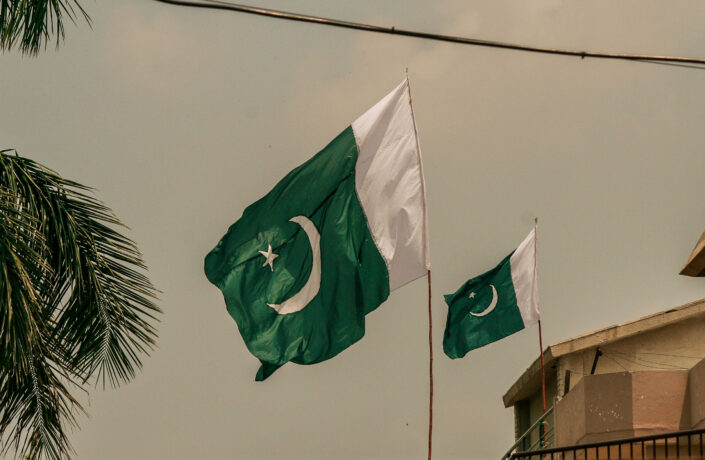
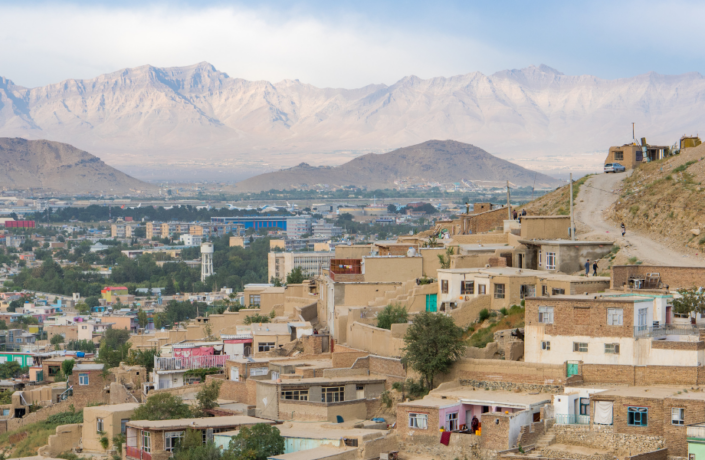
Many feel that the rise in fundamentalism has been fuelled by the failures of secular governments in Muslim countries to tackle basic economic problems, and by former actions of the west, which have been exploited by extremist elements to present political Islam as the only form of resistance. Strict Sharia law has now been imposed in several countries including Iran, Pakistan, and the Sudan and in a number of states in northern Nigeria. It was notorious in Afghanistan under the Taliban for its oppression of women and for the brutality of its punishments. The campaign is urgently needed by the moderate Muslim community to help confront the increasing violence and intolerance of political Islam.


The Executive Committee of IHEU is in touch with the organizers of the campaign and member organizations will be kept fully informed as plans for the campaign develop. What follows is an edited transcript of a presentation on the Sharia and human rights at IHEU’s Washington meeting.


Introduction

Islam is an all-encompassing religion that demands total submission to the will of God. Islamic law, the Sharia, prescribes every aspect of private behaviour and public conduct.


Muslims believe that the main elements of the Sharia were revealed by God to Muhammad, his Prophet, between about 610 and 630 C.E. They are documented in the Koran and in the Hadith – traditions which it is claimed have been handed down in an unbroken line from the Prophet and his companions. Surprisingly perhaps for laws which emanate directly from God, there is not one school of Sharia law, but five. The four orthodox (Sunni) versions differ somewhat from one another and from the fifth, the Shi’ite school. Nevertheless all five schools share sufficient characteristics that we can still speak in general of the Sharia as though it were a single body of law. One or other of these versions of Sharia forms the basis of the law in most Islamic countries, from the more liberal,

such as in Indonesia or Bangladesh, to the most harshly conservative – as in Saudi Arabia, or Iran.


The Sharia defines and controls everything: from how to prepare for prayer to when and how to pray; from the provision of dowries to behaviour during women’s menstruation; from the amputation of limbs for theft to the stoning of adulterers and killing of apostates; from the preparation and handling of food to the giving of evidence in a court of law. No detail of daily life, public or private, escapes its attention. The individual is barely at liberty to think or decide for himself. Virtually all activity is preordained; one has but to accept Allah’s laws as interpreted by the mullahs and ayatollahs.


Islam claims to have been founded ‘in the full light of history’. We are told that Muhammad was a historical figure and a wealth of written evidence can be traced in unbroken line directly back to him and his immediate followers. It is this claim that gives Islam particular strength. Although it is a claim that is being increasingly questioned by modern scholarship, it nevertheless enables the fundamentalists to argue strongly against any reinterpretation of the Koran or the Hadith on which the Sharia is based.


The necessity of belief

The Koran, the holy book of Islam, is believed by Muslims to have been communicated to the Prophet Muhammad “as a final expression of God’s will and purpose for man”. But to deny this claim, in any Islamic state, is blasphemy, and in some states punishable by death.


Modernity

It is still possible even today, of course, to find Christian and Jewish sects that try to adhere closely to the tenets of the founders, but the majority of both Christians and Jews have to a greater or lesser extent come to terms with modernity. There are today far more secular Jews than fundamentalists, and far more Christians happy with the separation of church and state than those who would like to see the return of theocratic government. But in Islam the state itself is seen as merely another human construct and as such lacking in legitimacy – unless its structure and laws conform to the higher law of Islam. The very concept of separation of religion and state is unimaginable in any truly Islamic society because every human institution including government must conform to holy writ.


Christianity did not give up theocratic control of society without a fight. Judaism is still engaged in the fight in the state of Israel. Less than three hundred years ago the church in Europe was still ordering men and women to be burned at the stake for heresy, for witchcraft or for defying its will. In Europe, the decline of the church’s hold on government has been slow and is still not complete.


The Western Struggle to Separate Religion and State

Three major factors have played a role in loosening the stranglehold of the church on government in the west. First, Jesus, who Christians believe is the son of God, drew a distinction between duty to God and duty to the temporal law in saying “Render unto Caesar that which is Caesar’s and unto God that which is God’s”.


Secondly, the scientific revolution that had its birth following the Renaissance of 15th century Europe again made possible the contemplation and study of the natural world. The ideas of the Renaissance were not snuffed out as they could so easily have been by the power of the church, but have continued to flourish. The claims of science, unlike divine revelation, can be tested by experience. Any scientific theory that fails to explain the world as we observe it will be replaced by one that better accords with observation. Divine revelation, on the other hand, provides answers that must be accepted since, coming from God, they cannot be challenged even if they are plainly wrong. We see this phenomenon at work today in America where Protestant fundamentalists reject the overwhelming evidence in favour of biological evolution because it conflicts with what they believe is the word of God.


The third great influence on the west was the Reformation, and the idea that man could have direct contact with his God. God’s word, and man’s conscience, would from then on be his guide. Everyone is thus empowered to hear and interpret God’s word for themselves without the intercession of the church or its priesthood.


Much of the social progress of the past two centuries can be credited to the courage and energy of the pioneers who introduced reforms such as public health, the abolition of slavery, even democracy itself, against the violent opposition of the established order, aided and abetted as always by the church. Such progress would scarcely have been possible without the belief that a

man’s conscience should be his guide. Without the revolution of individual conscience there would have been no concept of individual responsibility or of individual rights. Without the Renaissance and the Reformation there could have been no Universal Declaration of Human Rights.


In the Islamic world, no such reformation has happened.


The Sharia and The State

In much of the Islamic world, Sharia law forcefully opposes free thought, freedom of expression and freedom of action. Accusations of impurity, impiety or apostasy are waiting to silence any voice of dissent. Suppression and injustice shape the lives of all free- minded people, above all atheists, who are deprived of all freedom. One is born a Muslim, and one is forced to stay a Muslim to the end of one’s life. Islamic law denies the rights of women and non-Muslims. Unbelievers are shown no tolerance: the choice is death or conversion. Jews and Christians are treated as second-class citizens.


In countries which have proclaimed an Islamic state, such as Iran, the Sudan, Pakistan, some states in northern Nigeria, and Afghanistan under the Taliban, we can see the pernicious effects of the Sharia: the stoning to death of women exercising their right to personal freedom; random accusations of blasphemy carrying a mandatory death penalty being used to settle personal grudges; public hangings for apostasy, real or alleged, and many other acts of wanton cruelty.


In the Islamic world it is not the people, nor indeed the government, but ‘God’s word’ that shapes society. In an open and free society, people define the boundaries and powers of the organs of the state; the powers of the state derive from the people through their elected representatives. In an Islamic state all law derives from God, and no mere human agency, parliament or dictator, can be permitted to pass any law that contravenes God’s laws – as interpreted by the mullahs or ayatollahs. Thus in an Islamic state Islamic law is automatically part of the system. In Saudi Arabia, for example, the Koran has been declared to be the constitution to which all laws must conform. Placing divine authority above the will of the people is clearly incompatible with the very idea of democracy.


There is a further problem with the Sharia in that it was formulated at a time and in a society lacking any concept of the corporation or public institution. In the west, the church is itself an institution. No such concept exists in Islam. We cannot speak of “the mosque” as an entity, nor even of Islam itself as an institution in Islamic society. Islam is society. Neither does the idea of government as an institution, separate from the person of the governor, exist in Islam. The Sharia is therefore silent not only on any law governing public bodies, but on the very concept of the public institution. This makes it very difficult to apply the Sharia consistently to modern life. It also raises a question as to the legitimacy of any public body or government that is not run by God’s representatives. It is interesting, for example, that the House of Saud claim legitimacy not as the Royal House of Saudi Arabia but as ‘Protectors of the Holy Places’. The idea of the Caliphate remains very much alive. In Islam, the concept of a secular constitution, like the concept of democratic lawmaking, is by definition illegitimate.


The Sharia and Human Rights

Many aspects of the Sharia are inimical to the ideas enshrined in the Universal Declaration of Human Rights (UDHR). No individual or group of people can have any rights that do not conform to the tenets of the Sharia. Oppression, intimidation, public executions, lack of freedom, and ferocious censorship are the undeniable facts of life in many Islamic societies. The UDHR enumerates the rights of the individual that governments are obliged to protect. But Islam is opposed to any concept of individual freedom that is not subordinate to the will of God.


“What they call human rights is nothing but a collection of corrupt rules worked out by the Zionists to destroy all true religions.”

Ayatollah Khomeini


“When we want to find out what is right and what is wrong we do not go the United Nations; we go to the Holy Koran . . .”

Ayatollah Moussave-Khomenehi


The views of Ayatollah Khomeini were extreme even within Islam, of course, but perhaps more insidious are the claims of the apologists that there is no contradiction between Islam and human rights, straining to identify modern human rights within Islamic law. Maulana Maudoodi, the founder of Jamaat-i-Islami and the father of political Islam was one such, but, as Ann E. Mayer has pointed out, what he claimed to be human rights can be seen on closer analysis to be either privileges granted by God, or human duties towards God.


The Universal Islamic Declaration of Human Rights is an attempt dating from the early 1980s to square the circle. It reworks many of the rights familiar from the UDHR and adds others. But many fall far short of the internationally agreed standards of the UDHR. Furthermore, this and other Islamic human rights schemes are of dubious validity even in Islamic terms:


“The Islamic human rights schemes ... are the products of the political contexts in which they emerged. Their Islamic pedigrees are dubious and the principles they contain do not represent the result of rigorous, scholarly analyses of the Islamic sources... Instead, they seem largely shaped by their conservative authors’ negative reactions to the model of freedom in Western societies.”

Ann E. Mayer, Islam and Human Rights


Many Islamists claim that the UDHR is an attempt to force western standards and ideals on to others who do not share them. But abuse of human rights cannot be excused by cultural relativism. If we believe that everyone has the right to life, freedom, and the pursuit of happiness then we must oppose any system which seeks to deny those rights to others. To accept religion, culture or tradition as a justification for human rights abuses is to discriminate against the abused and to send the message that the victims are undeserving of humane consideration.


Perhaps the most unsavoury aspect of Islamic law from a human rights perspective is the severity of the punishments it prescribes. Like the most prurient voyeur, the Sharia pries into every aspect of private life and condemns with the utmost violence any conduct that fails to conform to its narrow standards of acceptable “family” behaviour. Adultery, or indeed any behaviour that fails to conform, is punishable by flogging, amputation or stoning to death. Homosexuality, too, is forbidden and punishable by flogging, sometimes to death. To add to the inhumane nature of the executions, they are frequently carried out in public – to act as a warning to others.


The Sharia and Women’s Rights

According to the Koran and the Sharia, despite declarations of the equality of the sexes before God, women are manifestly treated as inferior to men, and have fewer rights and responsibilities. A woman counts as half a man in giving evidence in a court of law, or in matters of inheritance. Her position is less advantageous than a man’s with regard to marriage and divorce. A husband has the moral and religious right and duty to beat his wives for disobedience or for perceived misconduct. A woman does not have the right to choose her husband, her clothing, or her place of residence, or to travel freely. Any conduct that undermines the idea that women are the property of their menfolk, or that threatens male domination, will fall foul of the Sharia.


The legal age of marriage varies from country to country, ranging from 9 in Iran to 13, 15 or 17 (in Tunisia). The choice of 9 in Iran follows from the marriage of Mohammed to Aisha, consummated when she was 9 and the Prophet was over 50. It should be noted, however, that the Prophet was allowed many actions by Allah that were denied to the other faithful, and not all Muslim scholars would accept the Aisha marriage as a precedent.


The four Sunni schools of law and that of the Shi’ites differ on a number of points important to women. In all schools, however, marriage is a contract according to which the husband should perform sexually and provide materially for the wife. The wife must have sex whenever the husband wishes. A man can easily divorce a woman by pronouncing that he is divorcing her three times. Polygamy with up to four wives is permitted, and in the Shi’ite sect, temporary marriage is allowed whereby a man can have access to an unlimited number of women. The practice is known as Mot’a or Sigheh. Men are also permitted concubines and female slaves.


No Muslim woman is allowed to marry a non-Muslim man whereas Muslim men are allowed to marry non- Muslim women. With the object of protecting morality and preventing sexual anarchy, women are expected to cover their whole bodies bar their faces and their hands up to their wrists. The Sharia is totally opposed to freedom of dress. This is obviously a huge infringement on the personal development of women, not allowing them to develop sexually and as people. It is a tragic irony that women are imprisoned behind veils when it is the men who, according to Islamic law, cannot be trusted to control themselves. On the pretext of protecting their honour women are kept locked up, isolated and unable to enjoy a full life or to develop their potential.


In order to protect their morality women can have no contact with men to whom they are not related without the presence of a male relative. The segregation of sexes in this way makes it very difficult for women to leave their houses and participate in society in any way at all. Under the Taliban many war widows were prevented from earning their living and were forced into starvation. Their crime? Had they prayed harder their husbands would have survived!


Many apologists for Islam, women among them, argue that women are happy in their roles in Islamic society, happy to be afforded the protection of their menfolk and to be kept away from the gaze of other men. But this is a false argument. If some women want to stay at home under the protection of their menfolk they can do so.


But do the apologists for Islam have the right to tell all other women, including non-Muslims, how they should behave? Women deserve to be treated as autonomous human beings and for this reason alone the misogynistic Sharia should be opposed.


The Sharia and Discrimination Against Non-Muslims

In addition to the imposition of Islamic morality on non- Muslims, Sharia law dictates that there shall be no equality between Muslims and non-Muslims. Under strict Sharia law only Muslims can be full citizens of an Islamic state. Many states shamelessly discriminate against non- Muslims. In Saudi Arabia and Kuwait being Muslim is a precondition of naturalization. Christians and Jews have limited rights but they may not participate in public life or hold positions of authority over Muslims. Anyone other than a Muslim, Christian or Jew is deemed to be an unbeliever and is not permitted to reside permanently in an Islamic state. The Koran only recognizes the People of the Book as religious communities.


In criminal prosecutions non-Muslims are given harsher punishments than Muslims. Crimes against Muslims are often punished more severely than crimes against others. In court under the Sharia the testimony of a non-Muslim carries less weight than that of a Muslim.


Freedom of Religion and belief

Freedom of religion and belief does not mean merely the freedom to have a faith but also the freedom to change one’s religion or belief. But under the Sharia, apostasy (either advocating the rejection of Islamic belief or announcing such rejection by word or deed) is not permitted and for a man is punishable by death. The punishment for a woman may be more lenient, although opinions differ. She might be spared, but only to stay in prison until she reverts, however long it takes. Even when the death penalty is not applied, those accused of apostasy can be subject to the most violent treatment. This discrimination is clearly contrary to freedom of religion and belief and to the principle that religion should be a private matter for the individual. In a feeble attempt to disguise the Islamic attitude to apostasy, apologists often quote the Koranic verse: “There shall be no compulsion in religion”. For a Muslim wishing to leave Islam this is simply not true.


The Islamic position on apostasy has been described as: “total disbelief that any sane person could possibly have a genuine reason for leaving ‘the most perfect religion’. He or she must therefore, by definition, be acting in bad faith”. Really? Read Leaving Islam, edited by Ibn Warraq (Prometheus, 2003) for the testimonies of over 20 brave souls who have done just that.


Belief in any religion should be voluntary and a private matter, but more often than not it is a collective statement and part of our identity. Typically, we inherit our religious belief from our parents, and share the beliefs of the community of which we are part. For most of us, our religion is more a matter of tradition, loyalty and custom than of deeply held belief. But for Muslims there is the added incentive of the severest penalties for any who wish to leave. One may ask the question of how strong a religion is if it has to force its adherents to stay under penalty of death.


Freedom of Expression

Under the Sharia and where Islam holds sway, writers, thinkers, philosophers, activists, and artists are frequently denied freedom of expression. Islamic regimes are notorious for the violent suppression of free thought. Often, as a government aligns itself closely with Islam, any critics of the government will be accused of heresy, blasphemy or insulting Islam. Under the Sharia people are deprived of many pleasures such as drinking alcohol, playing music, even of reading literature or philosophy, and are denied the opportunity of fully expressing their sexuality or of enjoying the arts.


Islamophobia and Racism

It is frequently claimed that critics of Islam are guilty of racism and Islamophobia. But since we are discussing religion and not race, the first charge fails. Certainly in the west there is a high degree of correlation between race and religion. The Muslims in Britain, for example, tend to be of Middle Eastern origin or from the Indian subcontinent, but nevertheless it is dangerous to confuse race and religion. Efforts to make Islamophobia a crime are thinly disguised attempts to equate arguments against Islam with racism. The very term Islamophobia is

misleading. A phobia is an irrational fear. How can a fear be made a crime? It is essential to distinguish criticism of Islam from both fear of Islam and from fear, hatred or contempt for Muslims. It is perfectly feasible to love the believer but hate the belief. Human beings are worthy of respect but not all beliefs must be respected. Yet moral criticism of Islamic practices or criticism of Islamic religion is often dismissed and demonized as Islamophobic.


No belief, rational or irrational, scientific or divinely inspired, should be exempt from critical examination. If a belief is sound it will stand on its own merits. If it is unsound it deserves to fail. No religion should seek immunity from the examination of its claims, or seek freedom from moral criticism of its practices.


Why Islamic Law Must Be Opposed

Islamic law should be open to analysis, research and criticism like any other system of practice and belief. The claim that its laws are divinely inspired should no more shield it from criticism than Christianity should have been spared criticism for burning heretics or for massacring unbelievers. The more pernicious aspects of Islamic law fall far short of the standards widely accepted by the international community.


Islamic law, the Sharia, should be opposed for its imposition of theocracy over democracy, its abuse of human rights, its institutionalized discrimination, its denial of human dignity and individual autonomy, its punishment of alternative lifestyle choices, and for the severity of its punishments.


In the west, even in countries which have a sizeable Muslim minority, any idea that the Sharia could have any sway should be strongly opposed since it conflicts with many basic human values, such as equality before the law; that punishments should be commensurate with the crime; and that the law must be based on the will of the people. Islamic law as it developed in the first few centuries of Islam incorporated many pre-Islamic Middle-Eastern misogynist and tribal customs and traditions. The Sharia developed not only from the Koran and the Sunna but through juristic reasoning and interpretation from other sects. We may ask how a law whose elements were first laid down over 1,000 years ago can possibly be relevant in the 21st century. The Sharia reflects the social and economic conditions at the time of the Abbasids and has become further and further out of touch with later social, economic, cultural and moral developments. The principles of the Sharia are inimical to moral progress, humanity and civilized

values.


The problem for all of us is how to oppose the violations of human rights inherent in Islamic law without being accused of cultural imperialism, neo- colonialism and racism, or of failing to respect ‘the other’. But cultural relativism is not the answer. In India, each religion has its own social laws. Muslim women do not enjoy the same rights as Hindu women. Why not? Justice cries out for secularism. One law for all – equality before the law – has to be the answer.


Many of the arguments for permitting each religion or culture to determine its own laws are based on a misunderstanding of the nature of human rights.


Human rights as defined in the UDHR are vested in the individual, not the group. As soon as rights are accorded to a group rather than to individuals, conflict becomes possible not only between one group and another, but between the group and its own members. Any group that denies the right of its members to leave is in contravention of one of the most fundamental principles of human rights. Yet clearly, one of the reasons for the growth of Islam over the past century has been that becoming a Muslim is a one-way street. Whether by birth or conversion, once you are a Muslim the only way out, under the Sharia, is death.


When Islam really does advocate jihad to achieve world domination, then anyone deeply concerned with humanity will be critical. Of all the existing ideologies and religions, Islam remains the greatest danger to humanity. It has neither been tamed nor moderated by progressive forces. Political Islam has the power to inspire the terrorist mind, and, through its ties to oil-rich states, the funds to pursue its plans.


Apologists for Islam often claim that many so-called violations of human rights are based on a misreading of the Koran and will quote this or that sura in its defence. But the arguments against Islam are not primarily against its holy text, although there is much to criticize, but against the practices of Islam. We are told that Islam is a religion of peace and that the struggle, jihad, for world conquest is not to be taken literally. Perhaps someone should tell the suicide bombers. But like the Christian Bible, the Koran has arguments to support every point of view. The only possible response to the charge of misunderstanding or misreading is to look at the reality of what is happening in those countries such as Iran, Pakistan, Saudi Arabia and northern Nigeria that have fallen under the sway of the Sharia.


The world is a battleground of social movements and ideas. It took people in the west over 400 years of often- bloody struggle to gain the right to criticize Christianity. Even now, that right is still not fully recognized. In Britain, for example, there is still a law against blasphemy, and many Islamic clerics have argued that it should be extended to cover Islam as well. It should be scrapped. Once we are prevented from expressing our point of view in the market place of ideas we will be heading back to the Dark Ages.


We must recognize that our society is far larger, diverse and more complex than the primitive tribal society of 7th century Arabia from which Islam sprang. It is time to renounce the idea that anyone should live under the Sharia. More than ever before, people need a secular state that respects freedom of and from religion, and human rights founded on the principle that power belongs to the people. This means that we must reject the claims of orthodox Islamic scholars that, in an Islamic state, sovereignty belongs to the representative of Allah or to Islamic justice. Indeed it demands that the very concept of an Islamic state be challenged. It is crucial to oppose the Sharia to enable Muslims to join

the modern, secular world.


What is needed is nothing less than the secularization of Islamic society, and the establishment of the idea that the individual conscience must be the guide and judge of personal, private conduct. But this cannot be imposed from outside by force. Attempts to impose the ideas of democracy and human rights from outside will be resisted as neo-colonialism or American imperialism and draw ordinary Muslims closer to the extremists. The ideas of personal freedom, progress and change must be sown from within Islamic society by Muslims and former Muslims themselves, aided and abetted of course by those of us in the west who share their ideals and hopes for the future.


The way will be long and hard, but the history of human society has shown that, once lit, the spark of individual freedom cannot be extinguished.


Contributors: Azam Kamgouian, Fatemolla, Roy Brown, Ibn Warraq, Lars Gule

j-meslier's picture

Human rights vs. Islam

For those who doubt that current Islam -and not just Islamic extremism- is the problem, read the articulate and moving autobiography of Ayaan Hirsi Ali, a Somalian refugee to the Netherlands. She is now a member of the Dutch parliament. The BBC website carries a short interview of her:

http://news.bbc.co.uk/1/hi/world/africa/3322399.stm

I read her book in French translation (Insoumise, published by Robert Laffont, 2005). An English version is due to come out in April, from Free Press.

j-meslier
"The slumber of reason begets monsters" F. Goya

Robert Andrews's picture

Islam Wants Respect, but Gives None

This post is reguarding this recent spate of demonstrations around the world reguarding the cartoons of the Prophet Mohammed. Islam wants respect for it's ideas and beliefs, but they won't--in Moslem countries where they are a majority--give other people and life-styles any consideration.

As far as gay and lesbian people are concerned, may even be put to death,(e.g.: Iran, Saudi Arabia) I as an openly gay man, can't respect the ideas of a group that won't even let me and my kind LIVE.

Storm's picture

Indeed

Yes, they do very much punish homosexuality in Iran. Hell, they executed two teenagers just last year, in Mashad.

Much like yourself, they wouldn't like my kind of individuals to live, either--A virtual 'American' atheist, born to a couple of Moslems; proudly known for having very strong atheist views doesn't go over too well in a conservative, over cultured Islamic state.

Unfortunately, if I can't get out of this country, where I am stranded in the underground of suppressed opinions and freedoms, I could very well end up a dead man.

Comment viewing options

Select your preferred way to display the comments and click "Save settings" to activate your changes.