Humanism for a better world

As a life stance rooted in rational thinking, modern Humanism provides a way of understanding our universe in naturalistic rather than in supernatural terms. It offers men and women, both as individuals and as members of society, a secular ethics grounded in human values.

Drawing inspiration from their rationalist and freethinking heritage, Humanists reject absolute authorities and revealed wisdoms. Humanists consider human experience to be the only source of knowledge and ethics. Humanists believe in intellectual integrity, and do not allow custom to replace conscience. Humanists promote free inquiry which is the basis of the scientific spirit; and as a living philosophy, Humanism constantly enriches itself with the progress of knowledge.

Guided by the spirit of human solidarity, Humanists are committed to tolerant pluralism and human rights. As Humanism is also a philosophy of human freedom, Humanists aim for a social order in which individual freedom and dignity, social justice, fundamental rights and the rule of civilised law are protected. Humanists continuously explore ways of extending responsible freedom and happiness in our increasingly complex world.

The social ideal of Humanism is the spread of democratic values resulting in comprehensive social, political and economic democracy. Humanists believe that this can be achieved only with the strength of humanity's own moral and intellectual resources.

Humanism seeks to be a modern, cosmopolitan and democratic alternative to traditional religion and to authoritarian and other oppressive social attitudes.

The Humanist world

The Humanist tradition has its intellectual roots in ancient China, India, Greece, Rome and Europe. However, Humanist organisations (humanist, ethical culture, rationalist, secularist or atheist) are a relatively recent phenomenon. Humanist groups are cultural organisations working on an educational or on a non-party political basis to translate Humanist aspirations into practical actions. In modern society, these organisations also provide a community for those who find meaning and value in life without the aid of traditional religions or gods.

There are hundreds of Humanist groups in dozens of countries, from Nepal to Peru, from Slovakia to Indonesia, from Ghana to New Zealand. All these groups are engaged in fulfilling their primary task of keeping the human-centred scientific outlook alive. Humanist groups provide criticism of dogmatic religious claims, cultivate the use of critical intelligence, develop ethical values appropriate to the present human condition and encourage the ideals of tolerance and dissent and the negotiation of differences by rational means.

To achieve their goals, Humanist groups publish literature, contribute articles to newspapers, organise seminars, workshops, conferences, produce broadcasting material for TV and radio, participate in debates, maintain Internet web sites, lobby governments and the media, and respond to official consultative documents.

Practical activities in the community by organised Humanists are as diverse as the defence of democracy, protection of civil rights, provision of sheltered housing for the elderly and helping the victims of religious and sexual intolerance and persecution. Humanist organisations in countries such as Belgium and the Netherlands provide social and personal support through education, counselling and community care, where hundreds of Humanist professional moral educators and counsellors are employed in schools, hospitals, prisons and the armed forces. Humanist groups in Asia work for democracy, women's emancipation and the eradication of superstition, while Humanists in Canada and Europe have fought for contraception and abortion rights. In Norway and the UK, Humanist groups offer non-religious rites of passage (naming ceremonies, weddings and funerals) as a service to the Humanist community. Still other Humanist groups may fight for the separation of religion and state, promote the scientific attitude, come to the rescue of religious prostitutes in India, or campaign against the genital mutilation of female children in Islamic societies...

IHEU - the international organisation for Humanism

A strong international organisation is essential to increase the world-wide impact of Humanism and to ensure that the world Humanist community benefits fully from the achievements of all its members. The International Humanist and Ethical Union (IHEU) is the international organisation for Humanism.

IHEU was founded in 1952 in Amsterdam and is the only umbrella organisation of Humanist, rationalist, atheist, secularist, ethical culture and agnostic groups around the world. Its Member Organisations range from large membership groups to specialist bodies such as publishers, universities and development agencies.

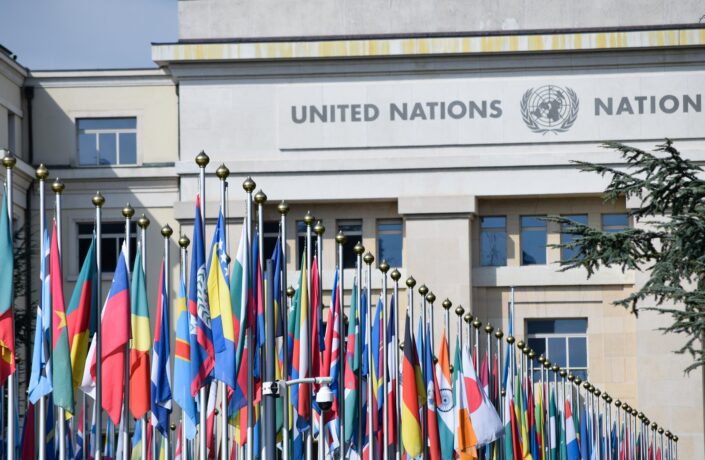
As a federation of national and regional Humanist groups, IHEU co-ordinates activities of its Member Organisations, stimulates their policies and guides their strategies, fosters the growth of new Humanist groups, and represents the interests of Humanists at the UN (New York, Geneva and Vienna), UNICEF (New York), UNESCO (Paris) and the Council of Europe. IHEU is a clearing-house for information and inspiration, and a forum where Humanist organisations and individuals can exchange thoughts and expertise for improving the impact of national and international activities. By representing Humanism to the world media, IHEU ensures that an ever-greater number of people learn of the Humanist alternative.

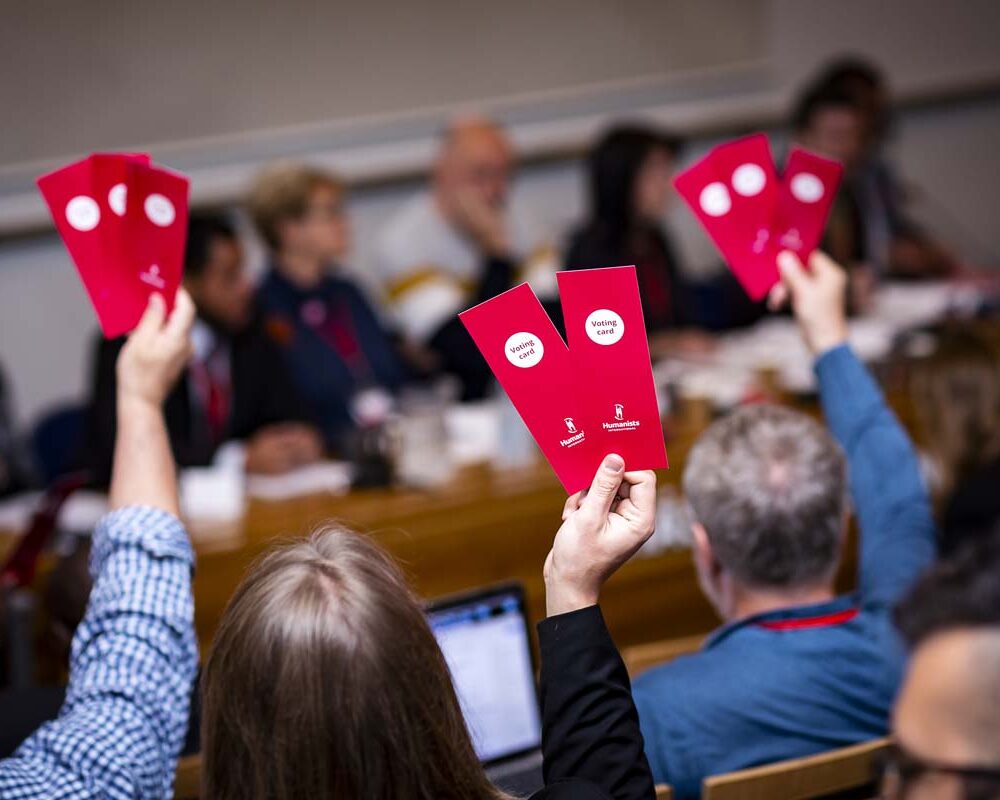
IHEU is democratically organised and is funded by donations and membership dues from its Member Organisations and Individual Supporters. IHEU Member Organisations are Full Members, Specialist Members or Associate Members. Individuals can associate themselves with IHEU by becoming Individual Supporters.

IHEU has its international headquarters in London and an office in New York, home of the IHEU-Appignani Center for Bioethics.

IHEU, internationalism and Human Rights

For IHEU, national sovereignty is less important than the building of a universal community. IHEU is strongly committed to the ideals of the UN; in fact, the first directors of UNESCO (Julian Huxley), FAO (John Boyd Orr) and WHO (G. Brock Chisholm) were all prominent Humanists. IHEU advocates that non-discriminatory international conventions on arms control, human rights or environmental issues must be ratified by all countries.

Many Humanist principles have already found expression in international human rights conventions; indeed, Humanist values form the philosophical basis of human rights as formulated in the Universal Declaration of Human Rights. IHEU has made submissions to various UN bodies on questions of environmental, economic, social and cultural rights. IHEU's concerns for human rights and peace have been many and varied; IHEU representatives in Geneva speak regularly at the UN Commission on Human Rights. The UN Convention on the Rights of the Child, the UN Convention on Torture; the Geneva Convention on Refugees, for example, find strong support from IHEU Member Organisations.

In the past, IHEU participated in the FAO's five-year Freedom from Hunger Campaign and is a founding member of the UNESCO NGO Working Group on Science and Ethics. IHEU has been represented at major UN Conferences on Population and Development, Environment, the UN World Conference on Women, UNESCO's conference on The Power of Culture, and the Oslo Conference on Freedom of Religion or Belief.

However, since the modern world has an abundance of single-issue campaign groups, IHEU concentrates especially on the defence and promotion (through education and lobbying) of the rights to individual self-determination, human rights and freedom of belief. For example, IHEU representatives to the UN in Geneva and in the Council of Europe contributed to the UN Declaration on the Elimination of all Forms of Intolerance and Discrimination Based on Religion or Belief. It was an IHEU initiative that led to the adoption by the UN of the Right to Conscientious Objection to Military Service. IHEU also raised with the UN bodies the issue of rights of religious and philosophical dissenters like Taslima Nasrin of Bangladesh and Xiao Xuehui of China and successfully campaigned for the release of Dr Younus Sheikh, sentenced to death in Pakistan for blasphemy. IHEU is a founder member of the Oslo Coalition for Freedom of Religion or Belief and plays an important role in its activities.

Outside the UN, IHEU and its Member Organisations have defended civil liberties, promoted more humane and rational attitudes on abortion law, sexual relationships, voluntary euthanasia, capital punishment, criminal reformation and the exploitation of animals. Of importance to IHEU have been campaigns against blasphemy laws; the protection of minorities and ethnic groups, and the elimination of discrimination based on religion, or the lack of it. More recently, IHEU has campaigned against the inclusion of God in the German and European constitutions, on the grounds that there ought to be absolute separation of religion and state. Humanists also campaign in many countries to establish the status of Humanism and Freethought as equal to those of traditional religions, and for their wider acceptance.

Individuals associated with IHEU testify before state and local legislatures on issues of contemporary concern; (for example surrogate parenting, cloning of animals, AIDS issues), assist in drafting legislation, serve on federal and state commissions and participate in public discussions.

Giving a moral leadership - IHEU declarations and resolutions

IHEU's Declaration of Interdependence: a New Global Ethics, issued at its Global Congress at Buffalo, New York, in 1988, emphasises a global moral consensus, human rights and human global responsibilities. At the 50th anniversary of its foundation in 2002, the IHEU General Assembly unanimously adopted the Amsterdam Declaration 2002, which sets out the fundamental principles of modern Humanism.

IHEU's pioneering statements in defence of gay and lesbian people are widely quoted. IHEU statements are standard declarations on contemporary issues: recent IHEU resolutions have opposed blasphemy laws, ethnic cleansing, and the abuse of children in the name of religion.

IHEU Growth and Development programme

IHEU fosters the development of new Humanist organisations and supports them with Humanist resources and advice. In collaboration with its Dutch Specialist Member HIVOS, IHEU also funds Member Organisation activities in the third world. Over the last few years, this programme has supported, for example:

  • Production of secular educational resources in Argentina
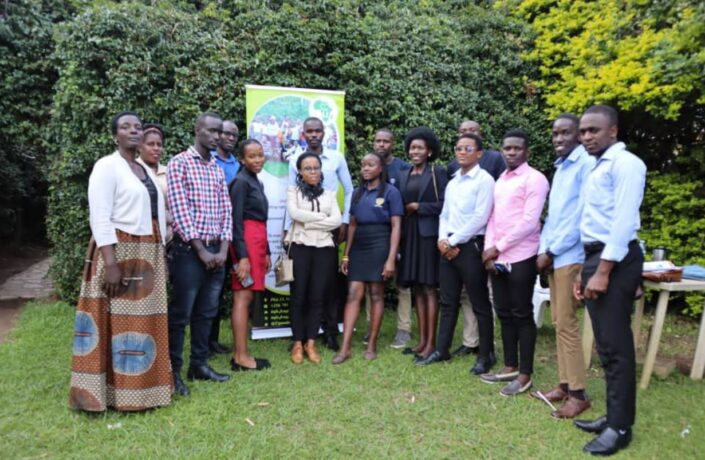
  • Development of Humanist activities in Nigeria and in Uganda
  • Expansion of Humanist activities in Nepal
  • Composition of non-formal educational material and a non-formal educational gallery in India
  • Empowerment of Women and Youth programmes in India
  • Organisation of the 2004 International Humanist Conference in Africa
  • Creation of an African Humanist Alliance and the appointment of regional representatives for West Africa and East Africa
  • Travel costs for Humanist leaders from Africa, Asia and South America to important Humanist events worldwide
  • Creation and support of Dalit rights and anti-superstition programs in India

IHEU Congresses and awards

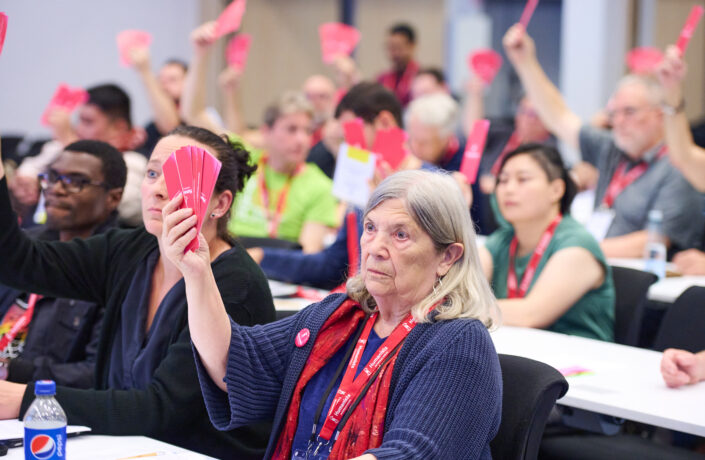
The first IHEU Congress was at Amsterdam in 1952. IHEU Congresses which feature leading intellectuals and social activists are an opportunity to formulate Humanist positions on important issues.

IHEU holds triennial World Humanist Congresses. Recent Congresses have been held in Mumbai, India (1999), The Netherlands (2002) and Paris, France (2005). IHEU also holds regional and subject-area conferences. Recent IHEU conferences include the Jefferson Conference (Paris, France, 2002), Empowering Women (London, UK, 2003), Humanist Visions for Africa (Kampala, Uganda, 2004), Bioethics: a Humanist Approach (New York, USA, 2005) and Victims of Jihad (Geneva, Switzerland, 2005).

At IHEU Congresses, outstanding achievements and contributions to the progress and defence of Humanism are recognised through the prestigious International Humanist Award. Past recipients have included Justice Tarkunde (defence of democracy, India); Atheist Centre (social work, India); Alexander Dubcek (defence of the freedom of conscience, Czech Republic), Dr. Pieter Admiraal (contribution to acceptance of Voluntary Euthanasia, the Netherlands), Dr. Andrei Sakharov (defence of the freedom of conscience, Soviet Union), Netti Klein (promotion of Humanism, the Netherlands), Prof. Paul Kurtz (promotion of Humanist principles), Prof. Amartya Sen and Prof. Jean-Claude Pecker.

International Humanist News

International Humanist News is a quarterly magazine with news and special features on Humanist developments and is published from London. Humanist magazines world-wide reproduce articles from International Humanist News in their pages. IHN is sent free to IHEU's Individual Supporters.

Support international Humanism

When you join IHEU, either as a Member Organisation or as an Individual Supporter, you express solidarity and your sense of identification and commitment to the cause of International Humanism. You receive regular information about other Humanist organisations and individuals, and you have the opportunity to participate in, and contribute to the growth of Humanism. As an Individual Supporter you could help IHEU annually, become a Life Supporter or make a contribution to the IHEU Endowment Fund, which will guarantee the long-term viability of the organisation.

We must all work together internationally if Humanist values are to make a difference to the world. If you support what we are working to achieve, please help us make a difference by becoming an Individual Supporter or by your Humanist group becoming a member of IHEU. Every addition to our number adds strength to the Humanist cause.

If you want details of a Humanist group in your country, subscribe to a Humanist magazine in your language (there are nearly 200!), obtain details of Humanist Websites on the Internet, or would like to participate in an IHEU Congress, contact us (in English, French, Dutch, German, Hindi, Marathi or Telugu).

We have a world to change. We need your help to change it!

Luc Beaudoin's picture

human experience and knowledge

I assume that the phrase "Humanists consider human experience to be the only source of knowledge and ethics." is meant to set humanism apart from religious and similar belief systems. However, there are several other sources of knowledge apart from those that are derived from experience. Sensory experience cannot be the only source of derivation of knowledge. Kant made a similar point. Otherwise, the proposition ties humanism to empiricism. Certainly, human experience is important as a source of positive knowledge, and as a measure of refutation of theories. But reasoning and other mental operations can operate in ways that are independent from sensory experience. We do not know the full scope of the forms of representations that our brains and minds utilize. But we can develop theories about the latter. As Aaron Sloman points out "a form of representation is the combination of syntax, pragmatics, semantics, and inference
strategies supported by the form (see Sloman 1993a, 1994b). We can now see that there may be several different syntaxes and forms of inference at different levels in the same representational system." These forms of representation have different pramatic properties and play different roles in the "architecture" of the mind.

Some systems of the mind are concerned with generating affective states, generating motivators, evaluating motivators, deciding upon motivators, scheduling and planning motivators. The mind can compare and reason about instances of representations (which may or may not have semantics). This is to say that the mind can busy itself, and generate new knowledge, in systems that are far removed, and not derived from, sensory representation. These systems can develop through ontogenesis and phylogenesis.

Of particular interest are the systems in the mind that support rationalism.

This is all to say that we ought not rest humanism solely on the pillar of experience and experiential derivations: they alone cannot support the entire mental architecture that needs to be brought to bear on rationalism.

roy's picture

General Comment

All of the articles which purport to be about IHEU, or Humanism in general should have a by-line saying who was the author and when it was first published. This particular article is completely misleading because without either it appears to be current and it is totally inaccurate.

Roy

admin's picture

Needs rewrite

You're right. This article is a legacy from the pre-July 2004 web site and it needs updating (at least), if not a complete rewrite. As a first step, I have deleted one paragraph that is completely wrong.
--
IHEU Website Administrator

admin's picture

Revised version

This is a revised version. It will probably be edited further in the near future.

17 August 2005 Edited further.
--
IHEU Website Administrator

Comment viewing options

Select your preferred way to display the comments and click "Save settings" to activate your changes.