Democracy vs. Theocracy - Islamic Human Rights and the Universal Declaration
In this, the second of a four-part series of articles, Ibn Warraq examines the difference between the Islamic view of Human Rights and the rights enshrined in the Universal Declaration of 1948.
There is a well-known café in Brooklyn called Vox Pop, and underneath the sign bearing that name there is a sub-title, which reads Books, Coffee, Democracy. A theocratic café would undoubtedly be called Vox Dei- the voice of God, and its subtitle, Book (in the singular), Holy Water, and Theocracy; Vox Populi where sovereignty belongs to the people, versus Vox Dei, where sovereignty belongs to God; quite clearly two contradictory worldviews. In an Islamic theocracy with its book the Koran, manmade laws, which, in a secular democracy, have been arrived at by a historical process of debate and deliberations, and which reflect the changing aspects of society, are to be replaced by God’s laws as laid down in the Koran, and elaborated by theologians. Islamic law, Shari’a, though in reality they reflect a medieval, seventh or eight century world view, are considered eternal and applicable in whatever conditions or times Muslims find themselves. As interpreted by the four major schools of law of Sunni Islam, and the Shiites, the Shari’a is unambiguously incompatible with a Liberal Democracy, and unequivocally violates several of its tenets.
Shari’a is the total collection of theoretical laws that apply in an ideal Muslim community that has surrendered to the will of God. It is based on divine authority, which must be accepted without criticism.
Islamic law is thus not a product of human intelligence, and in no way reflects a constantly changing or evolving social reality (as in European law).
It is immutable, and the fiqh, or the science of the Shari’a, constitutes the infallible and definitive interpretation of the Sacred Texts; infallible because the group of Doctors of Law have been granted the power to deduce from the Koran and the Traditions authoritative solutions; and definitive because after three centuries, all the solutions had been given. Shari’a is divine and immutable. The work of the learned doctors of the Shari’a is but a simple application of the words of Allah or His Prophet, and it is only in certain narrowly defined limits, fixed by God Himself that one can use a kind of reasoning known as Qiyas, that is, reasoning by analogy. The decisions of the learned having the force of law rest on an infallibility that God Himself conferred through Mohammed on his community.
While the Koran contains praiseworthy moral principles, even if not particularly original – the need for generosity, respect for parents, and so on, these are outweighed by unworthy principles: intolerance of pagans, the call to violence and murder, the lack of equality for women and non-Muslims, the acceptance of slavery, barbaric punishments, and contempt for human reason.
Is the Shari’a still valid? We may well ask how a law whose elements were first laid down over a thousand years ago, and whose substance has not evolved with the times, can possibly be relevant in the 21st century. The Shari’a reflects the social and economic conditions of the time of the early Abbasids and has simply grown out of touch with all the later developments – social, economic and moral. Improbable though it may seem, we have progressed morally. We no longer regard women as chattels, which we can dispose of how we will, we no longer believe that those who do not share our religious beliefs are not worthy of equal respect, we even accord rights to children and animals. But as long as we continue to regard the Koran as eternally true, with an answer for all the problems of the modern world, we will have no progress.
The Koran enshrines principles that are inimical to moral progress.
Let us look at The Universal Declaration of Human Rights of 1948 and compare it to Islamic law and doctrine.
Article 1: All human beings are born free and equal in dignity and rights. They are endowed with reason and conscience and should act towards one another in a spirit of brotherhood.
Article 2: Everyone is entitled to all rights and freedoms set forth in this Declaration, without distinction of any kind, such as race, colour, sex, language, religion, political or other opinion, national or social origin, property, birth or other status.
Article 3: Everyone has the right to life, liberty and security of person.
Article 4: No one shall be held in slavery or servitude; slavery and the slave trade shall be prohibited in all their forms.
Here are my comments on the above Articles:
Women are inferior under Islamic law; their testimony in a court of law is worth half that of a man; their movement is strictly restricted, they cannot marry a non-Muslim.
Non-Muslims living in Muslim countries have inferior status under Islamic law, they may not testify against a Muslim. In Saudi Arabia, following a tradition of Mohammed who said 'Two religions cannot exist in the country of Arabia', non-Muslims are forbidden to practice their religion, build churches, possess Bibles, and so on.
Non-believers- atheists in Muslim countries do not have 'the right to life'. They are to be killed. Muslim doctors of law generally divide sins into great sins and little sins.
Of the seventeen great sins, unbelief is the greatest, more heinous than murder, theft, and adultery.
Slavery is recognised in the Koran. Muslims are allowed to cohabit with any of their female slaves (Sura, iv.3); they are allowed to take possession of married women if they are slaves (Sura, iv.28).
Article 5: No one shall be subjected to torture or to cruel, inhuman or degrading treatment or punishment.
Punishments for the transgressors of the Holy Law include amputations, crucifixion, stoning to death, floggings.
Article 6: Everyone has the right to recognition everywhere as a person before the law.
The whole notion of a person who can make choice, and can be held morally responsible is lacking in Islam; as is the entire notion of human rights.
Articles 7, 8, 9, 10, 11 deal with the rights of an accused person to a fair trial.
As Schacht has shown, under the Shari’a, considerations of good faith, fairness, justice, truth, and so on play only a subordinate role. The idea of criminal guilt is lacking. Revenge for a killing is officially sanctioned, though a monetary recompense is also possible. The legal procedure, under Islam, can hardly be called impartial or fair, for in the matter of witnesses all sorts of injustices emerge. A non-Muslim may not testify against a Muslim. For example, a Muslim may rob a non-Muslim in his home with impunity if there are no witnesses except the non-Muslim himself. The evidence of Muslim women is admitted only very exceptionally and then only from twice the number required of men.
Article 16 deals with the rights of marriage of men and women.
Women under Islam do not have equal rights: they are not free to marry whom they wish, the rights of divorce are not equal.
Article 18: Everyone has the right to freedom of thought, conscience and religion; this right includes freedom to change his religion or belief, and freedom, either alone or in community with others and in public or private, to manifest his religion or belief in teaching, practice, worship and observance.
Under Islam, one does not have the right to change one's religion, if one is born into a Muslim family. Applying double standards, Muslims are quite happy to accept converts to their religion, but a Muslim may not convert to another religion, this would be apostasy, which is punishable by death. Here is how the great commentator Baydawi (c.1291) sees the matter: “Whosoever turns back from his belief, openly or secretly, take him and kill him wheresoever you find him, like any other infidel. Separate yourself from him altogether. Do not accept intercession in his regard'.
Article 19: Everyone has the right to freedom of opinion and expression; this right includes freedom to hold opinion without interference and to seek, receive and impart information and ideas through any media and regardless of frontiers.
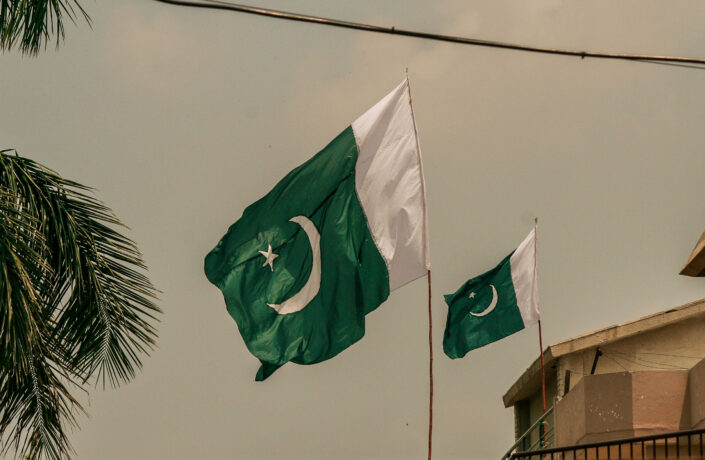
The rights enshrined in articles 18 and 19 have been consistently violated in Iran, Pakistan and Saudi Arabia. In all three countries, the rights of their Bahai, Ahmadi, Shia, and Christian minorities have been denied. All three countries justify their actions by reference to Shari’a. Christians in these countries are frequently arrested on charges of blasphemy.
Article 23: Everyone has the right to work, to free choice of employment, to just and favourable conditions of work and to protection against unemployment.
Women are not free to choose their work under Islam, certain jobs are forbidden to them, even in so-called liberal Muslim countries. Orthodox Islam forbids women from working outside the home. Non-Muslims are not free to choose their work in Muslim countries, or rather certain posts are not permitted them.
Article 26 deals with the right of education.
Again, certain fields of learning are denied to women.
It is clear that Islamic militants are quite aware of the incompatibility of Islam and the 1948 Declaration of Human Rights.
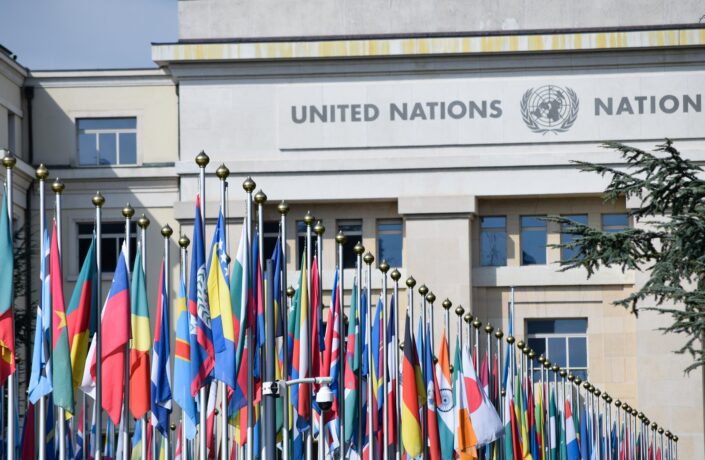
For these militants met in Paris in 1981 to draw up an Islamic Declaration of Human Rights which left out all freedoms that contradicted Islamic law. Even more worrying is the fact that under pressure from Muslim countries in November 1981, the United Nations Declaration on the elimination of religious discrimination was revised, and references to the right 'to adopt' (Article 18, above) and, therefore to 'change' one's religion were deleted, and only the right 'to have' a religion was retained.
To be continued
Ibn Warraq
Trackback URL for this post:
- Login or register to post comments
- Printer-friendly version