Untouchability
UK House of Lords adopts measure against caste discrimination
Submitted by Matt on 3 March, 2010 - 19:12.
Following intensive lobbying by the National Secular Society (NSS, an IHEU member organization), the UK’s House of Lords on 2 March 2010 adopted an amendment to the new UK Equality Bill, paving the way for caste discrimination to be made illegal. Lobbying by the NSS was given a new focus by the first international conference on untouchability hosted by the IHEU and held in London last summer.
World Conference shows misery of untouchability and hope for progress
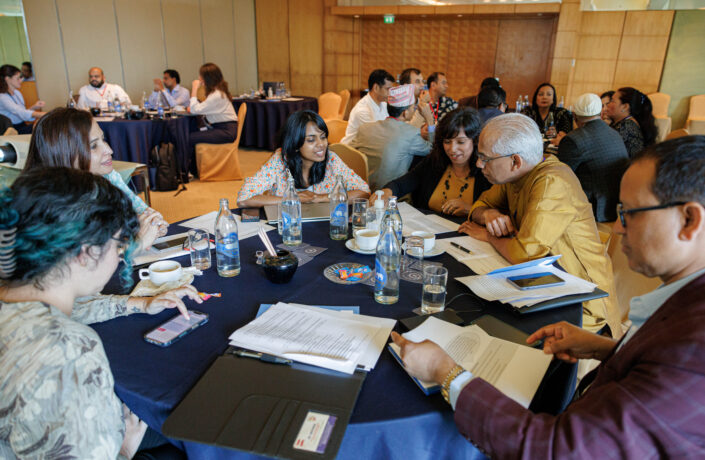
Submitted by admin on 21 August, 2009 - 10:48.Around 100 participants came from around the globe to IHEU’s first “World Conference on Untouchability” to share successful strategies to combat a problem they described as “the most widespread, pernicious and intractable form of discrimination on Earth.” The conference, held in London’s Conway Hall Humanist Centre on June 9 and 10, brought together politicians, academics and grassroot
IHEU World Conference on Untouchability
Submitted by admin on 21 August, 2009 - 10:48.I am very honoured to have been invited to speak at the World Conference on Untouchability, and to add my congratulations to the IHEU for highlighting an issue which affects 250 million people, mainly in the Indian subcontinent but as you have noted, Mr President, also in Nigeria, Yemen, Gambia, Japan, and Korea.
Caste and politics in India
Submitted by admin on 21 August, 2009 - 10:48.
India became a nation under the British regime after 400 years of Mughal rule. Despite many changes during this long period, one unchanging phenomenon was caste discrimination.
The Untouchables of Bangladesh
Submitted by admin on 21 August, 2009 - 10:48.
Bangladesh embodies a combination of Bengali society and culture, a Hindu and Buddhist heritage and later Muslim traditions. The caste system and prejudice against “untouchables” are part of Hindu culture. Although Hindu in origin, work-based discrimination and social exclusion have been a reality in both the Hindu minority and the Muslim majority communities in Bangladesh.
Caste discrimination in Africa
Submitted by admin on 21 August, 2009 - 10:48.
If this conference had been held 300 years ago, nobody from my continent would have attended, and if ever such a person set foot on the shores of this country, he or she was on their way to the “New World”, victim of the international slave trade and of racism that accorded black people inferior and untouchable status.
Untouchability in Japan: Discrimination against Burakumin
Submitted by admin on 21 August, 2009 - 10:48.The term buraku literally refers to a small, generally rural, hamlet. Burakumin are a Japanese social minority group: Japan’s “invisible race.” No physical characteristics distinguish them, unlike other main minority groups, from the majority population. There are about six million burakumin in modern Japan (about 2 per cent of the population).
UN begins to move on caste discrimination
Submitted by admin on 18 June, 2009 - 07:29.
Caste discrimination “clealy falls within my mandate” claimed the newly-appointed UN Special Rapporteur on Racism Mr Mugai, speaking on 16 June 2009 at the end of a short debate on his first report to the Human Rights Council. One week after the landmark conference on untouchability held in London under the auspices of IHEU, an official of the Human Rights Council has finally taken this issue on board. (video added)
Global initiative against untouchability launched in London
Submitted by admin on 10 June, 2009 - 15:37.
The first “World Conference on Untouchability” concluded today [10 June 2009] with the launch of a global initiative against caste discrimination. The conference, organized in London on June 9 and 10 by the International Humanist and Ethical Union (IHEU), brought together nearly a hundred politicians, academics and grass roots leaders to share successful strategies to combat caste discrimination and help the nearly 250 million victims of Untouchability. The conference declaration, passed unanimously, proposes expanding successful grass roots programmes, improving national legislation, and strengthening UN enforcement mechanisms.
Superstition kills: new film premieres at World Conference on Untouchability
Submitted by admin on 10 June, 2009 - 08:08.
In a new 30-minute film, Swedish film maker Henrik Thome tracks IHEU's International Director Babu Gogineni as he and his colleagues visit a village in Nalgonda district in Andhra Pradesh state, where an independent minded Dalit woman was murdered on the pretext that she was a witch. After meeting the victim's family, they start an educational and media initiative in the region to bring the killers of Bhuvanagiri Somamma to justice. After meeting with rationalist Bikshapathy, whose family was made an outcast by fellow Dalits, the team travels to Bidar town in neighbouring Karnataka state where they join Prof. Narendra Nayak, President of the Federation of Indian Rationalists Associations, and rationalists from Tamil Nadu for some spectacular action. Watch this film which premiered at the IHEU's World Conference on Untouchability in London on 10 June 2009 here.