Caste discrimination in Africa

West & Southern AfricaIgwe, Leo

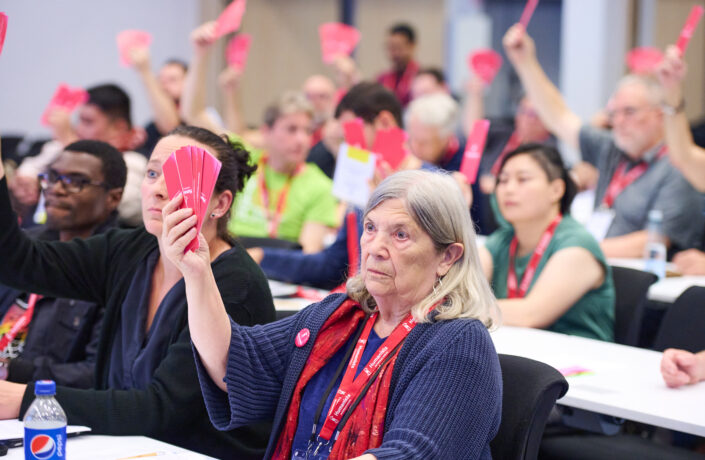
If this conference had been held 300 years ago, nobody from my continent would have attended, and if ever such a person set foot on the shores of this country, he or she was on their way to the “New World”, victim of the international slave trade and of racism that accorded black people inferior and untouchable status.

But today people of my colour and from my continent can attend this meeting because things have changed. Thanks to the efforts, sacrifice, campaigns and lobbying of Humanists and Humanistic individuals like you, slavery was abolished and racial discrimination was criminalized. We meet today, more than 100 years after the abolition of slavery and 60 years since the adoption of the Universal Declaration of Human rights (UDHR), to explore ways of tackling caste discrimination and untouchability world wide because the efforts and struggles that led to the abolition of slave trade and the adoption of the UDHR are unfinished.

Few people know that caste discrimination exists in Africa. Many are unaware that untouchability is practised in varying degrees in countries and communities across the black continent. Lower-caste people exist in my country Nigeria, in my home state, Imo and in my home town Mbaise, in Southern Nigeria. This social disease is practised in Cameroon, Gambia, Niger, Senegal, Mauritania and elsewhere.

Lower-caste people in Africa are victimized and discriminated against by persons who regard caste discrimination as a sacred tradition that should not be changed or challenged but should be observed, preserved and passed on to the coming generations. lower-castes are called by different names in different places: Osu, Omoni, Adu, Ebo, Ume, Ohu, Oruma etc. and by various derogatory phrases. Untouchables in the Mandarin region are confined to occupations such as blacksmiths, potters or undertakers.

In Nigeria, the practice is most pronounced among the Igbos in South-eastern Nigeria. According to Igbo tradition, lower-caste people are called Osu and the upper caste, Diala. The Osu are the descendants of those who were sacrificed to the gods or spirits, or who took refuge in the local shrine to avoid punishment. There are other myths and misconceptions of how Osu practice started. Whatever its origin, Osu discrimination is a social reality and a living tradition among the Igbos in Nigeria.

Caste Discrimination in other African states
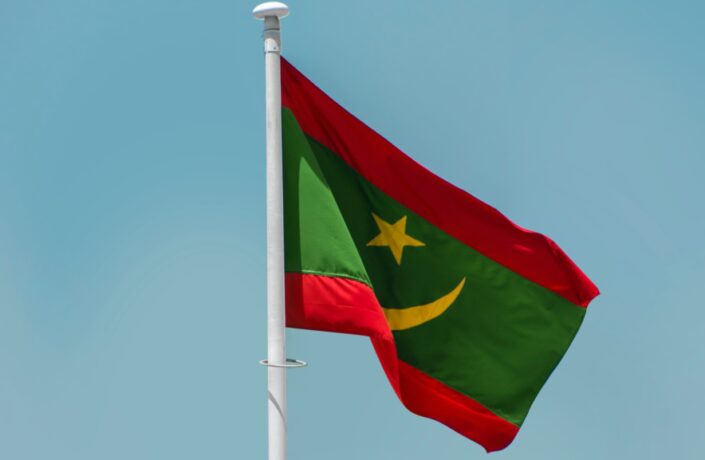
In most Africa states, lower-caste people are slaves or descendants of slaves or those who, according to social stratification, carry out menial, dirty jobs like shoemaking or blacksmithing. In Niger, lower-caste persons are slaves, weavers or well-diggers. They are found among the Hausa, Djema-Songhai and the Touareg. In Senegal, the untouchables are the Neenos, the Nyamakalaw and the Jonow. In Mauritania we have the Haratin or black Moors who are slaves or ex-slaves of the Bidans – the white Moors. In Burkina Faso the lower caste is the Bellah, the slave caste of the Touaregs. In Gambia, we have the Jaam or Ngalo people, whose forefathers were collateral for debts, were sold to settle debts or were captives of Islamic jihadists who invaded centuries ago. Lower-caste people in the Great Lakes Region – Rwanda, Burundi, Uganda – are the Twa. Throughout Africa, lower-caste people are in the minority and discrimination against them is largely unreported and unacknowledged.

Acts of discrimination

Lower-caste people live separately from upper-caste persons. Traditionally the Osu in Nigeria live near the local markets or shrines. Untouchables are not allowed to interact closely with upper-caste individuals. The belief is that they could defile the so-called “freeborns” through such contact or interaction.

Traditionally inter-caste marriage is forbidden. Such a marriage is regarded as a taboo – an abominable treason against the people and the land. So a Diala who marries an Osu is automatically ostracized. He loses his
Dialaship”. And the descendants for generations after him are Osu. In his book No Longer at Ease, Chinua Achebe portrayed graphically and poignantly the pain that accompanies inter-caste marriage.

Upper-caste families go to any length to oppose inter- caste marriages. Upper-caste persons wanting to marry members of a lower caste may be attacked, beaten and brutalized, forced to abort pregnancies, or have the babies sold after delivery. Many inter-caste marriages end in divorce, or the lower-caste widow is sent packing as soon as her upper-caste husband dies.

Politically, untouchables are second-class citizens: they can vote but they cannot be voted for. In Nigeria, untouchables cannot hold traditional leadership positions like Nze, Ozo or Eze, since it would be deemed a desecration of the position to do so. In Owerri in Imo state a prominent Osu politician who won an election was robbed of his mandate, while an untouchable who emerged as the king of his town was dethroned by a judge who ruled that the anti-Osu legislation was unenforceable. In Mbano, posters of an Osu person standing for the Chairman of his local government were torn down by Dialas chanting the common slogan that an untouchable could not rule them.

Untouchables lack access to land and their housing rights are violated. In Nigeria the Osu live near the market and local shrines. They are not allowed to live, own land or erect houses outside the untouchable areas. Discrimination continues even after death. In Gambia, lower castes may not be buried with the upper castes. In some Nigerian communities, the Osu are traditionally buried in the forest.

Discrimination against lower castes affects the siting of developments like schools and the distribution of social amenities. Lower-caste people come last in the queue for community development programs. Their access to development projects sited on upper-caste lands is also likely to be limited.

Changes and Challenges
Today, untouchables live better than they did decades or centuries ago. Conditions have improved particularly for those who are educated, have done well financially or have migrated from the rural areas to urban areas or city centres. Almost all have converted to Christianity or Islam. Many untouchables live on traditionally “freeborn lands”. They have married freeborn men and women and have been appointed to some political posts. But many challenges still remain. Many lower-caste people are still oppressed and discriminated against. Christianity and Islam have not necessarily helped, because people still cling to their caste identities. Most people follow caste status when choosing a marriage partner and when voting during any election. Caste discrimination is still upheld as a “sacred” tradition.

Responses
Many African states have adopted measures to tackle caste-based discrimination. At independence, African states adopted constitutional provisions guaranteeing freedom from discrimination for all citizens. Some have enacted laws banning caste discrimination and slavery. But like many laws enacted in Africa, these provisions have not been enforced. At best they have only driven the practice underground, to fester there.

In many African countries, the social divisions caused and created by religious imperialists were responsible for caste division and oppression, but that is not so in Nigeria. Caste practice predates the advent of Christianity. And Christian religious groups have tried to tackle the problem. Churches in Nigeria have also tried to preach against untouchability. They have tried to integrate Osu and treat them with dignity and equality. Others, however, have avoided condemning the practice for fear of alienating the majority upper caste.

The way forward
• Africans states need to enact laws, where none exist, to criminalize caste discrimination. And anti-caste laws must be enforced. In some cases, states’ revision or expansion of legislation is needed.
• Legislation should be backed by public education campaigns. Traditions die hard. So governments need to complement laws with awareness-raising programmes to reason people out of the primitive practice of untouchability.
• Human rights and civil society groups need to lobby governments to acknowledge the problem and take constitutional, legislative and administrative measures to eradicate caste oppression and injustice.
• Human rights and civil society groups need to persuade regional and sub-regional bodies to tackle the issue of caste discrimination in member countries.
• International organizations like the UN, UNICEF, UNDP, UNESCO and the EU should be lobbied to investigate the practice of untouchability. Many of these agencies sponsor, assist or facilitate projects in these countries where caste discrimination prevails.

Conclusion
There is an urgent need for local, regional and international initiatives to tackle worldwide caste division, hatred and oppression.

I started by paying tribute to those who fought to bring an end to the slave trade, those who outlawed racism, and bequeathed to us the UDHR. But we all know that they didn’t achieve this by caving in to the arguments and justifications of religious fanatics and cultural relativists. They had to be prepared to break taboos or challenge traditions. Today untouchables across the world find themselves in similar or worse situations than those of black people during slavery and under apartheid. We need a strategy to combat and eradicate the this social disease. We need programmes to bring hope, dignity and respectability to ‘the broken lives’ of untouchables everywhere, so that years from now, lower- caste people around the world will look back to this Conference with gratitude and appreciation.

Leo Igwe is IHEU International Representative, Africa

Trackback URL for this post:

http://www.iheu.org/trackback/3707